



How to update GPU drivers in Windows 11: which method to use
This guide walks through how to update GPU drivers in Windows 11: when to let Windows Update handle it, when to install a manufacturer's package instead, and when Device Manager is actually the right tool for the job rather than the default one.
- Routine update, nothing specific to fix → Windows Update.
- A specific release the GPU maker has published that Windows Update hasn't delivered yet → the manufacturer's or laptop maker's official installer.
- Local driver files already downloaded, or a driver that needs rolling back → Device Manager.
Windows checks in with Windows Update on a regular schedule and downloads a newer driver automatically once a suitable one is available, according to Microsoft. Manual driver files should always come from the manufacturer's own site instead of anywhere else, per Microsoft's guidance. Start by confirming exactly what's currently installed; that's the baseline every step below gets measured against.
Find your GPU model and current driver version
Before touching any update method, check what's actually installed right now.
- Right-click the Start menu, select Device Manager, and expand Display adapters to see all the currently installed adapters, per Microsoft's own troubleshooting steps.
- Right-click the adapter, choose Properties, then open the Driver tab to see the installed driver version, not just the model name. Write it down.
- Ignore the listed driver date as a sign of how current a driver is. Microsoft notes that the date is descriptive text the driver's provider sets, and it can be any date the provider chooses.
Windows Update itself now shows a driver's publisher name and version number directly, a change from the older compiled "publisher, device class, version" label, per Microsoft.
How to update GPU drivers through Windows Update
For most people, this is where the process should start, and ideally end.
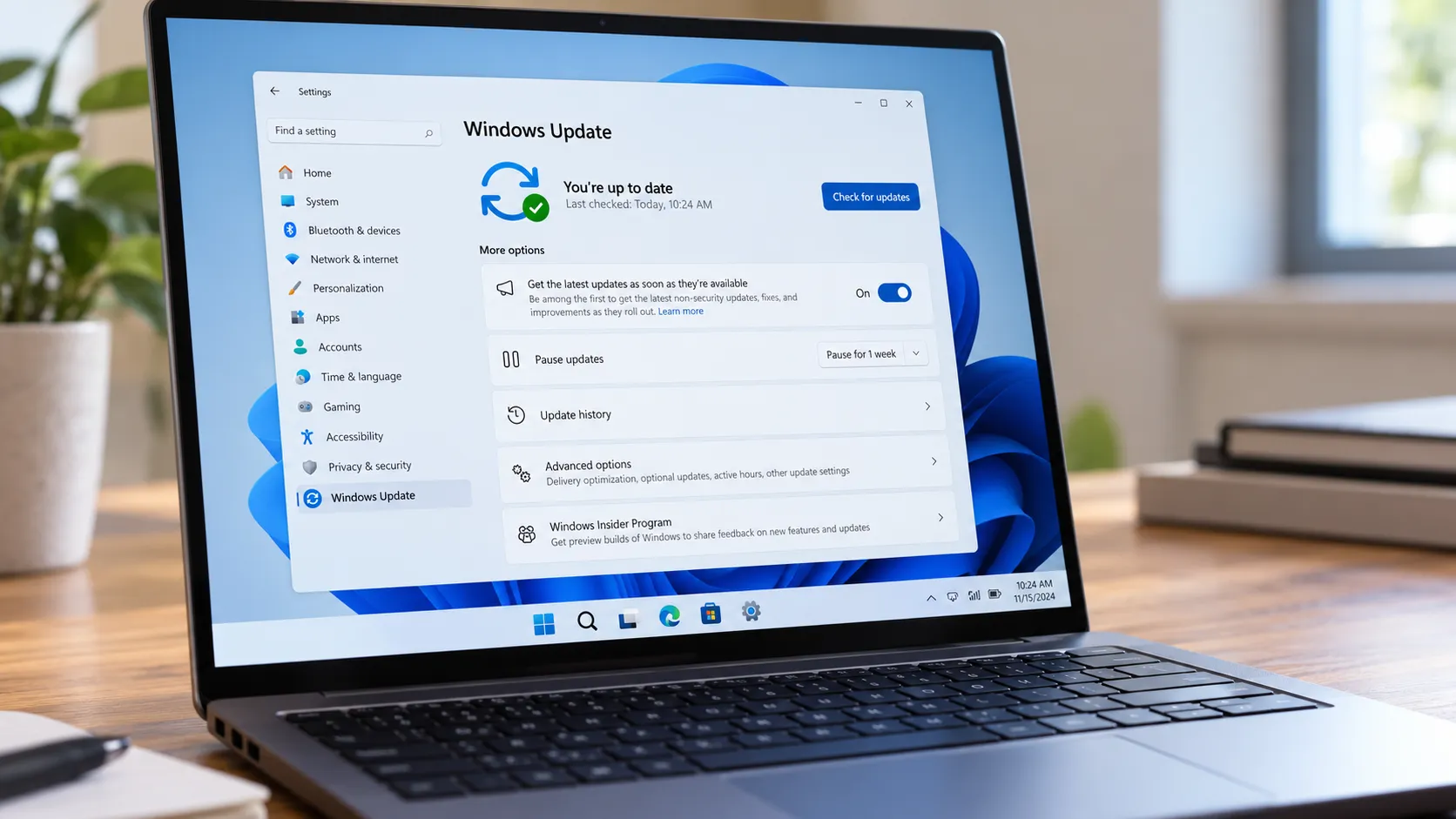
- Open Settings, go to Windows Update, and select Check for updates. Microsoft's driver troubleshooting guidance points users to this manual check before trying anything else.
- This same check already runs automatically in the background: Microsoft says that once a suitable newer driver is available, Windows downloads and installs it without any input needed.
- If nothing new shows up, try Device Manager's own search: expand Display adapters, right-click the GPU, choose Update driver, then Search automatically for updated driver software, a workflow Microsoft documents here.
- If that turns up nothing either, Device Manager offers to search Windows Update directly, which Microsoft's support page confirms just points back to the same source.
There's a reason this can still be the correct driver, even when it's not the newest build listed on a vendor's homepage. Microsoft explains that driver providers embed targeting information inside the driver files themselves, and Windows Update reads that data to match a driver to the specific device, regardless of what version number looks newest.
To confirm the update worked, reopen the adapter's Properties, check the Driver tab, and restart if prompted. If the version changed and nothing else is wrong, stop here. A manual install only makes sense with a real reason to keep going.
How to update NVIDIA or AMD graphics drivers manually
Manual installs make sense when Windows Update hasn't delivered what's needed: a specific driver release the GPU maker has published that hasn't shown up automatically yet.
- Download the latest graphics card driver from the manufacturer's own site, matching it to the exact GPU model and to the installed version and architecture of Windows. Microsoft's guidance is direct here: avoid downloading GPU drivers from anywhere other than the manufacturer's official site. That rule isn't limited to one GPU brand, so it applies whether the card is NVIDIA, AMD, or Intel.
- For AMD cards, check the release notes for whatever package is actually being downloaded. AMD's Adrenalin 25.6.1 notes, released last year, show the kind of check worth making: they list support starting with Windows 11 version 21H2 and Windows 10 64-bit version 1809, while noting that operating system support can vary by Radeon product. AMD ships new packages regularly, so confirm against the current release notes for the version being installed, not this one specifically. Installing also requires administrator rights on the account, per AMD.
- Skip AMD's standard Windows package entirely if running Radeon graphics under Apple Boot Camp. AMD's release notes exclude that configuration and point those users to the system manufacturer instead.
- Run the installer, restart if it asks for one, then recheck Properties > Driver tab to confirm the new version installed. Retest whatever prompted the update, whether that's an app, a game, or a pending Windows upgrade.
Laptop GPUs are worth a separate word of caution. A generic installer from NVIDIA or AMD's main site is built for desktop cards and reference designs, not the exact configuration inside a specific notebook. If that installer won't detect the hardware or refuses to proceed, the laptop maker's own support page, not the GPU vendor's homepage, is the next place to check.
Update a GPU driver through Device Manager, or roll back one
Device Manager isn't usually the first stop for a routine update, but it's the right tool for two specific jobs: installing files already sitting on the machine, and undoing a driver that's causing trouble.
To install from local files, such as extracted driver files rather than a full installer: right-click the GPU under Display adapters, select Update driver, then Browse my computer for drivers, and point Windows to the folder containing the files. Microsoft outlines this exact path for situations where a driver isn't showing up through the normal automatic search.
Device Manager can also roll back a driver to whatever was installed before, a separate action from manually installing a new package. Microsoft's documentation confirms that rolling back a driver requires administrator permissions on the account. If Windows doesn't have an earlier version saved to restore, that option won't help, and the fix at that point is reinstalling the previous package directly from the manufacturer, not a sign anything went wrong.
The Windows 11 24H2 NVIDIA safeguard hold: a documented case, not a current warning
In guidance published in 2024 for the Windows 11 24H2 update, Microsoft identified certain NVIDIA display driver versions that could cause a loss of display after upgrading to Windows 11 version 24H2 or later, and applied a safeguard hold that kept the update from being offered on affected PCs. It's a useful illustration of how a driver can hold up a Windows upgrade, not proof it's still active on any particular system today. Microsoft's guidance doesn't list every affected driver version, so this only matters if the exact on-screen message shows up: "Your PC has a driver that isn't ready for this version of Windows. A new version is available."
If that message appears, update the NVIDIA driver first. Microsoft says that once a new NVIDIA driver installs successfully through Windows Update, the safeguard hold should clear and the Windows 11 update should be offered again on the next check. Don't try to force it through: Microsoft specifically advises against using the Update Now button or the Media Creation Tool until a compatible driver installs and the update is offered the normal way.
If Windows Update never offers a fixed driver on its own, Microsoft's documented fallback for this exact scenario is downloading the driver package from the Microsoft Update Catalog, extracting the CAB file, and installing it through the Browse option described above. Treat that as a targeted workaround for this specific compatibility case, not a general-purpose install method.
That's a different scenario from a driver update that goes wrong on its own. If the issue occurred after a Windows Update specifically, Microsoft says reinstalling the previous driver often resolves it. Reinstalling an older package and rolling one back through Device Manager both aim at the same fix: getting back to a version that worked, whether that means rerunning an older installer or restoring the previous package through Device Manager, if it's still available there.
What to do next
Start with Windows Update, then confirm in Device Manager's Driver tab that the version actually changed. If it did and nothing's broken, there's nothing else to do.
Reach for the manufacturer's or laptop maker's official installer only when there's a specific reason: a blocked Windows update, a documented bug, or a feature the current driver doesn't support. Match the download to the exact GPU model and Windows version before running it, and check the OEM's driver page first on a laptop, since a generic vendor installer built for desktop hardware may not recognize it.
If a Windows upgrade is stuck behind a driver compatibility message, update the NVIDIA driver through Windows Update before trying the Update Catalog workaround. If a problem started right after a Windows Update, try reinstalling the previous driver, or rolling it back through Device Manager if that option is available, before assuming anything more serious is wrong.

Comments
Be the first, drop a comment!