





Windows 11 performance improvements for low RAM PCs so far
Microsoft says Windows 11 is now "up to 20% more responsive," with improvements stretching from boot-up through Start, File Explorer, Search, Snipping Tool, Microsoft 365, and Edge, according to a Windows Experience Blog post published today. The company singles out PCs with 8GB of RAM as seeing an "especially meaningful difference" from new memory-management work, according to the same post.
What the announcement doesn't say matters just as much. Microsoft hasn't identified which build, cumulative update, or rollout stage actually carries these Windows 11 performance improvements for low RAM PCs to an individual machine, and nothing in today's post confirms whether every edition or region gets them at once. That gap is the first thing current 8GB owners need to understand before expecting a difference.
The claim builds on groundwork Microsoft laid out two and a half months ago, when it said it was targeting "memory optimization for 8GB and above" through a more efficient memory allocator and leaner WinUI 3 and Chromium/WebView2 components, according to a Windows Insider Blog post from that time.
What's confirmed right now is Microsoft's own account of the work: the headline figures, the 8GB-specific fix, and the architecture behind both. What isn't confirmed is independent testing of the builds actually carrying these changes, or a firm timeline for when a given 8GB PC will see them. The rest of this piece sorts Microsoft's claims from what outside testing, done before today's announcement, actually shows about Windows 11 faster on 8GB RAM in practice.
What Microsoft says changed: the specific performance claims
Microsoft attributes the responsiveness gain to improved memory management that keeps a PC's resources focused on the active task rather than idle background processes, according to the Windows Experience Blog. The company also says it's rolling out separate memory-saving changes elsewhere in the OS aimed specifically at reducing background memory use, apart from the headline 20% figure, according to Microsoft.
The most-cited number describes retention, not expansion. Windows can now keep up to 2GB more active data resident in RAM instead of shuffling it off to slower storage, Microsoft says. That's a claim about delaying when data gets paged to disk as more apps or tabs open, not a claim that Windows now uses less memory overall or that an 8GB PC suddenly behaves like one with 10GB installed.
Two named apps get specific figures. Photos now launches up to 20% faster, and Bluetooth headphone pairing, including AirPods, is up to 15 seconds quicker, according to Microsoft.
All of these are Microsoft's own benchmarks, run on its own hardware and methodology. The company hasn't published the device configurations, RAM amounts, or baseline build used to produce the 20% figure, so until an outside lab reproduces it, the number is a company claim rather than an independently verified benchmark.
How Windows 11 memory management changes target 8GB RAM PCs
One figure in today's post is the only one explicitly scoped to low-memory hardware. On PCs with 8GB of RAM or less, Widgets now load only when opened, freeing more than 200MB of memory for apps and other tasks, according to Microsoft.
That sits on top of broader memory work described two and a half months ago: a more efficient memory allocator to cut overhead across apps and components, continued tuning of WinUI 3 so apps built on it use less memory by design, and efficiency work across Chromium and WebView2 wherever they appear in the OS, Microsoft explained.
The reason this matters for 8GB owners is how little slack they had to begin with. In one test setup, a fresh boot with only a handful of startup applications running, PCMag found Windows alone consumed roughly 6.6GB, leaving only a sliver of headroom on an 8GB system even before any of these changes existed.
These changes are built to ease a capacity constraint, not expand one. An 8GB PC still has 8GB of physical RAM no matter how efficiently Windows manages it; the goal is squeezing more useful work out of that fixed amount, not adding to it.
What independent 8GB testing shows and why it predates this update
Verdicts on 8GB machines vary sharply depending on who's testing and how. PCMag recommends 16GB as a baseline after limiting a desktop PC to 8GB using the msconfig tool. In that setup, everyday apps added up fast: Spotify used around 220MB just playing music, Slack added another 657MB, and opening six Chrome tabs with one streaming YouTube pushed the system toward its limit. PCMag's conclusion was blunt: 8GB turns sluggish with even light multitasking and slows to a crawl once something like Photoshop opens.
Windows Central reached a friendlier verdict, calling 8GB "not only viable but quite enjoyable" within reason. Idle use sat around 3.8GB on its test PC. With ten Edge tabs open, including a 4K YouTube stream, Netflix, and Gmail, usage topped out at 6.6GB, dropping to 5.7GB once the 4K tab closed and fluctuating between 5.7GB and 6.0GB during general browsing.
Even that more forgiving test showed how fast the margin disappears once real work starts. Adding GIMP alongside the same batch of browser tabs pushed memory use to between 7GB and 7.2GB, Windows Central found, on hardware with no slack left to spare.
Both tests ran well before today's announcement, in June and August, and neither one evaluated the specific package of changes Microsoft is describing now. That doesn't mean Microsoft's underlying memory work was entirely absent from those test builds, but it does mean neither review measured the stated 20% responsiveness improvement or the 2GB retention claim directly. The supplied independent tests don't validate those figures on real 8GB hardware; they only show how 8GB machines behaved on earlier builds under specific, documented workloads.
When Windows 11 performance improvements for low RAM PCs may reach your device
Availability here is less settled than the blog post suggests. Windows 11 version 26H2 entered the Release Preview Channel on Aug. 27, 2026, delivered as an enablement package rather than a full standalone release, which Microsoft said at the time was expected to reach general availability later this year, according to the Windows Insider Blog. That expected timeline hasn't been confirmed as finalized as of today.
Versions 24H2, 25H2, and 26H2 share a single servicing branch, meaning they receive the same features through Microsoft's continuous innovation model rather than through one named release, Microsoft explains. In practice, that means a given performance change can land through a routine monthly update rather than a headline feature drop, so two 8GB PCs on different update schedules could see today's improvements at different times.
Microsoft hasn't specified which cumulative updates, editions, or regions currently include each individual improvement outlined in today's post. Don't assume an 8GB PC already has the Widgets memory fix or the 2GB retention improvement simply because the announcement is public.
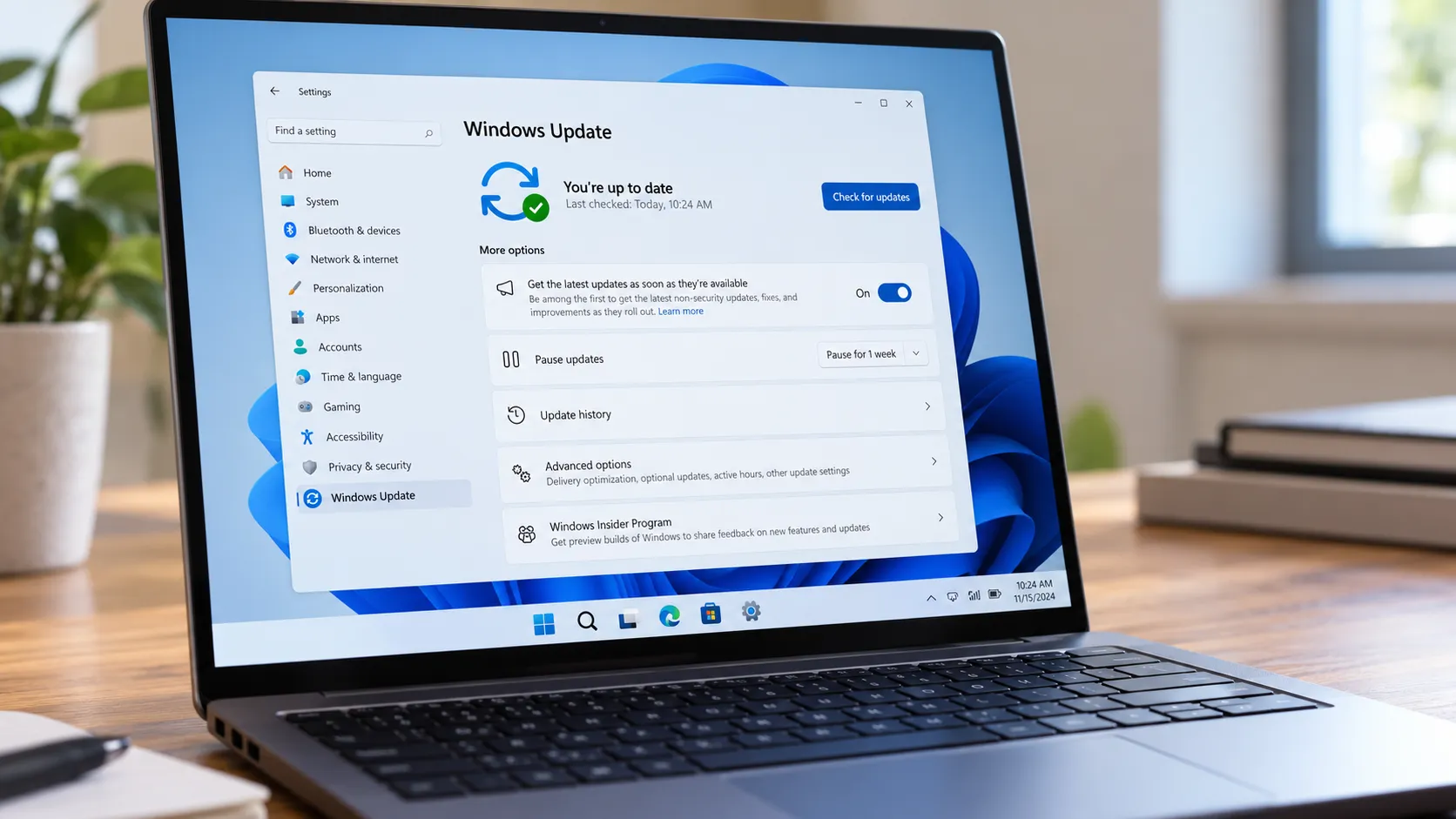
To check what's actually installed, open Settings > System > About, or type winver into the Start menu search box, to confirm the current Windows version and build. Use Settings > Windows Update separately to check for and install any updates available for the device.
What to do before you update or buy
Weigh the evidence as it stands. Microsoft claims up to 20% greater responsiveness and up to 2GB more retained active memory, according to its announcement, while independent 8GB testing conducted two and a half to four months ago shows outcomes ranging from "quite enjoyable" to "do not buy," depending entirely on workload, per Windows Central and PCMag.
Based on what's confirmed so far, the changes target easing a capacity constraint on existing 8GB hardware rather than proving 8GB has become an adequate standard for a new purchase. Both PCMag's and Windows Central's testing show that margin disappears quickly once real multitasking starts, regardless of how efficiently the OS manages what it has.
Current 8GB PC owners should check for updates now, note their Windows version and build, and judge any difference against their own workload once the changes actually reach their device. Anyone shopping for a new Windows 11 PC, especially for Photoshop, heavy multitasking, or similar tasks, should still treat 16GB as the safer baseline, per PCMag's recommendation, until independent labs confirm Microsoft's numbers hold up outside the company's own testing.


Comments
Be the first, drop a comment!