



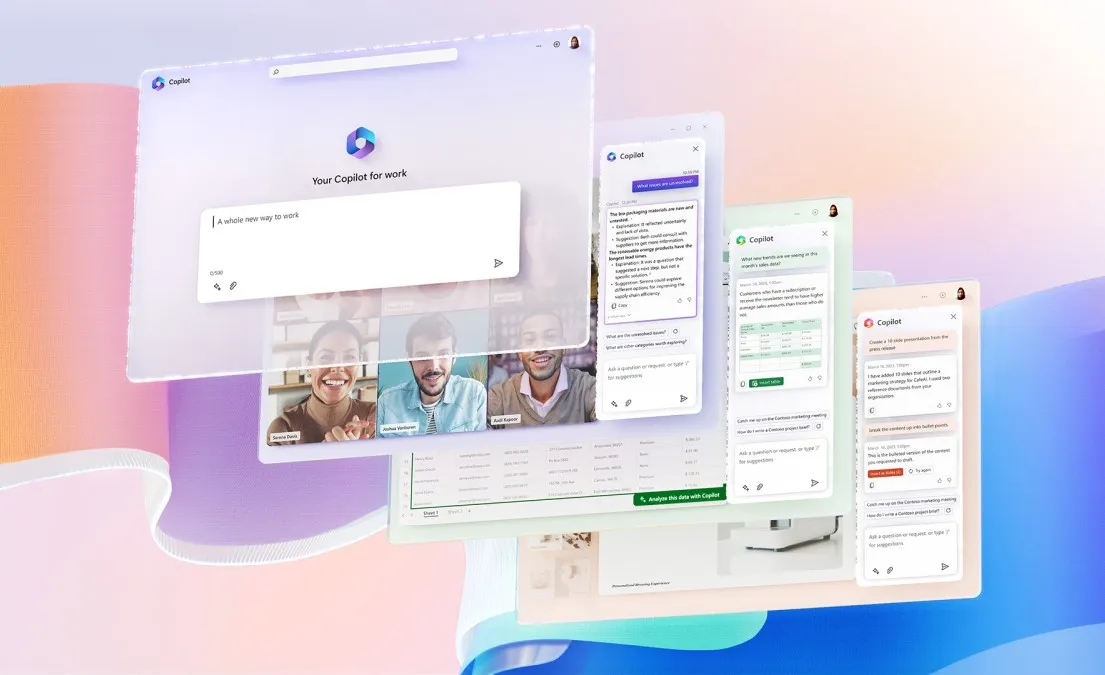
Ask three different people what "Microsoft Copilot" does, and there's a good chance you'll get three different answers, and all of them will be partially right. That's the problem. Microsoft Copilot isn't one product. It's a family of surfaces, and each one sees a different slice of your data. Mixing up Copilot Chat with Microsoft 365 Copilot, or a Teams meeting assistant with the standalone Researcher agent, is a common reason people asking how to use Microsoft Copilot for research end up with thin or oddly irrelevant answers.
Even when you pick the right tool, the output still needs a skeptical read. Independent testing of Copilot's Deep Research feature found the reports thorough and backed by cited sources, but every single report tested contained factual errors, and one uncapped report ran past 20 pages. Broader academic auditing of deep-research AI tools, Bing Copilot included, found that pulling in more sources doesn't automatically translate into better factual grounding; citation problems showed up across the entire category, not just one product.
What follows is a six-step workflow, in order, for research with Microsoft Copilot, from choosing the right surface to fact-checking and cleaning up the final draft. Steps 1, 2, and 5 apply no matter which Copilot mode you're in. Step 3 is specific to the Researcher agent's clarifying-questions checkpoint; steps 4 and 6 describe the now-retired Deep Research experience and are included only for readers working with existing reports; Microsoft retired Deep Research from the consumer Copilot app on August 18, 2026. Each is labeled accordingly, so Copilot Chat users aren't sent hunting for buttons that don't exist in their version.
Step 1: Match the task to the right Copilot surface
Before writing a single prompt, figure out what your version of Copilot can actually see. A quick way to sort it:
Synthesizing workplace data with the open web? Use Microsoft 365 Copilot.
Researching online and adding your own files only when needed? Use Microsoft Copilot Chat for research tasks like this.
Working inside one ongoing Teams conversation? Use Teams chat.
Need a live recap of what's happening in a call right now? Use the meeting assistant.
Microsoft 365 Copilot draws on both the open web and your organization's internal data through Microsoft Graph, meaning it can pull from emails, chats, documents, and meetings you're already permitted to access. It requires an add-on license.
Copilot Chat doesn't require an additional license. It uses the web by default, and you can supply organizational data yourself by uploading a file or pasting text into the chat when you want that context factored in. That makes it a solid choice when you want to use Copilot for online research without provisioning extra licenses.
Context matters even within a single app. In a Teams chat thread, Copilot uses the previous 30 days of that conversation by default unless you specify another timeframe, but it can't see any other chat, meeting transcript, email, or file, which is exactly why people are baffled when it "doesn't know" something they assumed was obvious. In a live Teams meeting, Copilot can answer questions in real time; if you want to ask about what was said after the meeting, live transcription needs to have been enabled, and Copilot can then use the transcript along with meeting-chat content.
Whichever surface you pick determines what your prompt can realistically ask for. Get that wrong, and no amount of clever phrasing fixes it later.
Step 2: Write a scoped prompt for Microsoft Copilot research
Microsoft's own guidance on this is refreshingly blunt: clear, detailed questions produce more focused and reliable results than vague, open-ended ones. That sounds obvious, but most people still type something closer to a search-bar query than an actual research brief.
Before you ask anything, decide your search scope: workplace resources, the open web, or both. Defining that upfront produces a noticeably more targeted report, according to Microsoft's documentation for the Researcher agent.
A framework for building Copilot prompts for research that travels across every surface, from plain Chat to Researcher, has six parts:
Objective: the decision this research needs to support
Audience: who's reading the output
Timeframe: what window of time the data should cover
Source scope: web, workplace data, or both
Output length: a specific word or page count
Citation requirement: whether and how sources need to be shown
A working example: "Summarize 2025-2026 hybrid-work adoption data for a 10-person team, using our HR files and public reporting, in under 500 words, with sources cited." That single prompt does more work than three follow-up messages trying to fix a vague first attempt.
Step 3: Answer Researcher's clarifying questions (Researcher agent only)
Researcher sometimes pushes back before it commits to a report. It may ask follow-up questions to narrow scope, and Microsoft is explicit that engaging with them is what keeps the final output aligned with what you actually needed.
This step is specific to the Researcher agent. It doesn't apply in plain Copilot Chat, Teams chat, or a Deep Research run that jumps straight to a report, so skip ahead if that's not what you're using.
Treat Copilot's first interpretation of your prompt as a draft to negotiate, not a verdict. Correcting scope here takes thirty seconds; discovering the scope was wrong after a full report has already generated costs a lot more, and it's the cheapest fix in the entire workflow.
Step 4: Set the report length before starting a Researcher run
Deep Research defaults toward thorough, and thorough can mean bloated. In Office Watch's testing, In Office Watch's testing, a Deep Research report reached 27 pages, while the outlet got a shorter, roughly 8-page result by using Copilot's separate Think Deeper option.
Length isn't just an editing headache. A Deep Research run can take five to ten minutes to complete, so setting scope and length before you hit submit saves actual time, not just cleanup work afterward.
Usage limits remain worth checking before starting a long Researcher task because Microsoft changes plan entitlements and limits over time. Check Microsoft's current plan documentation rather than relying on older Deep Research quotas.
Step 5: Verify every consequential citation before you trust it
A citation attached to a sentence is not proof the sentence is correct. In Teams chat, Copilot responses come with clickable citations linking directly to the source content used, though that specific behavior is documented for that interface and isn't guaranteed to work identically everywhere else in the Copilot family.
Office Watch found factual errors, described as minor but consistent, in every Deep Research report it tested. Citations and errors coexisted in the same reports; having a source attached didn't mean the claim next to it was clean.
The academic DeepTRACE framework audited publicly accessible deep-research tools including Bing Copilot specifically, not the full Microsoft 365 Copilot suite covered elsewhere in this guide, and found broad struggles with unsupported statements and unreliable citation practices across the category. Treat that as evidence for general caution, not a scored verdict on the enterprise product most readers here are actually using.
For every number, date, quote, or conclusion that will inform a real decision, run it through this sequence:
Open the citation itself. Don't just note that one exists.
Find the exact sentence, table, or quote it's supposed to support.
Check who published it and when.
Confirm the source backs the full claim, including any qualifiers Copilot may have dropped.
Where the citation is weak, secondhand, or aggregated, swap in the original study, filing, or dataset.
Skip this, and the speed Copilot offers becomes a problem the moment someone asks where a number actually came from.
Step 6: Save and edit an existing Deep Research report (legacy reports only)
When a Deep Research report is done, resist the PDF button. Office Watch recommends downloading the output as an editable Word (.docx) file instead, since any AI-generated report needs human revision before it's fit to hand to anyone else.
Expect a rough landing, not just cosmetic quirks. In Office Watch's testing, opening the exported .docx in Word triggered an "unreadable content" error on first launch; clicking through to recover the file restored it completely, but it's a jarring first impression for a document a manager or client might see over your shoulder. Once past that, the headings are inconsistent too: some subheadings render as bolded Normal text instead of proper Heading 3 style, so the outline looks right at a glance but breaks the moment you try Word's navigation pane or an auto-generated table of contents.
One feature worth using on high-stakes work: near the References section, look for a "See my thinking" link. It shows which sites Copilot visited and what it pulled from them. Treat it as a progress log, not proof of exactly how each conclusion was reached.
Deep Research gets you a fast first draft. Turning it into a document someone else can rely on is still the job in front of you.
Conclusion
Run the six steps in sequence, and each one sets up the next: the right surface makes the prompt possible, the prompt makes clarifying questions useful, and a scoped, verified draft is what makes the export worth editing at all.
Copilot's real edge is combining permitted workplace context with the open web inside a single query, but that advantage only shows up when the mode in front of you actually has access to what you need. Pick the wrong surface, and it's just a generic web assistant with a Microsoft logo on it.
None of the citation or accuracy gaps here are unique to Copilot. The same academic auditing that flagged Bing Copilot also flagged Perplexity, GPT-based search, and YouChat for similar weaknesses. Of all the Microsoft Copilot research tips in this guide, the one worth keeping longest is Step 5: check the source before you use the claim, no matter which AI tool eventually replaces this version of Copilot.




Comments
Be the first, drop a comment!