



Windows 11 Update Broke USB Audio Workaround: What Helps
Microsoft has confirmed that its September 8, 2026 security update can knock out USB audio on some Windows 11 PCs, cutting off sound from speakers, headsets, and microphones that connect over USB. If you're trying to find a Windows 11 update broke USB audio workaround, the scope here is narrower than "audio is broken" across the board, and the only reported workaround that may help is limited to one of two failure patterns showing up in reports.
Microsoft's release health documentation, per BleepingComputer this week, says that after installing the update, "some USB Audio Class 1.0 devices might fail to start or produce audio." The confirmed scope covers Windows 11 version 24H2 or later, tied specifically to update KB5124008 or KB5124012 (BleepingComputer). Microsoft hasn't shipped a fix or given a timeline; TechRadar reports this week that the company said only it's "working on a resolution and will update this documentation when more information is available."
Reports describe two different symptom patterns: some devices lose sound only in multichannel modes, while others fail to start entirely with a Code 10 error. The workaround covered below is intended for the multichannel symptom and does not address a device that fails with Code 10. Start by confirming the update is actually installed, then check Device Manager for your pattern before trying anything else.
What Microsoft has confirmed, and where that confirmation runs out
The official scope is USB Audio Class 1.0, a specific audio driver standard, not USB audio devices as a whole (BleepingComputer). Neither cited report offers a consumer-facing way to check whether a given headset, speaker, or interface actually uses UAC 1.0 versus a newer class. That's a real gap: a Code 10 error alongside a matching symptom below is evidence consistent with the known issue, not confirmation of it, and a device on a different Windows build isn't necessarily unaffected, just outside the documented scope of this particular incident.
Wireless audio doesn't appear to be part of the problem. Windows Latest reporting relayed by TechRadar notes that Bluetooth headsets and speakers don't appear to be affected (TechRadar), though "doesn't appear to be affected" leaves room for exceptions nobody has documented yet. Since the confirmed scope is USB-specific, it's reasonable to infer that analog 3.5mm connections sit outside this bug too, but that's an inference, not a tested guarantee.
Microphones can be hit as well, not just speakers and headsets, according to the same reporting (TechRadar). If a USB mic went silent in Zoom or Discord around the same time your speakers acted up, run it through the diagnostic steps below instead of assuming it's an app problem.
TechRadar also relays reports of a separate, Microsoft-unacknowledged issue where the File History backup feature stops working after the same update. That's a distinct problem from the audio bug, so check it separately if you rely on File History (TechRadar).
Confirm the update is installed, then check for USB Audio Class 1.0 Code 10 errors
Start by verifying you're actually dealing with this update, not something that just looks similar.
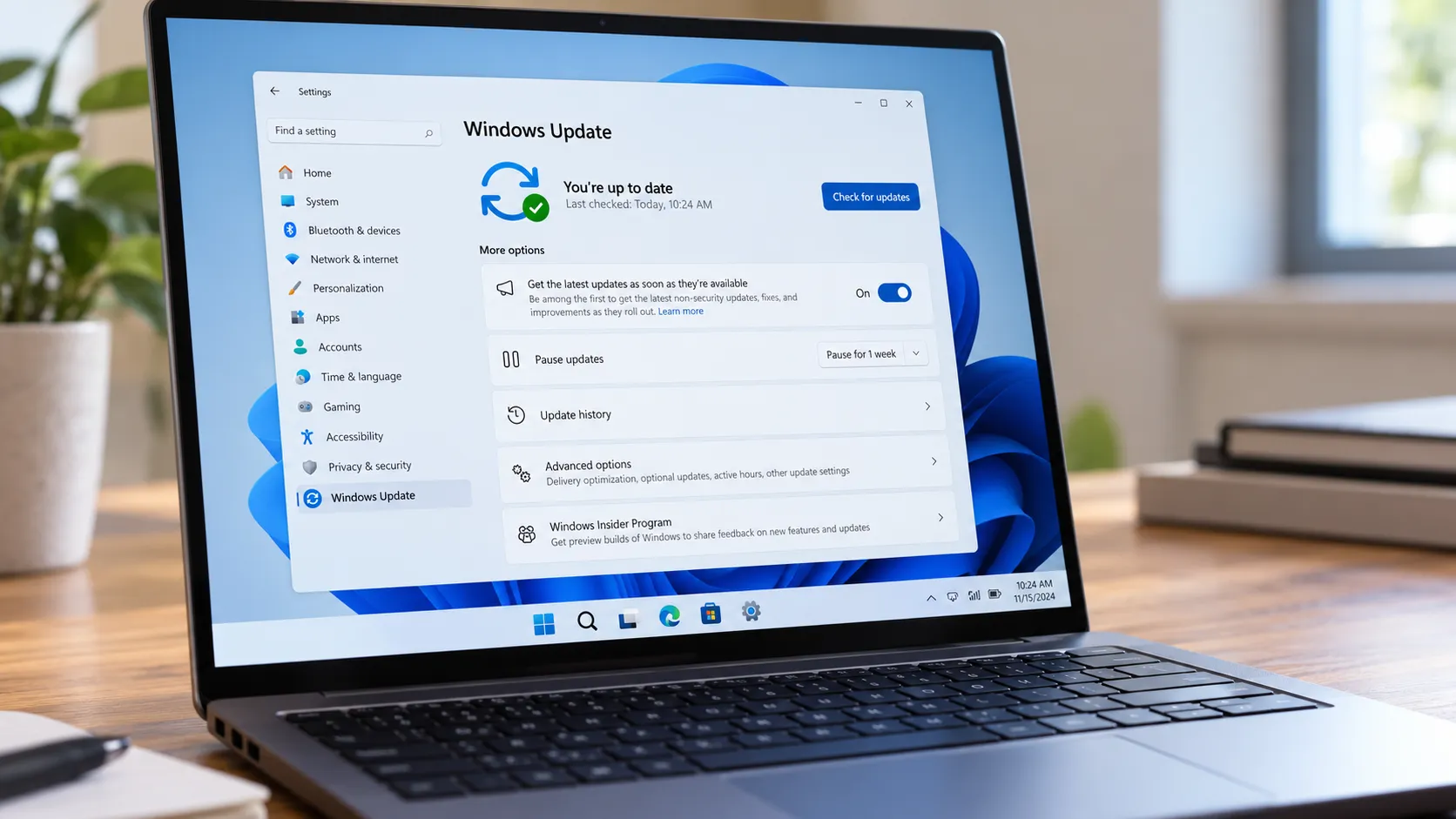
Step 1: Check your update history. Go to Settings > Windows Update > Update history and look for KB5124008 or KB5124012 in the installed list. Confirming one of those two KBs is what separates a genuine Windows 11 KB5124012 USB audio fix scenario from a Code 10 error with an unrelated cause. If neither KB shows up, this documented September issue probably isn't your cause, even if the symptoms look close.
Step 2: Open Device Manager and look for the pattern. Expand Sound, video and game controllers, and check Audio inputs and outputs too if a microphone is involved. Reports describe two patterns here, and each calls for a different next step.
Some users describe devices that keep working in standard stereo but go silent specifically in surround, 3D audio, or 8-channel modes. TechRadar reports that Microsoft describes the bug as something that "could manifest in other ways," including audio that plays fine in stereo but disappears when switching to multichannel output (TechRadar). This piece refers to that behavior as Pattern A; it describes reported symptoms, not an official Microsoft category.
Other users report devices that don't load at all, showing "This device cannot start (Code 10)" in Device Manager, sometimes with unresponsive volume controls and a Sound settings panel that won't cooperate (BleepingComputer). This piece calls that Pattern B.
Code 10 is a generic Windows error with plenty of unrelated causes, from driver corruption to hardware faults that have nothing to do with this update. Treat it as this specific bug only after confirming KB5124008 or KB5124012 is installed and you're running 24H2 or later (BleepingComputer).
How to switch USB audio to 2-channel mode on Windows 11
If a device works fine in stereo but goes quiet in surround or multichannel modes, some affected users have reported restoring audio by switching to 2-channel mode (BleepingComputer). Microsoft hasn't published official steps for this, and the path below wasn't verified against a device actively showing this bug. It's the standard Windows procedure for changing a device's channel configuration, not a confirmed remedy, so test it on your own hardware and treat the result as anecdotal until Microsoft says otherwise.
- Press Win+R, type
mmsys.cpl, and hit Enter to open the Sound control panel. - On the Playback tab, select the affected USB device and click Configure. This opens the speaker setup wizard, which controls channel layout for that device. If Configure is unavailable or grayed out, your device or driver may not expose channel selection through Windows, and this workaround won't apply to you.
- Choose Stereo instead of whatever multichannel option (5.1, 7.1, or similar) is currently selected, then step through and finish the wizard.
- Restart the app you were using, or reboot the PC, and test playback again.
This isn't a Microsoft-issued fix, and it hasn't worked for everyone who's tried it. For a device that fails to start at all rather than just losing multichannel sound, this workaround has nothing to reach, since that's a different problem, covered next.
Pattern B: Code 10 errors and devices that won't start
If Device Manager shows "This device cannot start (Code 10)" for the USB audio device, the stereo workaround above doesn't apply. The device isn't initializing in the first place, so there's no channel setting to adjust.
The simplest temporary option is switching to an alternate output if one is available: analog 3.5mm audio, or Bluetooth, since wireless devices aren't part of the confirmed scope of this bug (TechRadar). On a laptop with a built-in jack or speakers, that's the fastest path back to working audio.
Some outlets, including 9to5Windows, have suggested rolling back or reinstalling the audio driver through Device Manager (9to5Windows) in reporting from earlier this week. That's outlet-sourced troubleshooting, not a remedy Microsoft has validated against its own incident description, so treat it as a secondary, unproven step. Right-click the device in Device Manager and check whether Roll Back Driver is available under the Driver tab; if so, use it and restart. If it isn't available, select Uninstall device, then open the Action menu in Device Manager and choose Scan for hardware changes, if that option is present, to prompt Windows to reinstall a driver. There's no guarantee a working driver comes back on its own.
If neither an alternate output nor a driver reinstall restores audio and the affected device is one you depend on, removing the update is the remaining documented avenue covered here, though other hardware-specific fixes or manufacturer driver updates may be worth checking before going that route.
If nothing else works: removing the update, and whether it's worth it
Uninstalling the update removes its security patches along with whatever is breaking audio, so weigh that before proceeding. You may need administrator access on the PC to complete the uninstall.
- Go to Settings > Windows Update > Update history > Uninstall updates, and confirm you're selecting KB5124008 or KB5124012 specifically, not a different recent patch. Note the KB number before you proceed, in case you need it later.
- Select Uninstall, then restart when prompted.
- Check Windows Update afterward, and pause updates temporarily under Advanced options if you want to avoid the update reinstalling while Microsoft works on a fix.
Removing the update has restored audio for some users, but that isn't confirmed as a universal fix, so results vary. What is confirmed is the trade-off: uninstalling it also removes this month's security patches, leaving the PC without them until Microsoft resolves the underlying bug (TechRadar).
That trade-off is the real decision point. With a usable alternate output available, whether Bluetooth, analog, or a second device, keeping the security update installed preserves this month's security coverage while the stereo workaround or alternate output may already be enough to get by. If the affected USB device is the only option and it's needed today for calls or recording, pulling the update is defensible, but consider whether the PC handles sensitive work, remote access, or anything else that makes running without current security patches riskier than usual. Check Microsoft's release health documentation periodically and reinstall or update Windows once Microsoft publishes a resolution; the company's own language on timing stays vague, with no ETA attached to the promised fix (TechRadar).
What to do right now
Verify the update history and Windows version before changing anything: confirm KB5124008 or KB5124012 is installed and that the PC is running Windows 11 24H2 or later, then check Device Manager to see which pattern applies. Try the 2-channel switch for multichannel silence, reach for an alternate output first if you're seeing Code 10, and save update removal for last resort while watching Microsoft's release health documentation for an actual fix.


Comments
Be the first, drop a comment!