






Halo Remake Xbox Opinion: Why the PS5 Port Signals an Identity Crisis
A writer at Eurogamer traded in a PS2 and more than 100 games the day after a single session with Halo 3 at a colleague's apartment. Not gradually. Overnight. That is what a system-seller looks like: not a game that rewards console ownership, but one that creates it from nothing.
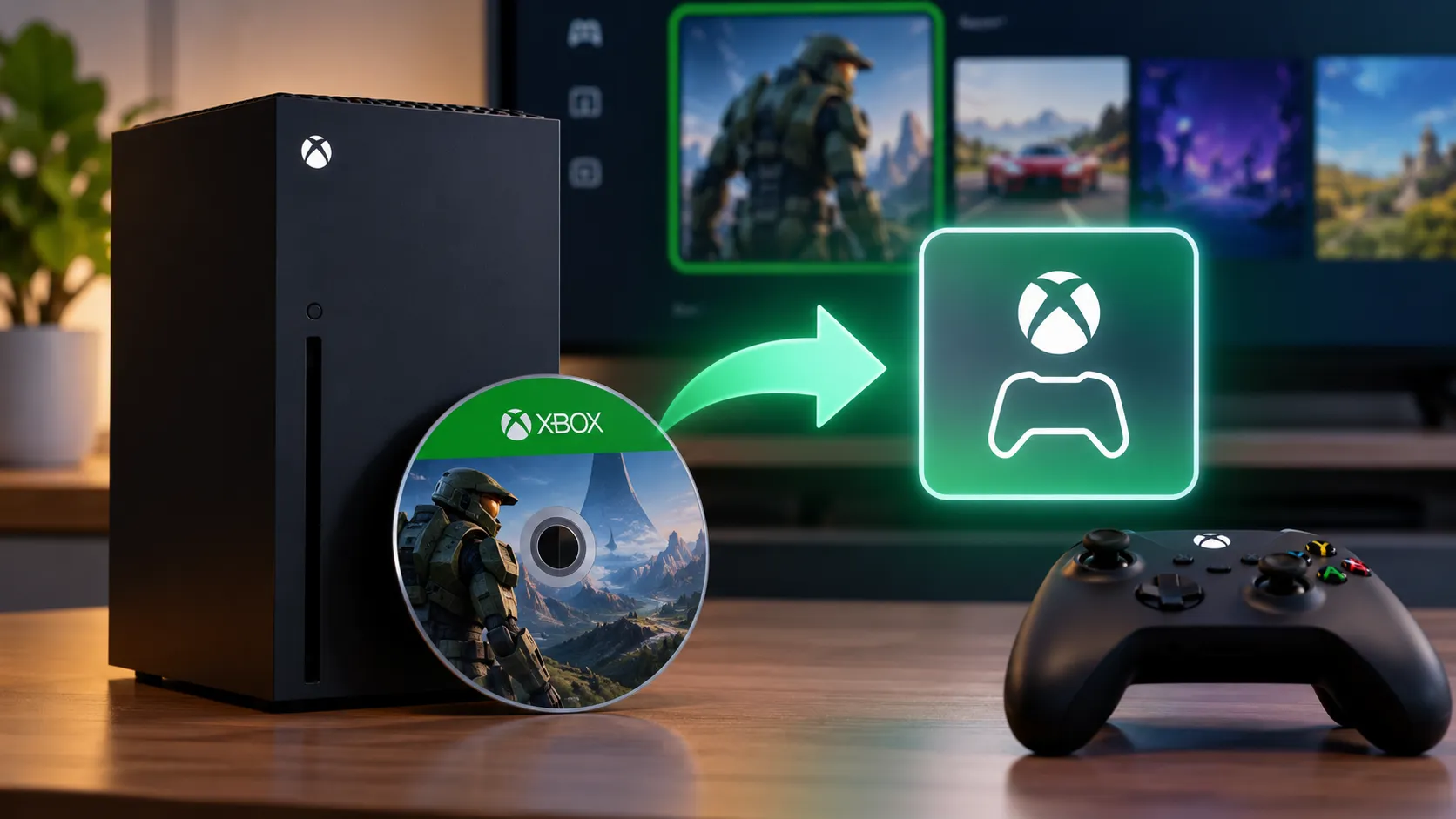
Reports that Halo: Campaign Evolved, a full remake of the original Combat Evolved with added missions, is headed to PlayStation 5 mark the end of that dynamic. Scanlines and Game Studio Unlocked have both reported the move, framing it as part of a broader multiplatform pivot that also includes Fable and Forza Horizon 6. Microsoft has not confirmed the Halo remake specifically, but The Verge called Halo's move to PlayStation "the clearest indication yet of the company's shift in priorities," describing it last October as "merely the apotheosis" of a strategy years in the making.
The business case for that strategy is coherent. What it cannot explain is what Xbox hardware is now for.
Why the new Halo remake is different from a normal port
The comparison to Grounded or Pentiment on Switch matters, because those ports were low-stakes experiments. The Verge reported last October that Xbox tested the waters with smaller titles before moving to bigger names: Hi-Fi Rush and Sea of Thieves on PS5, then Indiana Jones and Gears of War. Each step was individually defensible. Cumulatively, they were leaving a question open. Halo closes it.
The franchise's role in Xbox history was structural, not decorative. The original Xbox launched in 2001 as the first console with a built-in hard drive and Ethernet port, introduced Xbox Live, and became the first platform to deliver downloadable game patches, infrastructure the entire industry eventually copied, per Scanlines. Halo shipped alongside that hardware and gave players a specific, compelling reason to buy in. Fable and Forza are beloved franchises. Halo converted people not gradually, not rationally, but overnight, at the cost of a hundred games.
The remake is not a new Halo game. It is a remaster of a 2001 title, packaged with added missions and sent to a competitor's platform. Xbox's most culturally potent asset is 25 years old, and even that is no longer exclusive. The gap between what Halo represents historically and what it represents commercially today is exactly the tension the Halo remake makes impossible to paper over. Other ports were distribution experiments. This one signals there is nothing left that Xbox is protecting.
Xbox identity crisis: how the strategy got here
This didn't happen in isolation. Game Studio Unlocked traces the pivot to around 2017, when Xbox formally shifted from competing on hardware to maximizing platform reach, with Game Pass subscriptions as the center of gravity. The numbers made the logic obvious: the PS4 had outsold the Xbox One roughly 117 million units to 58 million, a near two-to-one gap that made fighting for hardware share increasingly expensive, per Game Studio Unlocked. The PS5 has since extended that gap to roughly 2.5 to 1 against Xbox Series hardware.
Game Pass grew steadily in response, climbing from around 6 million subscribers in 2019 to 33 million by 2023. Then it stalled. Microsoft reported 34 million subscribers in 2024 and has not updated the figure since, with mid-2025 estimates sitting around 36 million, per Game Studio Unlocked. Spencer's 2022 target of 100 million subscribers by 2030, confirmed by The Verge, is structurally out of reach. Slower subscriber growth is almost certainly part of why multiplatform expansion accelerated: if the subscription model can't scale on its own, getting Xbox games onto PlayStation at least generates revenue and visibility.
That's a publisher's calculation. It is not a console maker's.
Xbox's own messaging has made the tension visible without resolving it. The "This is an Xbox" campaign repositioned the brand as a state of play on any screen. Former Xbox president Sarah Bond told Mashable, as reported by The Verge last October, that locking games to a single device is "antiquated for most people." Sensible arguments for a games publisher. Not arguments for buying a specific piece of hardware.
The counterargument deserves a straight hearing. Xbox games have genuinely reached more people through multiplatforming: Sony reported that Indiana Jones, Oblivion Remastered, and Forza Horizon 5 all ranked among the top PS5 downloads after going multiplatform, per The Verge. Broader reach is real. It just doesn't answer why someone should own an Xbox console specifically, which is the only question that matters for the hardware business.
What Project Helix suggests about the next move
Project Helix, the reported codename for Microsoft's next console, extends the identity problem rather than resolving it. According to GDC reporting cited by Game Studio Unlocked earlier this year, Helix reportedly runs Windows underneath with an Xbox Mode interface on top; users could exit to a standard Windows desktop and install Steam, Epic, or GOG directly. Microsoft told developers at GDC to "build for PC" going forward. These details come from a single analytical source and remain unconfirmed by Microsoft, so treat them as informed speculation. But if the direction is accurate, the implication is plain: the next Xbox is not trying to be a distinct platform. It is trying to be a curated entry point to platforms that already exist.
Game Studio Unlocked reported projected pricing of $1,000 to $1,200, also unverified, with a consumer launch unlikely before late 2027. At that price point, per the same analysis, a buyer could instead purchase a PS6 and a Steam Deck. The exact figures may shift. The competitive problem doesn't.
The leadership transition sharpens the contradiction. Phil Spencer announced his retirement in February 2026 after more than a decade leading Xbox, per The Verge. His replacement, Asha Sharma, pledged "the return of Xbox" in her opening memo while simultaneously committing to making the brand feel "seamless, instant" across PC, mobile, and cloud. Those two commitments pull in opposite directions and no one has explained how they get reconciled.
Matt Booty's situation captures the underlying incoherence more precisely. The Verge reported last October that Booty called for "smaller games that give us prestige and awards" in a town hall, the day after Microsoft closed the studio behind Hi-Fi Rush a short, critically acclaimed, award-winning game that fit that description exactly.
The 2013 Xbox One failure followed a recognizable pattern: a premium device with a muddled pitch, while Sony launched a cheaper box with a single clean message and built a decade of hardware dominance on it. Helix is not the same mistake. But it rhymes. What the original Xbox and 360 offered and what neither Helix nor the current messaging offers is a reason to buy in that couldn't just as easily describe something else.
What this actually means for Xbox hardware owners
The erosion of exclusivity followed a deliberate sequence: small ports first, then larger ones, then flagship titles. Halo's reported arrival on PlayStation represents the end of that sequence, per The Verge and Game Studio Unlocked. For existing Xbox console owners, the practical implication is straightforward: future purchasing decisions now come down to price, ecosystem preference, and inertia. The hardware-exclusive value proposition is gone.
The remake also says something about where the Halo brand itself stands. The most powerful move Microsoft can make with its flagship franchise in 2026 is to remaster a game from 2001 and put it on a competitor's platform, per Scanlines. That isn't a comeback. It's an acknowledgment of where Halo's cultural weight currently lives, and how far that is from what the franchise once generated on its own.
Whether Sharma's "return of Xbox" amounts to anything concrete depends on whether new exclusives emerge that actually justify hardware ownership. No executive memo has explained how that works while simultaneously building for everywhere, per The Verge. The two commitments are not impossible to hold simultaneously, but nobody has drawn the map.
"More people can play our classic games" is a defensible thing for a publisher to say. It just isn't a reason to manufacture a console. Xbox started as the latter. The Halo remake is the clearest marker yet of when, and how completely, that changed.

Comments
Be the first, drop a comment!