





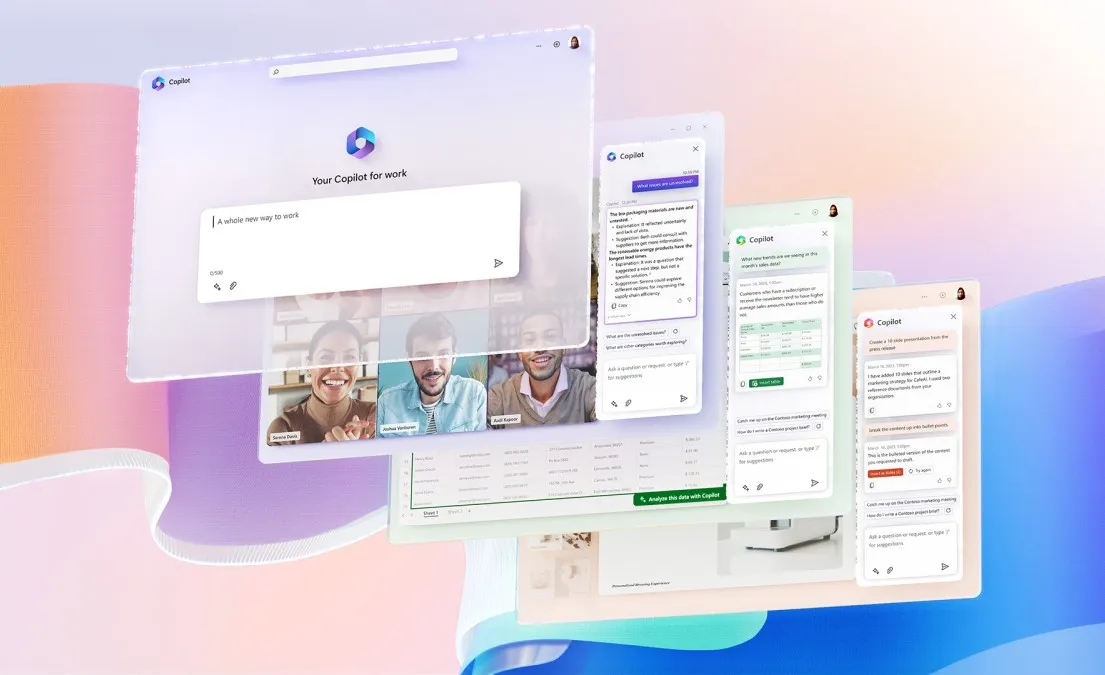
Satya Nadella told investors on Microsoft's Wednesday earnings call that the company will begin bringing Copilot's chat, coding, task-delegation, and autonomous-agent capabilities together in one Microsoft Copilot super app this quarter. It's the clearest confirmation yet that Microsoft's sprawling Copilot lineup is heading toward a single, unified Copilot app.
The announcement puts an official stamp on something Fortune had reported two months earlier: Microsoft has scattered multiple Copilot assistants across its products, and customers wanted one place to go instead of several. Nadella's remarks turn that reporting into confirmed strategy, coming from Microsoft's CEO rather than an anonymous source.
Nadella committed to a quarter and named the four pieces going into the merged app. He did not name a date, a price, or say whether the new app replaces Microsoft's existing standalone Copilot apps or runs alongside them.
What Nadella actually confirmed
Speaking to investors, Nadella said Microsoft is "bringing these Copilot experiences together, including Code, in one super app spanning both consumer and commercial experiences." That's a direct, on-the-record statement, not a leak and not an analyst's guess.
He attached a timeframe to it, not a date: "this quarter." Microsoft confirmed that the consolidation work is happening this quarter, but it did not give an exact launch date or define what will ship during the quarter.
The four named components are chat, Code, Cowork, and Autopilots. In Nadella's own framing, "Copilot is evolving rapidly from chat to Cowork to Autopilots." Distribution, pricing, and account handling all sit outside what Microsoft has confirmed publicly so far.
The Copilot super app's four named components
Chat and Code are the familiar pieces. Chat is the general-purpose assistant most users already know, and Code refers to Microsoft's coding-related Copilot experience, according to earlier reporting on the project. Both capabilities predate this announcement; what's new is Microsoft's plan to fold them into one app instead of keeping them in separate products.
Cowork and Autopilots are less familiar, and Nadella's own language suggests why they matter more. That same earlier reporting described Cowork as a task-delegation tool, distinct from a chatbot that only responds when asked. Nadella's framing suggests a move toward Autopilots acting on a user's behalf rather than waiting for a prompt, per his line about Copilot evolving "from chat to Cowork to Autopilots."
The announcement does not explain how an Autopilot would decide what task to take on, what permissions it would need to act inside a user's files or accounts, or how one interface presents four fairly different tools without turning into a maze of settings. Microsoft has named the four pillars. How they'll actually work together is still Microsoft's to explain.
Why Microsoft is consolidating now
Fortune's original report framed the project as Microsoft's answer to a "nagging problem": multiple Copilot assistants spread across its portfolio, with customers wanting one place to go instead of hunting through several apps. Copilot is already accessible throughout most of Windows, so a single front end could make those tools easier to find rather than requiring users to know which app has which feature.
Microsoft presented the announcement alongside usage figures that Nadella said showed stronger engagement. Conversations per user nearly doubled year over year, he said, and weekly engagement with Copilot is now on par with Outlook and Teams. He also said the time it takes customers to reach high monthly usage has dropped from months to days over the past year, and that satisfaction scores have doubled, though he didn't share the numbers behind either figure.
Microsoft is pitching the two threads as connected: fixing the fragmentation problem, the company suggests, is how already-growing usage becomes something durable rather than scattered. That's an inference the reporting supports, not something Nadella stated outright, and it still depends on launch details Microsoft hasn't released.
What enterprises and everyday users still don't know
For everyday users, the open question is how the app actually reaches them. It's unclear whether it arrives as a new download, gets built directly into Windows 11, or shows up through a browser. PCMag notes that if Microsoft ships it as part of Windows 11, it could appear on PCs without a separate install, though that's a possibility the outlet raised rather than something Microsoft has confirmed. Earlier reporting also suggested users would be able to switch between personal and enterprise Copilot modes inside one interface, but Microsoft hasn't formally described how that toggle would work.
For IT departments, the stakes are higher, and a single app that spans consumer and commercial use, and includes autonomous agents, raises questions administrators will need answered before they let employees near it. Among them: whether a personal Copilot login and a corporate one stay separated inside the same app; what files, emails, or documents an Autopilot can access to finish a task; whether an agent needs human approval before acting; whether an administrator can later audit what an Autopilot actually did; and how existing Copilot subscriptions map onto whatever the unified app charges.
Microsoft has not explained how these issues will be handled specifically within the unified app. Nadella's comment that he looks "forward to sharing more soon" remains the extent of the company's commitment on that front.
What to watch next
Microsoft has announced the container and the quarter. Whether the result is a meaningful consolidation of four different products or simply a new front end sitting on top of existing services depends on details the company hasn't shared yet: how personal and work identities separate, what an Autopilot is allowed to touch, and how current subscriptions carry over.
The Microsoft Copilot super app rollout, whenever it begins publicly, will show which of those questions Microsoft has answered, and which it has left for "soon."



Comments
Be the first, drop a comment!