





Microsoft Surface Camera Innovation: What AI Really Changes on Pro 11
If you've shopped for a Surface Pro 11 in the past year, you've probably seen it pitched as an AI-first camera device, complete with a high-resolution sensor and a chip that's supposed to make video calls smarter. That's the real story behind Microsoft Surface camera innovation on this generation of hardware, and it's worth separating what Microsoft added from what's actually been verified. The short version: the front camera carries a genuinely high 12.2MP resolution, a fast neural processor sits alongside it, and Microsoft uses that processor to run software features like background blur and eye contact correction. None of that proves calls look or sound better than before, and a firmware bug that surfaced last year shows how many more layers now sit between your face and the person on the other end of the call.
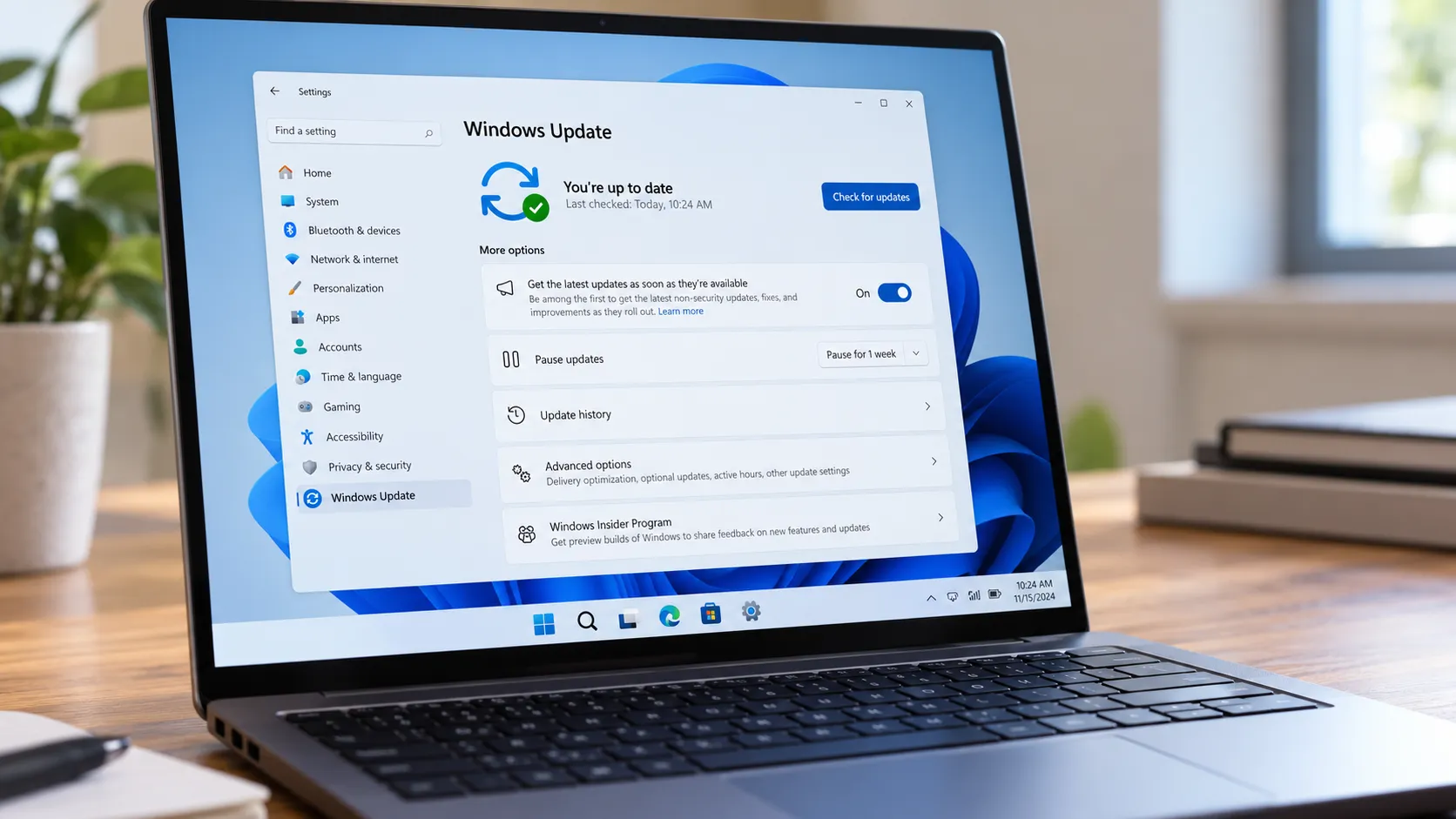
The documented failure affected Surface Pro 11 and Surface Laptop 7 systems running Windows 11 version 24H2 or later, and it showed up specifically when Windows Studio Effects were switched on: affected owners couldn't stream video during conference calls or record with the Windows Camera app (WindowsForum, last year). If that matches a problem you've had, open Settings, check Windows Update for pending firmware, install it, restart, and test a call with the same Studio Effects settings you used before. If your camera already works fine, the documented issue doesn't give you a reason to change anything; just keep the device updated normally. What follows breaks down what the hardware and Surface camera AI features actually do, what independent testing found, and where a separate Microsoft product runs into a different kind of camera limit entirely.
What Microsoft Surface camera innovation actually changes
Surface Pro 11 pairs a 12.2MP front camera with IR hardware for Windows Hello, plus a 10MP rear camera. Windows Central's reviewer called it one of the largest front-facing cameras by megapixel count they'd seen on any laptop, which is a reviewer's characterization rather than an industry benchmark, but worth noting since front-facing laptop cameras rarely get this kind of billing (Windows Central, 2024). Megapixel count alone doesn't tell you about lens quality or how the camera handles a dim room, so treat it as one data point rather than the whole story.
The device qualifies as a Copilot+ PC because its Qualcomm Hexagon NPU rates at 45 TOPS, clearing Microsoft's 40+ TOPS threshold for that classification (Windows Central, 2024). That chip powers Windows Studio Effects camera and audio features when switched on, including background blur, eye contact correction, and Voice Clarity, an audio rather than camera function (WindowsForum, last year). Coverage of the firmware update describes on-device NPU processing as lower-latency and better for privacy than routing video through the cloud, though that's a characterization from reporting rather than something independently measured here (WindowsForum, last year).
None of this proves AI processing makes video look better. Studio Effects are additional functions layered onto the camera feed, not a documented improvement to the underlying image. What you're actually buying is a high-resolution front camera and a chip capable of running effects, not a verified quality boost.
What independent testing found about the final image
DXOMARK ran the Surface Pro 11 through its laptop test suite, combining lab measurements with more than 20 hours of perceptual evaluation focused on how the camera renders faces during video calls (DXOMARK, 2024). The results landed somewhere in the middle. The camera preserved detail well across most conditions, produced pleasant color and white balance, and kept subjects consistently in focus. It also showed occasional clipping in bright areas, noticeable exposure instability, and visible noise across every lighting condition tested (DXOMARK, 2024).
One limit matters for anyone reading this as a verdict on the AI pipeline: the published evaluation does not report a comparison of Studio Effects on versus off, and it doesn't attribute the noise or exposure results to the sensor separately from any software processing (DXOMARK, 2024). So the rough edges found in testing can't be pinned on the AI features, and neither can the good detail and color. That distinction is the practical limit of Surface Pro camera technology right now: the NPU enables effects, but the available testing doesn't show that it improves the raw image one way or the other. Windows Central's separate description of the camera as "fantastic," folded into a 95/100 overall device score, reflects one reviewer's impression rather than a measured benchmark (Windows Central, 2024).
For anyone deciding whether to trust this camera for regular video calls, the practical read is straightforward: according to DXOMARK's testing, it handles decent lighting competently. If your calls happen in dim rooms or against a bright window, that same testing found noise and exposure problems persist there, and no amount of "AI camera" branding changes that on its own.
Why the camera experience depends on firmware, not just hardware
Studio Effects add software and driver components between the camera and the app: the NPU runtime and the Studio Effects modules sit in the path alongside the usual OS camera drivers. That layering doesn't prove AI processing caused any particular bug, but it does mean there are more places for something to break.
One of those places broke last year. Microsoft's own update notes, as quoted in reporting, describe a fix that addresses an issue where customers couldn't stream video during conference calls or record video with the Windows Camera app when using Studio Effects, covering Surface Pro 11 and Surface Laptop 7 (WindowsForum, last year). The published component list for that release included Hexagon NPU and Qualcomm audio subsystem updates, but the available reporting doesn't identify which specific component caused the regression, only that a fix targeting those parts resolved the symptom (WindowsForum, last year). That's reported secondhand, so check Microsoft's Surface update history directly and look for the entry matching your exact device before treating this as fully confirmed for your unit.
The fix targets devices running Windows 11 version 24H2 or later, arrives automatically through Windows Update, and is also available as manual driver and firmware packages for admins managing multiple machines (WindowsForum, last year). None of the reporting says how many devices were actually affected, and once a firmware update installs, it can't be rolled back by a typical user, so a current system restore point is worth having before applying it (WindowsForum, last year).
If Studio Effects have broken streaming or recording, confirm the device is a Surface Pro (11th Edition) or Surface Laptop (7th Edition) on Windows 11 24H2 or newer, then install anything pending under Settings > Windows Update and restart, since firmware changes typically need a reboot to finish. Turn Studio Effects back on and test a short call or recording in Teams, Zoom, or the Camera app, whichever mirrors the actual workflow. For fleets, reported guidance suggests piloting the update on roughly 5 to 10 representative devices for 7 to 14 days and running them through real conferencing workflows before pushing it everywhere, since the same irreversibility applies at scale (WindowsForum, last year).
A separate case: Surface Hub Smart Camera automatic framing limits
Everything above concerns NPU-backed Studio Effects and streaming reliability on a personal device. Surface Hub 3 raises a different question: whether a shared meeting room's camera can be locked to a fixed view. The two are parallel examples of camera controls running into limits, not evidence of one shared AI system across Microsoft's Surface lineup, and IT admins evaluating Surface Hub for meeting rooms need to know this distinction before promising a room something the hardware can't do.
Surface Hub 3's built-in Surface Hub Smart Camera includes automatic framing, sometimes called IntelliFrame, and its behavior varies by Windows edition. On Windows 11 Pro or Enterprise, automatic framing is off by default and has to be turned on manually. On Windows 10 Pro or Enterprise, automatic framing is always on and can't be disabled at all (Microsoft Q&A, earlier this year).
Leaving automatic framing off on Windows 11 gives the camera's default wide view, the closest thing available to a static shot. It is not a configurable crop. Neither Windows edition lets an admin permanently exclude part of a room from the frame, so there's no built-in way to keep, say, a whiteboard or a doorway out of view (Microsoft Q&A, earlier this year).
A response on Microsoft Q&A recommends, for anyone who needs genuine fixed framing, physically repositioning the Surface Hub or camera, or attaching an external USB camera with its own cropping controls (Microsoft Q&A, earlier this year). If a room needs a permanently cropped view for confidentiality, compliance, or a fixed presentation shot, check the Windows edition on that Surface Hub first. A wide default view won't satisfy that requirement on either edition.
What to do now
For Surface Pro 11 buyers, treat the 12.2MP camera and 45-TOPS NPU as hardware and feature-enablement specs, not proof of better low-light video; DXOMARK's testing shows a camera that's competent but still noisy and exposure-unstable, regardless of which Studio Effects are switched on. Owners who hit the Studio Effects streaming or recording failure should install the pending firmware, restart, and retest their usual conferencing app rather than assume it's still broken. Surface Hub 3 buyers and admins are working a different problem entirely: verify which Windows edition the unit runs before promising a room a fixed camera shot, and plan on an external USB camera if precise, permanent cropping is a genuine requirement rather than a nice-to-have.


Comments
Be the first, drop a comment!