





Microsoft Surface touch interface design: how haptics work
Every time a Surface Dial clicks under a fingertip or a Surface Slim Pen 2 pulses after a completed gesture, three things happen in sequence: something detects the input, software decides how to respond, and a small motor produces the sensation felt. That pipeline sits at the center of Microsoft Surface touch interface design, and Microsoft has now documented, at least partially, how it works at the operating system level.
What hasn't been documented is which Surface devices actually deliver that experience end to end. Windows supports haptic feedback through a dedicated API on compatible mouse, touchpad, and pen hardware, but Microsoft's own guidance says availability "varies by model and manufacturer" (Microsoft Design, three months ago). Microsoft notes its device list "is updated as new devices are added," which confirms a reference exists somewhere on Microsoft's side, but nothing published spells out the current haptic status of every Surface model on the market (Microsoft Design, three months ago).
Haptic feedback, in plain terms, means sensing an interaction, letting software choose a vibration pattern to represent it, then firing an actuator to produce that vibration. The feel is manufactured, not automatic. Three separate systems build on that idea across the Surface lineup: the physical Dial accessory, the Slim Pen 2's haptic motor, and the Windows InputHapticsManager API that lets apps request feedback directly. They share a pipeline but implement it differently, and having one piece working says nothing about whether the others do.
How Microsoft Surface touch interface design turns input into feel
Microsoft's design framework splits touch feedback into two categories. Passive feedback comes directly from physically interacting with hardware, like the click of a real mechanical button. Active feedback is generated by the device and controlled entirely through software (Microsoft Design, three months ago). Microsoft doesn't say how much of the feedback on any given Surface device falls into each bucket, only that both exist as design categories developers can build around.
Active feedback runs on predefined waveforms, and each one is shaped by three variables: intensity (how strong it feels), decay (how quickly it fades), and sharpness (whether it feels soft or crisp) (Microsoft Design, three months ago). That structure is why a well-built app can make a slider tick feel distinct from a completed gesture, even though both are ultimately vibrations from the same actuator.
Timing matters as much as the waveform itself. Microsoft's guidance recommends latency under 50 milliseconds so a response feels instantaneous. It also warns developers against firing feedback at every alignment boundary during a drag, since an object being moved can cross plenty of them, page center, guides, other objects, in quick succession (Microsoft Design, three months ago).
The recommended fix is to infer intent instead of reacting to every boundary crossing: fire feedback only when someone appears to be trying to land precisely on a position, not every time they cross a line while repositioning something quickly. That's a matter of app design, not a user setting, so two apps built on the same API can feel noticeably different depending on how closely a developer followed the guidance.
Surface Dial: the most documented piece of Microsoft Surface haptics
Of the three systems, the Surface Dial has the most independently detailed engineering record. An optical encoder inside the Dial measures rotation at 0.1° resolution, and that position data feeds a linear resonant actuator, or LRA, that simulates the feel of mechanical detents. The angular interval and intensity of each simulated click are configurable in software rather than fixed by any physical mechanism (Surface Dial paper, two years ago).
The Dial launched alongside the Surface Studio in 2016, and its design had to work around a real hardware limit. The Studio's touchscreen could support only one active input device at a time, and the Dial was meant to be used alongside the active Surface Pen already occupying that slot. That meant the Dial had to be detected passively, without transmitting its own electric pulses, which required testing conductive patterns on the underside of the device. Engineers built and tested 10 candidate patterns before settling on a "bullseye" design for mass production (Surface Dial paper, two years ago).
That paper is described as an invited technical paper rather than a peer-reviewed study, but it's still the most granular public account of how any Surface haptic hardware actually works. It also documents off-screen Windows use, with configurable key mapping that can control things like volume, zoom, or undo without touching a display at all (Surface Dial paper, two years ago).
Surface Slim Pen 2: confirmed specs versus Microsoft's marketing language
The Surface Slim Pen 2 mixes documented specifications with language that's harder to independently verify. On the confirmed side: the pen has a haptic motor, supports 4,096 levels of pressure sensitivity, and lists Zero Force Inking on its fact sheet, while Microsoft's own writeup describes ink appearing the instant the tip hits the screen (Slim Pen 2 fact sheet, three years ago; Microsoft, two years ago). Microsoft's broader design writeup also states that the haptic system delivers tactile signals confirming when a gesture like circling has been completed (Microsoft, two years ago).
Beyond that, Microsoft describes the Slim Pen as "meticulously crafted" to replicate the feel of writing on paper and calls the haptic system "groundbreaking." That's product marketing, not an independently tested comparison (Microsoft, two years ago). Nothing in the available material spells out how pressure sensing and haptic confirmation interact technically, so treat "paper-like" as Microsoft's own description rather than a verified spec.
Compatibility is where the gap matters most for current buyers. The fact sheet, published three years ago, lists haptic feedback as compatible only with Surface Pro 8 and Surface Laptop Studio running Windows 11 (Slim Pen 2 fact sheet, three years ago). Microsoft's newer marketing page mentions ink-enabled Copilot+ PCs like Surface Pro 11th Edition and Surface Laptop 7th Edition, but it never confirms haptic signals work on those devices the way they did on the older, listed models (Microsoft, two years ago). Anyone running a Slim Pen 2 on a newer Surface should verify haptic behavior on their own hardware rather than assume it carries over automatically.
What the Windows InputHapticsManager API actually proves
The InputHapticsManager API is the least tangible of the three systems because it isn't hardware at all. It's a developer-facing tool that lets an app request one of Windows' predefined waveforms and have the system route that feedback to the input device that most recently delivered input to the current thread, with device detection and fallback handled automatically (Microsoft Design, three months ago).
That targeting rule matters more than it sounds. The API goes after whichever compatible device sent the last input, not a fixed accessory the user picked. It doesn't mean software overrides hardware in some broader sense, just that Windows handles the routing logic so developers don't have to.
The API does not make every pen or touchpad vibrate on its own. The app has to request feedback, and Windows has to recognize the device as supported, before anything happens.
Comparing confirmed Microsoft Surface haptics across Dial, pen, and API
| System | Confirmed by source | Not established by supplied sources | User action |
|---|---|---|---|
| Surface Dial | 0.1° optical encoder driving an LRA, software-defined detents, BLE connection, configurable key mapping enabling off-screen use on any Windows PC (Surface Dial paper, two years ago) | How consistently detents feel across firmware versions or different app implementations | Check Dial pairing and battery status |
| Surface Slim Pen 2 | Haptic motor, 4,096 pressure levels, Zero Force Inking, gesture-completion signals (Slim Pen 2 fact sheet, three years ago) | Whether haptics work the same way on newer Copilot+ PCs beyond the models named in the older fact sheet (Microsoft, two years ago) | Check pen generation, host Surface model, and Windows version |
| Windows InputHapticsManager API | App-facing waveform requests, most-recent-input routing, automatic device detection and fallback (Microsoft Design, three months ago) | Which specific apps have integrated it; adoption isn't publicly quantified | Check whether the app in use documents haptic support |
None of these three systems governs every haptic interaction on a Surface device. The Dial generates its own detents through its own actuator, the Slim Pen 2's motor fires based on the pen's built-in hardware, and the API only matters for apps written to call it.
Why haptics feel like a later layer on Surface's touch interface
Surface's touch story didn't begin with vibration. Former Windows design lead Jensen Harris recounts that Microsoft's original touch interface work started around 2009 as a three-year effort centered on finger ergonomics, not tactile response. Engineers tested grip and reach using custom software that produced heat maps showing which parts of a screen were easy or hard to reach with a thumb, and that research shaped larger touch targets and edge-swipe gestures for functions like search and settings (Jensen Harris, earlier this year).
The first Surface devices, an ARM-based Surface and an Intel-based Surface Pro, shipped in 2012, years before the Dial or any pen haptic motor joined the lineup (Jensen Harris, earlier this year). That history documents an early focus on touch ergonomics, not a direct engineering lineage to today's haptic systems. It explains why haptics feel like a later addition to Surface's design rather than something baked in from the start, not a step-by-step roadmap to the Dial, pen, or API.
What to check when Surface haptics do not work
Before treating a missing buzz or click as a bug, confirm a few things directly on the hardware in question:
- Confirm the exact pen model and generation, then check it against Microsoft's documented compatibility rather than assuming support carries over between generations.
- Confirm the specific Surface model and Windows version, since haptic support depends on the device, the Windows implementation, and app behavior together.
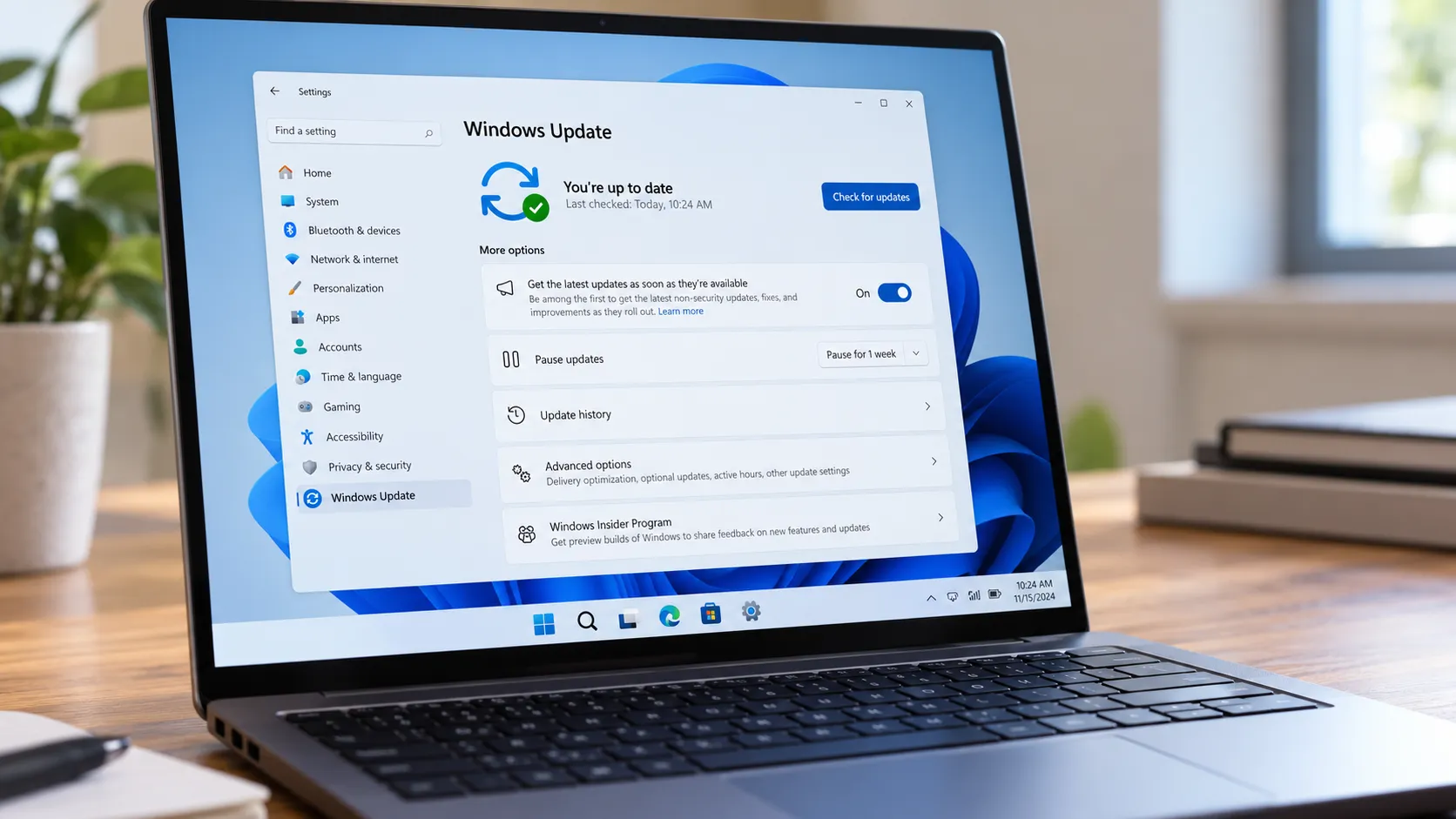
- Install available Windows and device updates, then retest. Nothing in the supplied research confirms that an update alone adds haptic support to an otherwise unsupported model.
- Check whether the app in use documents or demonstrates haptic support, since the API only fires when an app calls it.
- Confirm system haptic intensity hasn't been turned down or off in Windows settings.
The Dial's mechanics have the strongest independent paper trail of the three, covering its encoder, actuator, and detection method in detail. The Slim Pen 2's "paper-like" feel is largely a Microsoft product description paired with a compatibility list that predates current Copilot+ PC hardware. The API's real-world reach depends on app adoption Microsoft hasn't quantified anywhere in public.
If a Slim Pen 2 is in hand, check the exact Surface model and Windows version against Microsoft's current support information, then test haptics in a documented app after installing available updates. If a Dial is the accessory in question, test its detents and pairing on their own terms; don't treat an app's support for the newer Windows API as proof the Dial itself is working, since the two systems run independently of each other.


Comments
Be the first, drop a comment!