



Nvidia RTX Spark Windows on Arm Laptops: What's Ready Now
Nvidia RTX Spark Windows on Arm laptops are shipping at workstation prices before the software built around them is finished. The Surface Laptop Ultra configuration Tom's Hardware tested lists for $5,899 with 1TB of storage, and lead times on that unit already stretch into late December, according to Tom's Hardware's week-long review.
Nvidia detailed a wave of software updates for the platform in a blog post this week, crediting ecosystem partners for most of the actual work: Microsoft is adding a llama.cpp backend to Windows ML and shipping a Windows-native model-running app, while other partners are rolling out agent-security tooling, according to the Nvidia Blog. The hardware side has backing from Microsoft, Dell, HP, MSI, Lenovo, and Asus, all of which announced RTX Spark devices earlier this year, IEEE Spectrum reported.
Tom's Hardware spent a week using an RTX Spark-powered Surface Laptop Ultra as a daily driver and found it behaved like an ordinary Windows machine, aside from "a couple of tiny paper cuts," according to the review. The same review concluded that Windows "hasn't fully caught up to Nvidia's ambitions for secure, manageable local agents," a gap worth sorting through before anyone wires $5,899 into a PC.
This article splits the platform's software claims into four buckets: available now, beta or preview, announced but not shipping, and independently unverified. Readiness depends on the specific app a buyer needs, not on the platform as a whole.
Where Nvidia RTX Spark Windows on Arm laptops stand right now
Nvidia's October 13 announcement and the independent reviews that followed sort into four clear tiers:
- Available now: Windows ML's llama.cpp backend, the Llama Windows system-tray app, and Microsoft's MAI 1.1 Coding Flash model running locally are all shipping, per the Nvidia Blog. OpenClaw and GitHub Copilot already support Microsoft Execution Containers, Nvidia says.
- Beta or preview: Adobe's RTX Spark optimizations for Photoshop and Premiere are in beta, and MXC itself remains an "early preview" SDK, according to IEEE Spectrum.
- Announced but not shipping: Adobe Substance 3D updates are listed as "coming soon," and Hermes Agent isn't expected to add MXC and granular OpenShell controls until the end of this month, per the Nvidia Blog.
- Independently unverified: Nvidia's "all-day battery life" claim and broader RTX Spark AI performance claims beyond the Qwen-model benchmarks haven't been tested under controlled conditions, according to Tom's Guide and Tom's Hardware.
What Windows on Arm local AI laptops can run today
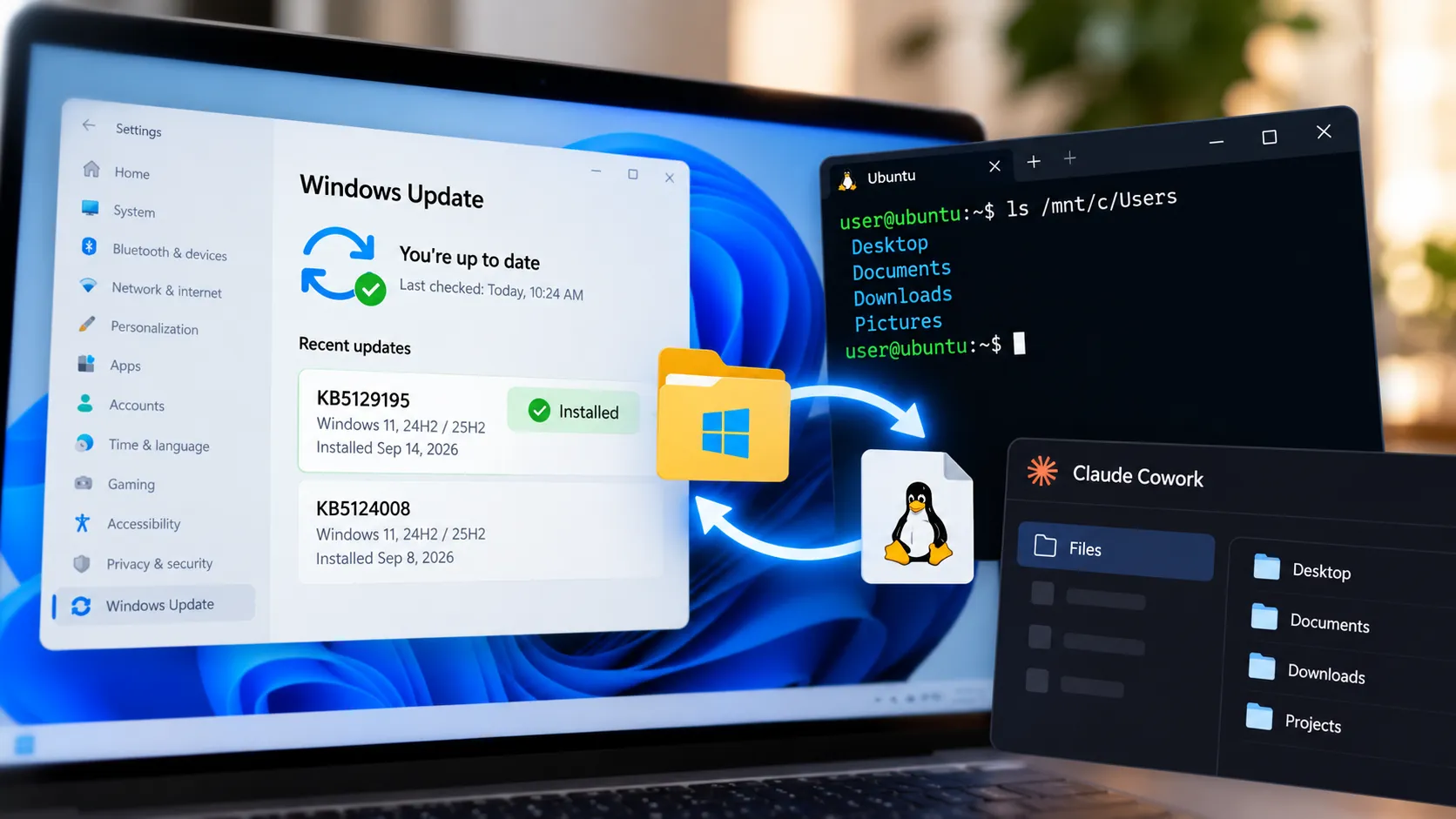
Windows ML now runs llama.cpp as a backend, extending the models it supports and unlocking Nvidia's RTX Spark-specific tuning. It ships alongside Llama Windows, a Windows 11 system-tray app that lets users browse and launch local models, including recommended downloads from the Hugging Face Hub, without touching a command line, according to the Nvidia Blog.
Microsoft's MAI 1.1 Coding Flash model is also now available for local, on-device use instead of routing requests to the cloud. Several agent apps, including GitHub Copilot and OpenClaw, are built to recommend an optimized local model and configuration, then set it up in a few clicks, per Nvidia.
Developers get two paths into a full coding environment: a new Windows Developer Config that installs common developer tools directly, or Windows Subsystem for Linux, which gives access to the same packages used to publish to the cloud, Nvidia says.
Creative software lags behind. Adobe's RTX Spark optimizations for Photoshop and Premiere are in beta, and Substance 3D updates are listed as "coming soon." Creative pros should test rather than assume these integrations are production-ready before building a workflow around them.
Nvidia is also releasing AI playbooks for RTX Spark tomorrow, October 16, according to the blog post, one more sign that this ecosystem is filling in pieces rather than shipping as a finished package.
Autonomous AI agents: why security support still varies by app
Microsoft Execution Containers, the sandbox meant to let agents act independently while staying walled off from unauthorized data, remains an "early preview" SDK rather than a finished, broadly tested feature, according to IEEE Spectrum.
Support for it is uneven. OpenClaw and GitHub Copilot now support MXC, but Hermes Agent isn't expected to add MXC and granular OpenShell controls until the end of this month, per the Nvidia Blog.
That distinction matters most for agents taking real actions on sensitive files or systems. Buyers who just want to run local chat or coding models, without autonomous task execution, don't need MXC support to get value from the platform today.
Nvidia has also published MCP connectors for its own apps, including Broadcast, Omniverse, RTX Remix, and a library of CUDA-X Skills, the blog post confirms. That proves agent connectivity to Nvidia's own software; it doesn't prove broad third-party app coverage.
Performance: what independent testing on the Nvidia RTX Spark Superchip actually shows
Tom's Hardware's AgentPerf-local benchmark, run with the dense Qwen 3.8-27B model, had the RTX Spark-powered Surface Laptop Ultra finish in 8 minutes versus 10 minutes for a 14-inch M5 Max MacBook Pro and 40 minutes for AMD's Ryzen AI Max+ 395, according to the outlet's testing.
That gap against AMD narrows sharply on a lighter model. Running the Qwen 3.6 35B A3B mixture-of-experts model, the Ryzen AI Halo system completed the same benchmark in what Tom's Hardware called a "more reasonable" 13 minutes, per the review. The headline result is model-specific, not a universal advantage.
The benchmark measured end-to-end task completion rather than raw tokens-per-second, and Tom's Hardware built llama.cpp from source on each machine to use its native acceleration stack, a methodology meant to mirror real agent workflows instead of synthetic throughput numbers, the outlet explained.
The results still come from a single OEM device tested against two models. Tom's Hardware itself noted that the Surface Laptop Ultra's larger 140W charger, compared with the MacBook Pro's 96W charger, may account for part of the gap rather than software maturity alone. Treat the numbers as directional, not a final verdict.
Where RTX Spark still falls short
Gaming remains secondary on this platform. Most titles aren't natively compiled for the Arm CPU, and the platform's 300 GB/s shared memory bandwidth trails the RTX 5060 Mobile's dedicated 384 GB/s, according to Tom's Hardware. In testing, Gears of War: E-Day was CPU-bound and hit a hang during a map transition.
Battery claims still lack independent verification. At a trade-show demo, Tom's Guide watched an RTX Spark Surface Laptop Ultra run for 5.5 hours before a low-battery warning appeared, with plugged and unplugged frame rates matching during a Gears of War comparison. But the outlet said there isn't anything concrete yet beyond Nvidia's "all-day battery life" claim, since the demo wasn't a controlled lab test, Tom's Guide reported.
Nvidia's broader ambitions also face a headwind that has nothing to do with software: rising DRAM and NAND prices, partly driven by the company's own Vera Rubin rollout, according to Tom's Hardware. The outlet didn't say how that will affect future RTX Spark pricing specifically, but it's a cost pressure worth watching for anyone weighing whether to buy now or wait.
What to check before you buy
Run through a short checklist before spending nearly $6,000. Confirm the exact laptop's memory and storage configuration and price, verify that the target AI app has shipped RTX Spark support (and MXC specifically if it will act autonomously on sensitive data), check whether required Windows apps run natively on Arm or only through emulation, and confirm any creative-app feature needed is out of beta.
What's solid today is narrower than the marketing suggests but still genuine. Windows ML's llama.cpp backend, Llama Windows, and local coding-model support are shipping now. In Tom's Hardware's own agentic benchmark, the RTX Spark-powered Surface Laptop Ultra running Qwen 3.8-27B finished in 8 minutes against 10 minutes for a 14-inch M5 Max MacBook Pro, a result reached independently of Nvidia's own marketing.
Wait for independent battery testing and broader benchmark coverage beyond Qwen models before treating RTX Spark as a general-purpose laptop replacement. Reconfirm MXC and app-specific support closer to purchase, since several integrations, including Hermes Agent's security controls, are still rolling out through the end of this month.




Comments
Be the first, drop a comment!