





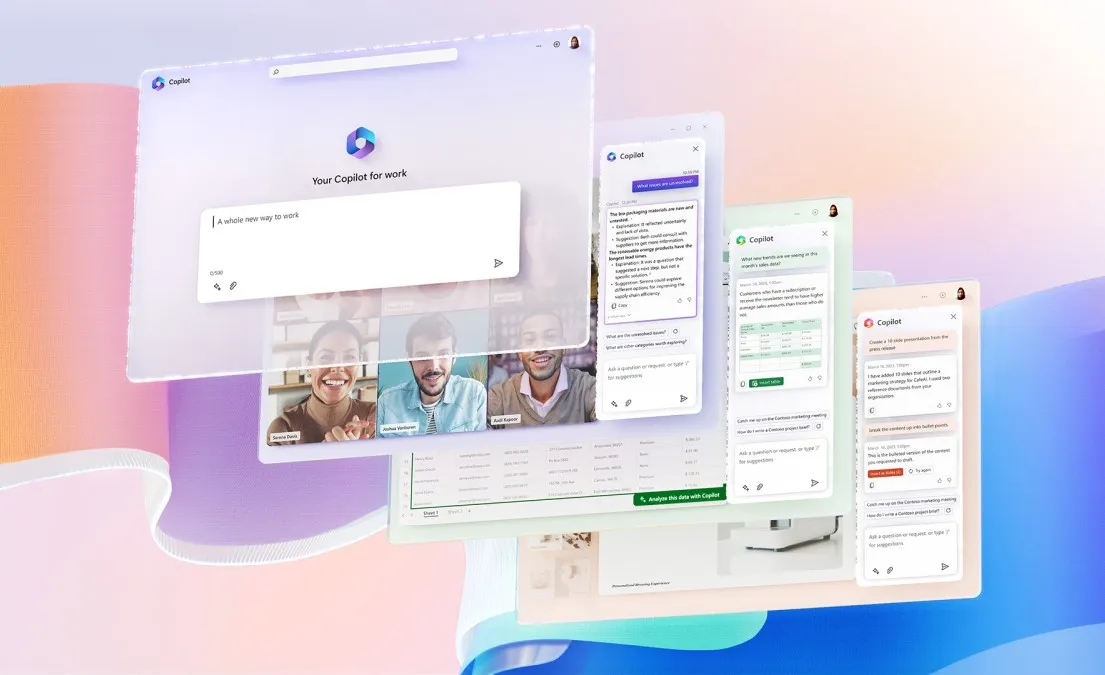
Ask "what is Microsoft Copilot" and you'll still get several different correct answers, because Microsoft uses the Copilot name across a unified chat app, AI features inside Word and Excel, a class of Windows PCs, work-account licenses, and tools for building custom agents.
The naming got even trickier in September 2026. Microsoft says Microsoft 365 Copilot is now named Microsoft Copilot, while Microsoft 365 Copilot Chat is now Microsoft Copilot Chat. The old Microsoft Copilot and Microsoft 365 Copilot app installations are also being merged into a single Microsoft Copilot app experience.
That app adapts to the account you sign in with. A personal Microsoft account gets a personal Copilot experience, while a work or school account can surface organizational data and features based on the licenses and permissions assigned to that account.
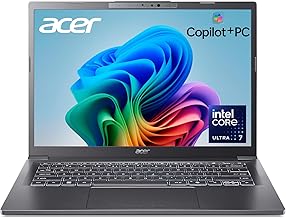
A separate hardware category, Copilot+ PCs, covers Windows computers with NPUs, or Neural Processing Units, capable of running supported AI workloads locally. Features such as Microsoft's Phi Silica small language model can execute on-device rather than sending every task to the cloud.
This guide sorts out which Microsoft Copilot product applies to your situation, walks through how to check what you already have, and covers what the paid tiers actually add.
What Is Microsoft Copilot, and Which Version Do You Have?
The easiest way to untangle the name is to separate the main Copilot experiences:
Microsoft Copilot app and chat: Microsoft's general AI assistant. You can chat, create images, upload files, and use other features for free, subject to usage limits and available capacity. Signing in and paying for a qualifying Microsoft 365 plan raises limits and adds features.
Copilot in Microsoft 365 apps for personal accounts: AI features inside Word, Excel, PowerPoint, Outlook, OneNote, and other Microsoft apps. Access depends on whether the Microsoft account owns a qualifying Personal, Family, Premium, or Pro subscription.
Microsoft Copilot for work or school: Copilot experiences tied to a Microsoft Entra work or school account. What the assistant can access and which features appear depend on the organization's Microsoft 365 plan, assigned Copilot license, and the user's existing permissions.
Copilot+ PCs: A Windows hardware category built around an NPU capable of running supported AI components locally. Buying a Copilot+ PC doesn't automatically buy a Microsoft 365 subscription or a paid Copilot license.
Copilot Studio: Microsoft's separate platform for building and publishing custom agents. Organizations can distribute those agents through channels including Microsoft Copilot, Teams, SharePoint, websites, and other supported destinations.
The important distinction is where Copilot gets its context.
A general Copilot chat can answer questions without being tied to a particular document. Copilot inside Word can work with the document you're editing, Excel can analyze spreadsheet data, and Outlook can summarize or help draft email.
For work accounts, Copilot is designed around the permissions the signed-in user already has. It doesn't give someone automatic access to files, messages, or other organizational data that account wasn't already permitted to see.
If you're on a personal Microsoft account with no employer involved, go straight to the personal-account steps below.
If you're on a work or school account, your capabilities depend on licenses and policies assigned by the organization.
If you're shopping for a laptop and trying to figure out what "Copilot+" means on the spec sheet, that's a hardware question covered further down and separate from the subscription decision.
How to Check Which Copilot You're Already Paying For
Personal Microsoft accounts
Check your Microsoft 365 subscription under your Microsoft account's Services & subscriptions page.
Microsoft currently sells several consumer plans with different Copilot access and usage limits, including Personal, Family, Premium, and Pro.
If you're on a Family or Premium plan, check whether you're actually the subscription owner. Microsoft says the AI features included with those plans are available only to the subscription owner and aren't shared with the other people covered by the subscription.
That restriction applies even though Microsoft 365 Family can otherwise be shared with up to six people.
Work or school accounts
Microsoft now provides an official way to check your Copilot license.
Your account can display one of several designations:
Copilot Chat (Basic): You don't have the Microsoft Copilot add-on license and don't have Copilot directly inside Word, Excel, PowerPoint, and OneNote.
M365 Copilot (Basic): You don't have the premium Microsoft Copilot add-on license, but your account has standard Copilot access in supported Microsoft 365 apps.
M365 Copilot (Premium): Your account has the Microsoft Copilot add-on license and priority access to the fuller Copilot experience in Microsoft 365 apps.
Microsoft still uses those labels in its license-checking guidance, even as the broader product name shifts from Microsoft 365 Copilot to Microsoft Copilot.
One thing that no longer works as a reliable license test is simply looking for the old Copilot button on the ribbon.
In Word, Excel, and PowerPoint, Microsoft has moved Copilot into a Dynamic Action Button in the corner of the document. The button itself doesn't prove that a work account has the premium add-on. Microsoft says it appears for users who have Copilot access through a qualifying consumer subscription or Microsoft Copilot work license.
If Copilot seems to be missing, check the Dynamic Action Button first. Microsoft's current troubleshooting guidance also points to the signed-in account, license, app build, update channel, and privacy settings as common causes.
What's Free, What's Paid, and What Each Tier Buys
Microsoft draws several different lines between free chat, personal Microsoft 365 subscriptions, and organization-assigned work access.
Free Microsoft Copilot
The Microsoft Copilot app remains free to use for general chat.
Microsoft says free users can chat with Copilot, create images, upload files, and use other features without paying, but availability is subject to capacity and usage limits.
When a limit is reached, users can wait for it to reset or move to a qualifying paid Microsoft 365 plan for higher limits and additional features.
Microsoft 365 Personal
Microsoft's current US price is $9.99 per month or $99.99 per year.
Personal covers one person and includes desktop Microsoft 365 apps with Copilot, 1TB of cloud storage, and higher Copilot usage than the free tier.
Microsoft 365 Family
The current US price is $12.99 per month or $129.99 per year.
Family extends the broader Microsoft 365 subscription to as many as six people, with up to 6TB of total storage at 1TB per person.
The important Copilot limitation remains: AI benefits are for the subscription owner only. Other people sharing the Family subscription don't inherit the owner's Copilot access in Word, Excel, PowerPoint, Outlook, and the other covered apps.
Microsoft 365 Premium
The current US price is $19.99 per month or $199.99 per year.
Premium includes the Family benefits for up to six people, while the subscription owner gets more extensive Copilot usage, access to advanced AI features, higher image-generation limits, and agentic research and analytics capabilities.
Microsoft describes Premium as the option for heavier AI users rather than as a completely separate assistant.
Microsoft 365 Pro
Microsoft now also sells Microsoft 365 Pro for $99.99 per month, with monthly billing only.
Microsoft positions Pro above Premium for users who need its highest Copilot usage allowances, including higher limits for agentic AI, visual AI assistance, AI-generated audio, and other advanced Copilot capabilities.
That tier wasn't in the pricing snapshot used in the original draft, so anyone comparing plans in 2026 should include it.
Current prices and feature limits can change, so check Microsoft's live individual Copilot pricing page before subscribing.
Work-account Copilot
Work licensing follows a different system.
Microsoft Copilot Chat is included at no extra charge with eligible Microsoft 365 organizational subscriptions for web-grounded chat.
Using work-grounded chat and the fuller Microsoft Copilot experience requires the appropriate Microsoft Copilot license assigned through the organization.
A personal Microsoft 365 subscription does not replace an employer-assigned work license.
A Few Subscription Details That Are Easy to Miss
If you're testing Microsoft 365 through a free trial, watch the renewal terms. Microsoft says subscriptions automatically renew unless they're canceled through the Microsoft account.
Excel also has an important requirement.
Microsoft says Copilot in Excel requires AutoSave to be enabled, which means the workbook must be saved to OneDrive. Copilot won't work on a local unsaved spreadsheet.
Feature availability can also vary by app, device, language, market, and subscription tier.
Usage isn't simply "unlimited" because you're paying. Microsoft's current AI credits and limits documentation gives different limits to different features and plans, and Microsoft says those limits can change as models and services evolve.
What Copilot Can Do, According to Microsoft
These are Microsoft's advertised capabilities rather than guarantees about the quality of every result, which matters if you're using Copilot for consequential work.
In Word, Copilot can draft, rewrite, summarize, and edit text using the document and other material you provide.
In Excel, Copilot can help analyze workbook data and answer questions about it.
In PowerPoint, it can help turn prompts or source material into presentations and refine existing slides.
In Outlook, Copilot can summarize email threads and help draft messages.
Microsoft's own documentation also warns that generative AI output can vary and can be inaccurate. Treat important factual, financial, legal, medical, or business-critical output as something to verify rather than something to accept solely because Copilot produced it.
What a Copilot+ PC Actually Adds
Buying a Copilot+ PC is a separate decision from paying for Microsoft 365 Copilot features.
The Copilot+ name refers to a class of Windows PCs with hardware capable of running supported AI workloads locally, particularly through an NPU.
Microsoft's Phi Silica components are a clear example. Microsoft distributes separate Phi Silica builds for supported Qualcomm, Intel, and AMD Copilot+ PCs.
Phi Silica is a compact Microsoft language model optimized for the device's NPU. Microsoft says it can perform supported language tasks such as text understanding, summarization, rewriting, and short-form content generation directly on the PC rather than sending those tasks to the cloud.
Those AI components arrive through Windows Update and can depend on the particular processor and Windows version.
That doesn't mean every Copilot interaction on a Copilot+ PC runs locally. The hardware category provides local AI capabilities for specific Windows features, while other Copilot experiences can still rely on cloud models and services.
And buying a Copilot+ PC doesn't establish that you have Microsoft 365 Personal, Premium, Pro, or a work Microsoft Copilot license.
Hardware and subscription are separate purchases.
Where Copilot Studio Fits
Copilot Studio is another product with the Copilot name, but it serves a different job.
Organizations and makers use it to build custom agents with their own instructions, knowledge sources, workflows, and integrations.
Once published, those agents can be distributed to supported channels such as Microsoft Copilot, Teams, SharePoint, websites, and other endpoints depending on the configuration and licensing.
That makes Copilot Studio relevant to companies building their own AI workflows, but it isn't something a normal consumer needs simply to use Copilot chat or Copilot inside Word.
Before You Pay for Anything
Work through this in order before spending money on anything Copilot-related:
Figure out whether you're using a personal account or a work or school account. That determines which licensing path applies.
Personal account: Check your current Microsoft 365 subscription in Services & subscriptions.
Family or Premium account: Confirm you're the subscription owner, because the included AI benefits don't transfer to other members.
Work or school account: Check Microsoft's Copilot license designation for the signed-in account, or ask IT if you're unsure what has been assigned.
If Copilot disappeared from Word, Excel, or PowerPoint: Look for the Dynamic Action Button before assuming access was removed.
Test the exact workflow you need. For Excel, that includes saving the workbook to OneDrive and enabling AutoSave.
Compare current usage limits, not just plan names. Personal, Family, Premium, and Pro provide different AI limits.
Starting a trial? Note the renewal date and cancel before it if you don't want the subscription to renew automatically.
Shopping for a Copilot+ PC? Treat its local AI hardware as separate from Microsoft 365 and work-account licensing.
For personal users, the simplest check is your current Microsoft 365 tier and whether you're the subscription owner.
For work-account users, check the license assigned to the account rather than guessing from whichever Copilot button happens to appear.
And if you're eyeing a Copilot+ PC, treat it as a hardware decision about which AI workloads that machine can run locally, not as a substitute for whatever Microsoft Copilot subscription or work license you do or don't already have.




Comments
Be the first, drop a comment!