





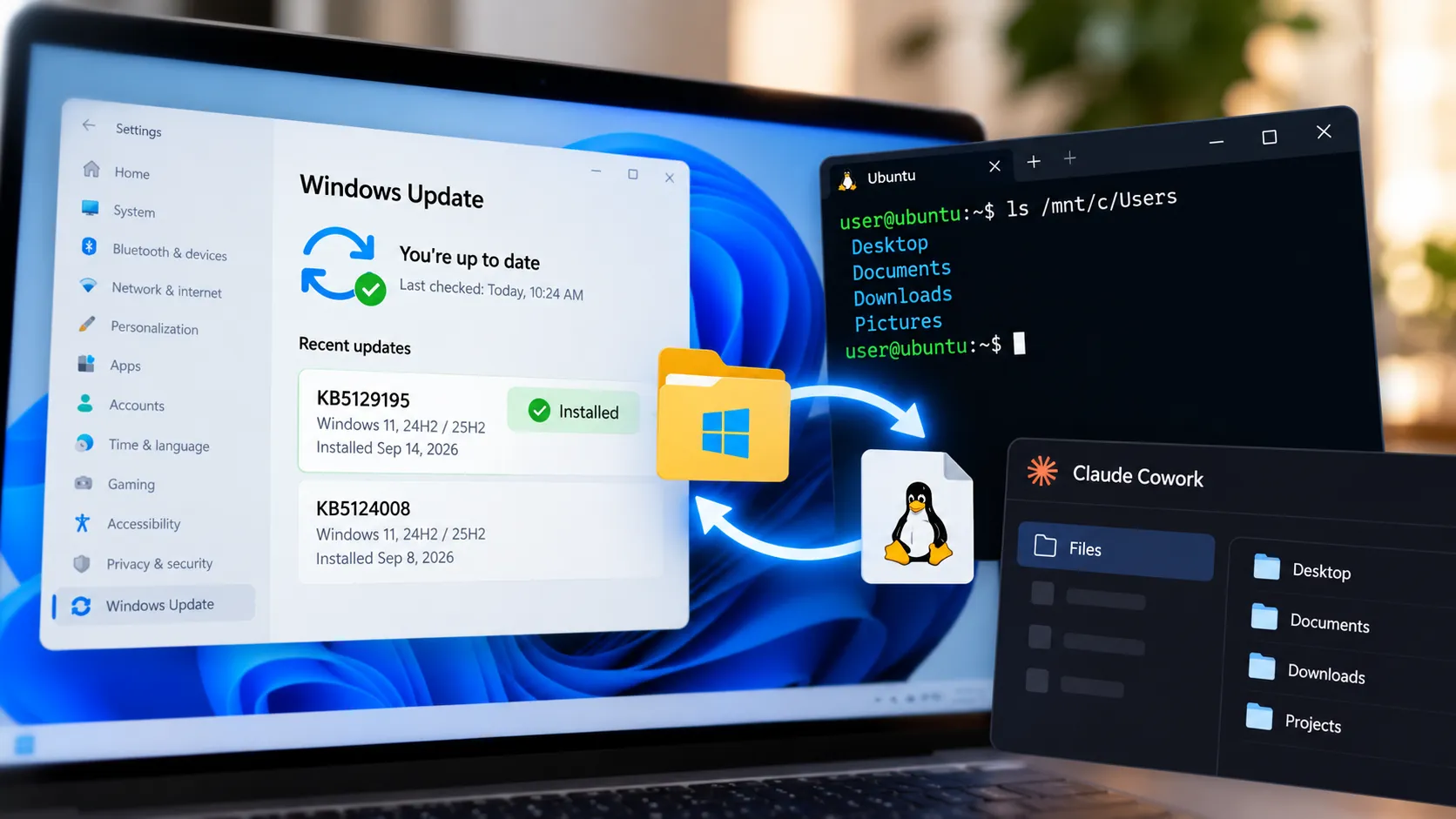
Microsoft released the Windows 11 July preview update this week, pushing builds 26100.8968 and 26200.8968 to Windows Insiders in the Release Preview channel on versions 24H2 and 25H2 respectively. The update spans File Explorer, Search, Voice Access, Windows Hello, touchpads, battery settings, and the Start menu, according to PCWorld.
Classified as a nonsecurity, quality-improvement update, the scope goes well beyond routine maintenance. The changes include long-overdue usability corrections, a notable accessibility upgrade in Voice Isolation, and an expansion of Windows Hello's hardware-backed biometric sign-in to external fingerprint sensors. Neowin documented the full feature set across both versions earlier this week.
The builds are currently available only to Windows Insiders. They will later be released to general users as an optional update, with no specific timeline confirmed.
Windows 11 July preview update: File Explorer, Search, and Start changes
The most visible File Explorer change is the one users will notice first: file sizes in details view now display as MB or GB rather than raw kilobyte counts. Middle-clicking a folder opens it in a new tab, behavior already familiar to anyone who uses a browser, and file thumbnails in the Recommended section are now crisper and easier to read. PCWorld documented all three changes.
Search gets a round of accuracy fixes. Settings search has been retuned to surface more relevant results toward the top. The Start menu also sees a few targeted fixes. View preferences now persist more reliably across sessions, keyboard navigation within Start has been improved, and the account section surfaces current Microsoft subscription status directly. Taken together with the Explorer and Search fixes, these are the kinds of changes users are likely to notice right away without needing to learn anything new.
Voice Access and accessibility updates
Voice Access gains Voice Isolation in this build. The feature filters ambient noise and can optionally suppress other speakers in the room, making it considerably more usable in shared spaces. Three modes are now selectable under Voice Access settings: full Voice Isolation, which requires a one-time voice enrollment to distinguish the user from others in the room; background noise removal without enrollment; and unfiltered input. Neowin documented all three modes. The change could be especially useful for users who dictate in open offices, have motor impairments, or rely on Voice Access as a primary input method.
Korean language support has been added to Voice Access as well. On the Magnifier side, the horizontal and vertical touch pan bars that previously overlaid magnified content are now hidden by default, reducing visual obstruction, though they remain available in Settings for those who need them, Neowin confirmed.
Fluid dictation is now off by default for new users, with a teaching tip shown the first time the feature is invoked rather than silent activation. Mouse cursor size now persists more reliably across sessions. Winaero noted the fluid dictation change yesterday. Neither is a dramatic shift, but both address friction points that users depending on these features encountered regularly.
Windows 11 preview build
Windows Hello Enhanced Sign-in Security (ESS) now supports external peripheral fingerprint sensors, not just built-in ones. That extends hardware-backed biometric sign-in to desktop PCs and other Windows 11 machines, including Copilot+ PCs, that previously lacked integrated biometrics.
Setup involves connecting a supported ESS fingerprint reader and enrolling via Settings > Accounts > Sign-in options. The feature was first disclosed in early 2026 and is now beginning its rollout, according to Neowin.
Precision touchpad users get two new controls: an adjustable baseline speed for scroll and zoom gestures, and an accelerated scrolling mode that builds momentum the longer a gesture continues. PCWorld noted both additions. On a precision touchpad, these address a real speed limitation when moving through long documents.
Two further changes round out this section. The Energy Saver threshold setting, which lets users define the battery percentage at which power-saving mode activates automatically, has been restored after being removed in a prior update. For new users, the lock screen now defaults to showing only the Weather widget, trimming a busier previous default.
Rollout context: servicing issues to know about
These preview builds arrive shortly after two separate issues in the update pipeline. A conflict between an Intel driver and the new Windows USB-C Connection Manager interface, introduced in the June 23 preview update (KB5095093), caused performance, power consumption, and system behavior problems on a subset of Dell devices.
As a mitigation, Microsoft temporarily withheld the July 14 security update (KB5101650) from affected machines. An out-of-band update released July 18 (KB5121767) resolved the issue, and devices that missed the security update are now being offered the OOB fix, according to Microsoft's release health documentation.
A separate WSUS synchronization problem, which caused timeouts during enterprise update deployments, was addressed with a service-side fix on July 18. Newly installed or rebuilt WSUS servers after that date should not encounter it, Microsoft's 25H2 release health page documents.
These issues were documented separately from the July preview features and both have published resolutions. Enterprise admins who experienced problems with the July 14 security update can check Microsoft's release health pages to confirm their environments received the July 18 fix before the next wave of updates lands.
What comes next
Windows Insiders in the Release Preview channel can install the builds now via Settings > Windows Update. Everyone else will see them arrive as an optional update if and when Microsoft moves them into a public optional update.
The strongest changes here are ones that will register quickly: readable file sizes in Explorer, search that actually finds two-character names, Voice Isolation for shared-space dictation, and ESS fingerprint support finally reaching external hardware. The update doesn't rearchitect anything. It fixes things that were visible, working poorly, or simply missing.


Comments
Be the first, drop a comment!