



Microsoft has introduced a Windows platform framework that lets apps request an age signal tied to the person currently using the PC.
Called the Windows Age API, the system is designed to give apps an age range or verification status without handing over the user's exact birth date. The developer APIs are currently available on Windows Insider builds, while Microsoft Account age verification is already available in several markets.
Microsoft's Sept. 8 Windows announcement separates three pieces that are easy to blur together: the Windows API developers can call, Microsoft Account age verification, and the individual apps or services that decide to use those signals.
Those pieces are not rolling out at the same speed.
How the Windows Age API works
The Windows Age APIs let an app ask Windows for information about the current user's age status.
Microsoft documents two available signals and a third API planned for a future update.
GetUserAgeRangeAsync
GetUserAgeRangeAsync returns a broad age range instead of an exact age or birth date.
The possible groups are:
Under 10
10 to 12
13 to 15
16 to 17
18+
If Windows cannot determine the age range, the API returns no age value.
Microsoft's developer documentation explicitly tells developers not to interpret a missing result as belonging to a particular age group.
The app needs its own fallback behavior instead.
GetAgeVerificationStatusAsync
GetAgeVerificationStatusAsync tells an app whether an age-verification status is available.
Possible results include:
Verified
Unverified
OptedOut
TemporarilyUnavailable
NotApplicable
Again, Microsoft tells developers not to make assumptions from an unavailable result.
NotApplicable, for example, does not mean someone is an adult or a child. It can mean verification does not apply, the signal is unavailable, or the feature has been disabled.
CheckAgeStatusAsync
A third API, CheckAgeStatusAsync, is planned but is not available yet.
Microsoft says it will extend the older CheckUserAgeConsentGroupAsync API and provide child, minor, or adult classifications that can account for regional policy differences.
The company has not given a release date or Windows build for it.
The API is currently a Windows Insider feature
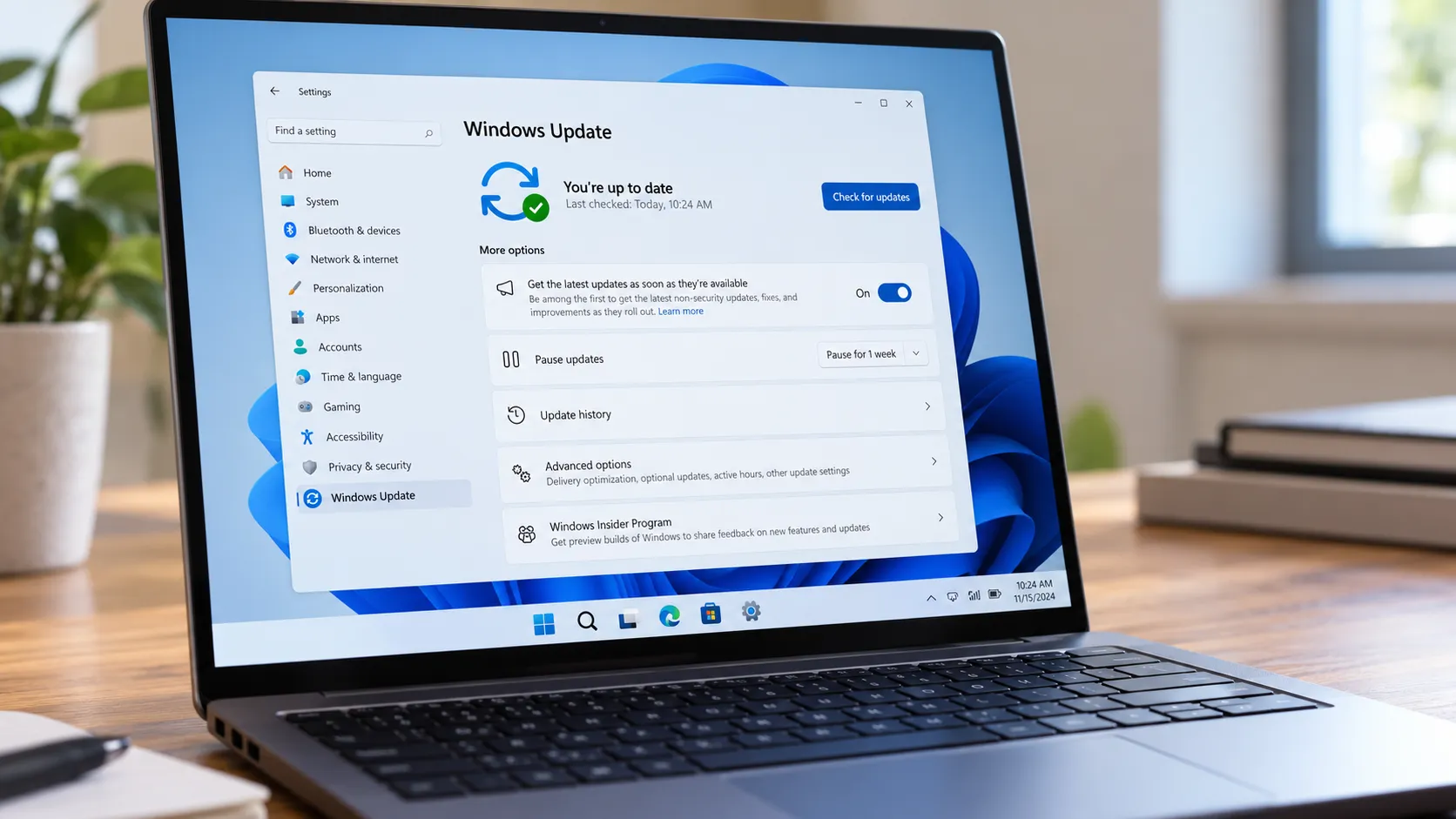
Microsoft says the Windows Age APIs are broadly available to Windows Insiders starting with build 26220.9472.
General availability for Windows users is coming "soon," but Microsoft has not published a firm date or final retail build number.
The minimum platform is Windows 11.
That means installing a regular Windows 11 release does not currently guarantee that third-party apps can use the new age signals.
The developer API rollout and Microsoft Account's consumer age-verification rollout are related, but they are not the same thing.
Apps need permission before they can read the signal
The API is not an unrestricted lookup of everyone using a Windows PC.
An app package has to declare the userAccountInformation capability.
Windows also requires the user to allow that app access to account information through Windows privacy controls.
If permission is denied, Microsoft says the request can fail with an access-denied error.
That adds a user-consent layer missing from the original announcement's simpler "account to age signal" diagram.
There is no standalone Windows setting labeled "Age API" that globally turns the system on for every application.
Individual apps have to implement the API, request the appropriate capability, and handle the user's permission decision.
Shared PCs and local accounts are now better documented
Microsoft's current developer documentation also answers part of the shared-PC question.
Calls apply to the user running the current process.
So on a PC where different people use separate Windows accounts, an app queries the age signal associated with the person currently signed in.
Microsoft currently retrieves identity-provider age information only from Microsoft Accounts.
For other account types, such as an ordinary local account, GetUserAgeRangeAsync returns no age range and GetAgeVerificationStatusAsync returns NotApplicable, unless an administrator has configured another value through policy.
That means a local Windows account does not silently inherit an age signal from some unrelated Microsoft Account on the PC.
A household that shares one Windows login is a different situation. Apps see the current signed-in user rather than somehow identifying which physical person happens to be sitting in front of the screen.
Administrators can set an age signal through policy
Businesses, schools, and other managed environments have another option.
Microsoft says administrators can configure a default age group or verification status using Group Policy or mobile device management.
When that policy is configured, the Age APIs return the administrator-defined value.
That could matter in managed devices where employees or students do not sign into Windows with ordinary consumer Microsoft Accounts.
Developers still have to handle cases where the API is unavailable and cannot assume every Windows user produces a usable signal.
Microsoft Age Verification sits underneath the account
Microsoft calls its separate verification platform Microsoft Age Verification, or MAV.
The idea is to let someone verify their age once and reuse the resulting status across Microsoft experiences instead of repeatedly providing a document, selfie, or other proof to individual apps.
Microsoft's model is:
Verify once, use everywhere
The resulting verified status is stored with the Microsoft Account.
Windows apps can then access that status through the Age API where the feature is supported, the app has implemented it, and the user has granted the necessary permission.
That does not mean every Microsoft product or third-party Windows app currently uses the signal.
Where Microsoft Account age verification is available now
Microsoft's current age-verification support page says users can proactively verify their age now in:
Australia
Brazil
Singapore
United Kingdom
Australia, Brazil, and Singapore are also the three markets Microsoft specifically identified in its Windows announcement as already having age verification available in Microsoft storefronts.
The UK is slightly different in the currently published material. Microsoft Support confirms that UK users can verify their Microsoft Account age, but Microsoft's Windows announcement does not make the same explicit statement about UK Microsoft Store or Xbox storefront enforcement.
So account-level availability and storefront requirements should not be treated as identical lists.
Microsoft Store and Xbox checks are confirmed in three markets
Microsoft has announced age-assurance measures across both Microsoft Store and Xbox storefronts in Australia, Brazil, and Singapore.
That corrects one uncertainty in the original draft.
Microsoft's March Singapore announcement explicitly covers both Microsoft and Xbox storefronts.
Its August announcement for Brazil likewise names Microsoft Store and Xbox.
Australia's rollout also covers both storefronts.
The age check is aimed at accessing or obtaining apps and games rated 18+.
Microsoft's current support documentation says an adult who chooses not to complete age assurance can lose the ability to view, purchase, or download new games and apps rated 18+.
Content already owned remains accessible.
Australia no longer needs to be treated as purely "coming soon"
Microsoft's Aug. 10 Australia announcement said enforcement would arrive "in the coming weeks."
That was useful at the time but is no longer the strongest description of the current status.
Microsoft's live support pages now say users in Australia can verify their age now, and its FAQ explains what happens to accounts that remain unverified.
That establishes that the verification system itself is active.
Microsoft still does not publish a transaction-by-transaction schedule saying exactly when every Australian account will encounter a mandatory prompt.
So it is safer to say the system is live and verification is available than to claim every 18+ purchase now triggers the same prompt for every user.
How Microsoft's age verification works
Microsoft offers several methods depending on the country.
Its current support documentation lists methods including:
Facial age estimation using a selfie
Uploading an identity document
Government identity services, such as Singpass in Singapore
Regional announcements describe additional options.
In Australia, Microsoft said users could also use email-based verification or a credit card through its age-assurance partners.
In Brazil, Microsoft's announced options included government identification, CPF, email-based verification, facial age estimation, document scanning, and credit card verification.
Exact choices can therefore differ by country.
Microsoft now says verification data is deleted afterward
The original announcement gave much more detail about what apps receive than about what happens to the information used during verification.
Microsoft's current support documentation closes part of that gap.
The company says age-assurance information is used only to verify age, is securely processed by its trusted age-assurance partner, and is deleted after the verification process is complete.
Microsoft names Yoti and Verifymy as age-assurance partners.
The verification status itself is different.
Microsoft says that status is stored with the Microsoft Account so it can be reused across Microsoft experiences.
In other words, the system is designed to discard the underlying verification material after processing while retaining the resulting account-level status.
Users should still read the applicable provider and Microsoft privacy terms before choosing between a selfie, document, or other method.
You can check your Microsoft Account verification status
There is now a user-facing way to see whether an account is verified.
Microsoft says to:
Sign in at your Microsoft Account.
Open Your info.
Find Profile info.
Look for Age verification.
The current status appears there.
Microsoft says verification is usually required only once, although users can occasionally be asked to verify again after changing account details or moving to another country or region.
What third-party Windows apps can do with the signal
Microsoft positions the Age API for apps that need to vary experiences by age.
Its developer documentation gives examples such as apps that:
Display user-generated content
Include social or communication features
Offer in-app purchases or virtual currencies
Stream or play age-rated media
An app could, for example, receive the 13-to-15 age range and adjust features without receiving the user's actual birthday.
Or it could check whether Microsoft's account-level verification says the user has been verified before displaying age-restricted functionality.
That is the platform Microsoft is building.
What remains unclear is how widely outside developers will actually adopt it.
Microsoft has not publicly identified a major third-party Windows application using the Age API.
Facial age estimation still deserves scrutiny
Microsoft's deletion policy answers one privacy question, but accuracy is separate.
The National Institute of Standards and Technology has independently tested facial age-estimation algorithms, although not specifically Microsoft's current Yoti or Verifymy implementations.
NIST's age-estimation evaluation found that performance varied with factors including image quality, a person's age, gender, and region of birth.
In its first evaluation of six voluntarily submitted algorithms, NIST found no single system that clearly outperformed the others.
It also found error rates were almost always higher for women's faces than men's faces in that test.
Those findings should not be applied directly to Yoti or Verifymy because NIST did not test those specific systems in the cited study.
They do show why a choice of verification methods matters rather than treating facial estimation as infallible.
The US has a policy signal, not a Windows rollout
Microsoft has not announced a US rollout of the Windows storefront checks covered above.
There is a broader regulatory development worth separating from Microsoft's plans.
In February, the Federal Trade Commission said it generally would not bring COPPA enforcement actions against qualifying general-audience or mixed-audience services that collect personal information solely for age verification without first obtaining parental consent, provided several conditions are met.
Those conditions include limiting the information to age-verification purposes, deleting it promptly afterward, providing notice, using appropriate security, and taking reasonable steps to ensure the verification method is accurate.
That policy can make age-verification technology easier for US services to adopt.
It is not evidence that Microsoft will activate Windows Age API storefront requirements in the US on any particular schedule.
Be cautious with age-verification emails
Microsoft has legitimately emailed customers about regional age-assurance rollouts.
That also creates an obvious phishing opportunity.
Do not assume an email asking for a selfie, identity document, credit card, or account credentials is genuine because Microsoft is rolling out age checks.
Instead, open Microsoft's website or the relevant Store or Xbox experience directly.
Microsoft now lets eligible users check their age-verification status under their Microsoft Account profile, so there is no need to rely solely on an email link.
What's live and what's still coming
The Windows age-assurance rollout now breaks down more clearly.
Live for Windows Insiders: GetUserAgeRangeAsync and GetAgeVerificationStatusAsync, starting with Windows Insider build 26220.9472.
Coming to general Windows users: the Windows Age APIs, with Microsoft saying general availability is coming soon but giving no firm date.
Still future: CheckAgeStatusAsync.
Live at the account level: Microsoft Account age verification in Australia, Brazil, Singapore, and the UK.
Explicitly confirmed for Microsoft Store and Xbox: age-assurance rollouts in Australia, Brazil, and Singapore.
Still unclear: broad third-party adoption of the Windows Age API.
That distinction matters because the API existing does not mean every Windows app suddenly knows or checks a user's age.
Developers still have to adopt it.
What to do now
For most Windows users, there is nothing to switch on globally.
If you're in Australia, Brazil, Singapore, or the UK, you can check your current Microsoft Account age-verification status under:
Microsoft Account > Your info > Profile info > Age verification
If Microsoft asks you to verify your age, complete the process through the Microsoft Account or official Store or Xbox interface rather than following an unsolicited link.
Windows Insiders can have access to the new Age APIs, but that does not automatically make ordinary apps start checking age. Apps need to implement the APIs themselves and request access to account information.
For everyone else, the important thing to watch is Microsoft's general Windows rollout and the first third-party developers that announce support.
Right now, Microsoft has built the plumbing, made account verification live in several countries, and begun using age assurance in its own storefronts. The broader Windows app ecosystem has not yet caught up.





Comments
Be the first, drop a comment!