



Windows Search AI-powered control center hits Insiders first
The Windows Search AI-powered control center Microsoft is building is still mostly locked to testers, even though the plumbing just went live for a slice of Windows 11 users. Microsoft started rolling out a rebuilt Search experience yesterday that executes typed commands like "turn on Bluetooth" or "dim my screen" directly, instead of only returning a list of files, according to the Windows Insider Blog. The idea is a single box that handles common settings without opening another screen, not a full replacement for the Settings app.
Microsoft has announced this rollout only for eligible Experimental-channel Insiders, and it hasn't announced a public-release date, per the Windows Insider Blog. That's the detail to sort out before anything else: Windows 11 Home and Pro users who aren't enrolled in the Insider program have nothing to check for yet.
The inline actions are also just one layer of an easily confused AI push inside Windows. Semantic file search, a feature tied to Copilot+ PC hardware that started rolling out in January 2025, is a separate system, and so is Copilot Actions, an experimental agent that interacts with apps and files after authorization, according to iTechGuides and Microsoft's Windows Experience Blog. PCWorld frames Microsoft's broader push as building Windows Search into the "front door" for an AI-driven version of Windows, reporting that Windows EVP Pavan Davuluri said thousands of additional actions are planned by the end of the year. PCWorld also reports that Windows Search will eventually call on other apps, including Copilot, to answer questions and complete tasks, an early look at deeper Windows Search Copilot integration, though Microsoft hasn't given a timeline for it. That's PCWorld's read on Microsoft's demos, not a shipped feature.
Which Windows 11 search box controls work now?
The redesigned Search began rolling out to Windows Insiders on the Experimental channel starting yesterday, with English as the only supported language at launch, per the Windows Insider Blog.
Getting it requires specific builds: 26340.9616 on the Experimental channel, or 28120.3181 on the Experimental (26H1) channel. Insiders on those builds still need to manually click "Check for updates" in Windows Update and restart before the new Search feature flag appears, the blog post notes.
Everyone else has no installation path right now. Microsoft hasn't published a timeline for a wider release, so there's no hidden setting to hunt for outside the Experimental channel.
What actually changed in Search beyond the headline commands
The new experience is rebuilt on WinUI 3, a framework Microsoft says produced "substantial improvements" in performance and memory use during early testing, according to the Windows Insider Blog. That's Microsoft's own testing claim, and nothing independent has verified it.
Microsoft also removed the large preview pane that used to sit on the right side of Search results. Internal click data showed nearly all engagement came from the results list rather than the pane, so the company collapsed everything into a single scannable list, per the same post. Inline previews and richer file details are expected to return later this year in a lighter format.
Search matching now accounts for typos and synonyms. Microsoft also plans to add filters for narrowing file results and rich inline web previews, which the company says will surface answers to queries like "weather in San Diego" or "How tall is the Eiffel Tower?" directly in the results list, according to the Windows Insider Blog.
The inline actions themselves stay narrow for now. Microsoft says it's "starting with familiar tasks," listing examples like switching to dark mode, muting audio, or arranging windows on screen rather than an open-ended command set. Phone actions tied to Phone Link devices are listed as coming soon, not available yet.
Windows Search Actions, semantic search, and Copilot Actions aren't the same feature
Microsoft and the press have used overlapping language to describe three different capabilities, and it's easy to assume typing a command into Search gives Copilot broad reach into a PC's files. Based on what's confirmed, it doesn't.
| Feature | What it does | Who can access it now | Hardware required | Touches files |
|---|---|---|---|---|
| Search inline actions | Flips settings or arranges windows from typed commands | Experimental-channel Insiders, English only | No requirement listed in the announcement | No |
| Semantic search | Interprets descriptive queries against file content, metadata, and images | Copilot+ PC owners, staged across Dev, Beta, and Release Preview channels since early 2025 | Copilot+ PC with a qualifying NPU | Yes, local files and photos |
| Copilot Actions | An agent that opens apps and files, clicks, types, and scrolls like a person | Initial preview documentation: Insiders outside the EEA who manually enable it | None specified beyond Copilot app version 1.25112.74 or higher, per last year's rollout documentation | Yes, within authorized folders |
Search inline actions, the feature covered above, only flip settings or arrange windows through typed commands. Microsoft's announcement describes settings and window-management actions and doesn't list a Copilot+ PC requirement, according to the Windows Insider Blog.
Semantic search, which iTechGuides refers to as AI-powered Windows Search, started rolling out to Dev Channel testers on Snapdragon-powered Copilot+ PCs with NPUs rated above 40 TOPS in January 2025, then later expanded to AMD- and Intel-powered Copilot+ PCs as well as OneDrive content and Release Preview testing. It interprets descriptive queries against file content, metadata, and images, processing locally on the PC's NPU, but it isn't a fully autonomous agent and doesn't guarantee every conversational query returns an answer, per the same source.
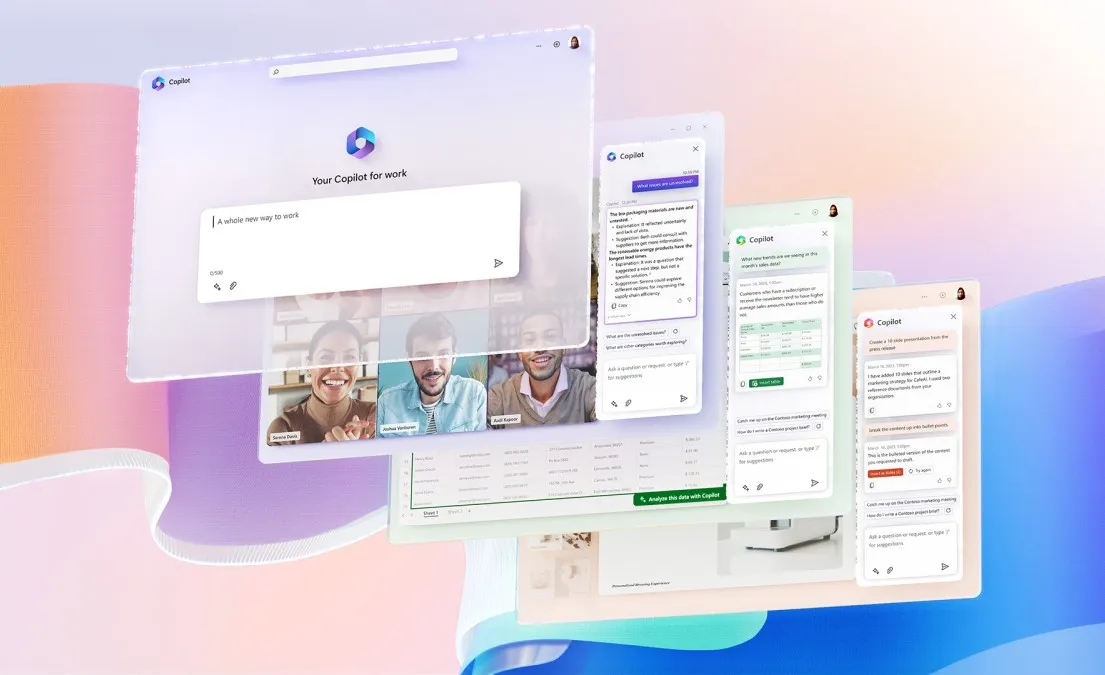
Copilot Actions sits apart from both. Microsoft describes Copilot Actions as an agent that interacts with apps and files, which gives it a broader stated scope than the inline actions announced for Search, according to the Windows Experience Blog.
What Microsoft's documentation says about Copilot Actions
Most of what's publicly known about Copilot Actions comes from Microsoft's preview documentation published about a year ago, not from this week's announcements. Treat what follows as how the feature was designed and initially rolled out, not necessarily its current state.
In that documentation, Copilot Actions is disabled by default and requires manually toggling it on through Settings > System > AI components > Agent tools > Experimental agentic features, per the Windows Experience Blog. During the preview, the agent could only reach a limited set of known folders, Documents, Downloads, Desktop, and Pictures, unless a user explicitly authorized more. That's narrower than the demo language describing Copilot as having "the same level of the ability to control and change things that I do as a user, but always with permission," a line PCWorld attributed to Microsoft Copilot lead Jacob Andreou.
The documentation also warned the feature may hallucinate or struggle with complex interfaces and asked users to monitor it closely. It flagged cross-prompt injection, malicious content embedded in a file that hijacks the agent's instructions, as a new risk category Microsoft said it was still working to defend against, per the Windows Insider Blog and Windows Experience Blog. Those warnings about mistakes, hallucinations, and cross-prompt injection are reasons to treat the preview as experimental rather than rely on it for unsupervised file work.
At its initial rollout last year, the feature was excluded from the EEA and required Copilot app version 1.25112.74 or higher, according to the Windows Insider Blog. Whether those folder limits, toggle path, or regional exclusion still hold hasn't been confirmed in current reporting, so anyone evaluating Copilot Actions should check current Settings menus and release notes rather than assume last year's documentation still matches what's shipping now.
What to do now
Standard Windows 11 users with no Insider enrollment have nothing to install. Since Microsoft hasn't announced a general-availability date, watching for an official rollout post is the only realistic option.
Experimental-channel Insiders on build 26340.9616 or 28120.3181 can check for updates, restart, and try the new Search flag. Stick to the routine commands Microsoft lists, like switching to dark mode or arranging windows, since that's what the feature actually handles today.
Anyone curious about Copilot Actions should confirm current regional availability and Copilot app version before enabling it, rather than relying on last year's preview documentation. Keep it off, or watch it closely if it's already on, until Microsoft publishes an update that clarifies what's changed since that initial rollout.


Comments
Be the first, drop a comment!