



Microsoft Surface RTX Spark Dev Box: Specs, Promises, and Open Questions
Microsoft announced the Surface RTX Spark Dev Box at Build this week, positioning it as a dedicated machine for developers running sustained AI workloads locally. Three numbers define the device: a 100W sustained thermal envelope, up to 128GB of unified memory, and approximately 1 petaflop of AI compute from Nvidia's RTX Spark chip, per The Verge and Engadget. Microsoft describes it as built for "long-running training jobs, agentic AI pipelines, and local model fine-tuning," according to Engadget, a narrow brief that shapes every hardware and software decision in the design.
The unresolved questions are equally specific. No pricing has been disclosed. No independent benchmarks exist. How Windows on Arm handles real AI developer toolchains on this hardware is untested in the field. The device will sell exclusively through Microsoft.com in the US later this year, with no broad retail presence, per PCMag.
Why the Surface RTX Spark Dev Box specs favor sustained AI workloads
The hardware argument is about holding performance steady, not hitting a peak. RTX Spark laptops operate within a 45W to 80W thermal envelope; the Dev Box runs at 100W, according to The Verge. Laptops throttle under extended load when they hit that ceiling. A desktop enclosure with no battery constraints can sustain a higher power budget. For training jobs and inference pipelines that run for minutes or hours, that difference is where the practical case for a dedicated desktop form factor begins.
The aluminum chassis is engineered to double as a heatsink, making the enclosure itself part of the thermal management system, per PCMag. The design is consistent with the sustained-workload framing: stay cool under continuous load rather than shed heat in bursts.
The 128GB unified memory pool, shared across CPU and GPU, is what supports Microsoft's claim that the system can run models up to 120 billion parameters locally, according to The Verge. Some of the largest publicly released open-weight models sit in that range. The gap between technically fitting in memory and running practically at useful inference speeds, with workable quantization and reasonable context lengths, is not addressed in current launch coverage. Worth keeping in mind.
All compute figures originate from Microsoft and Nvidia directly, per the Windows Experience Blog. The 1 petaflop AI performance figure, the 120-billion-parameter ceiling, the 6,144 Blackwell RTX cores: these are design specifications, not third-party-measured outcomes. Treat them accordingly until benchmarks arrive.
The software stack: where Microsoft's real bet sits
Raw silicon only gets a device so far. The Windows software layer co-developed with Nvidia for RTX Spark determines whether the hardware advantage actually reaches developer workflows.
The Windows scheduler was updated with workload profile scheduling, optimized specifically for RTX Spark's 20 Arm cores to scale workloads more efficiently across the full architecture, according to the Windows Experience Blog. Microsoft and Nvidia also implemented the Microsoft Power and Thermal Framework on RTX Spark, which the blog describes as standardizing thermal and power behavior to deliver efficiency while maintaining performance under intense workloads. That handles the software side of what the aluminum chassis handles physically.
Windows ML now exposes TensorRT natively on RTX hardware through a standard Windows API, per the Windows Experience Blog. Nvidia's technical blog reported last September that this integration delivers roughly 50% faster throughput than prior DirectML implementations on RTX GPUs. That figure comes from platform-level testing that predates the Dev Box, not from device-specific measurement, but it establishes a baseline for the inference runtime's performance trajectory.
The third piece is less visible but functionally important. Microsoft raised the OS-level ceiling on system memory accessible by the GPU, per the Windows Experience Blog. Without that change, a 128GB system would not have been able to load a 128GB model, because the GPU's previous addressable memory limit would have intervened before loading completed. This is what makes the 120-billion-parameter figure plausible as a design target.
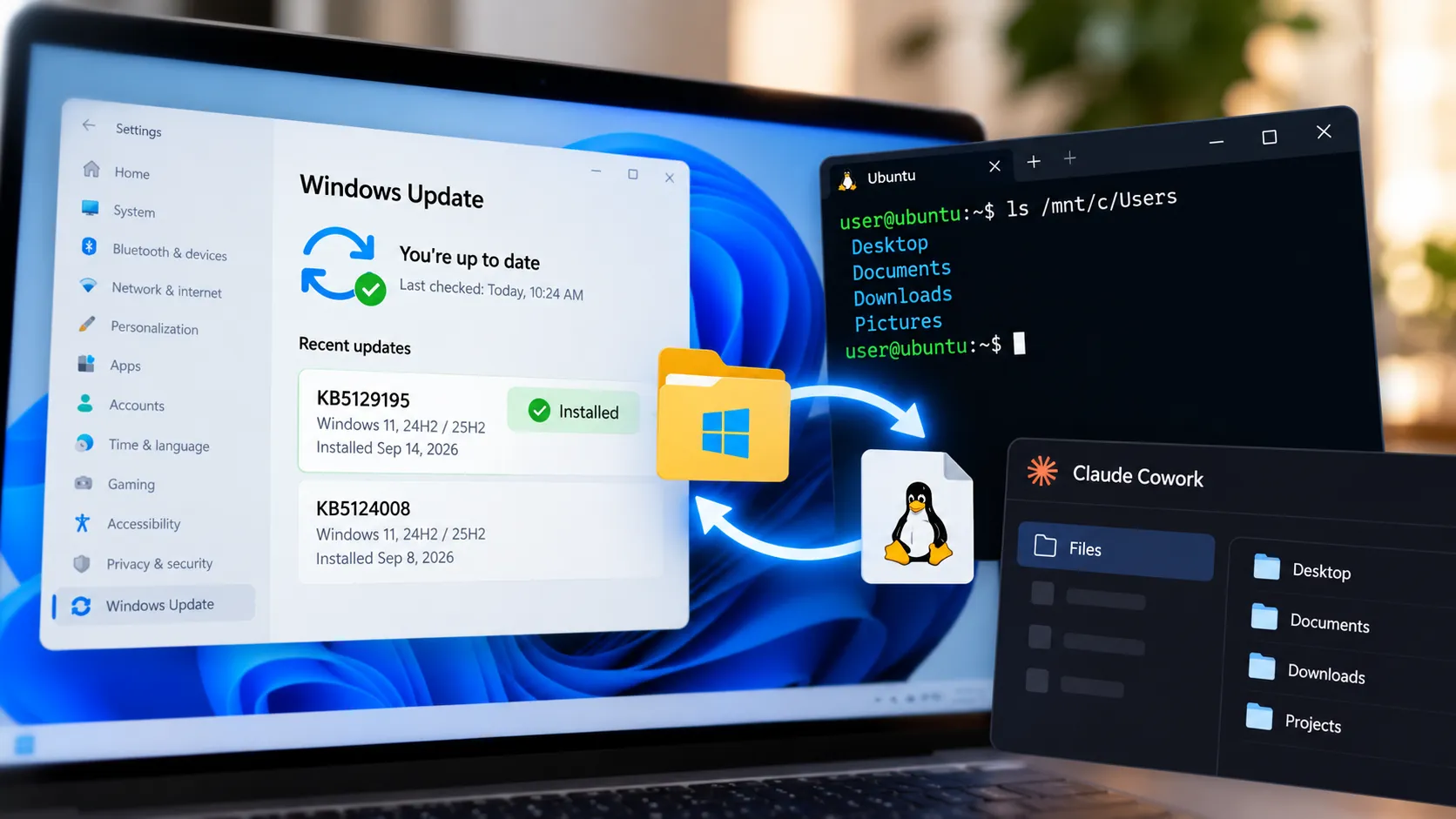
Microsoft also points to WSL as the pathway to the Linux AI ecosystem, per the Windows Experience Blog. Whether that covers container workflows, Linux-native AI frameworks, and CUDA toolchains without friction is a question the launch materials don't answer.
The Arm question: what still needs proving
The Dev Box runs Windows on Arm, and that matters more for this buyer than for almost any other. AI developer tooling has historically been the friction point on Arm-based Windows machines. CUDA workflows, containerized environments, and Linux-native libraries have varying levels of native Arm support; anything that lacks it runs through emulation.
Microsoft's answer is an updated Prism emulator, tuned for RTX Spark's microarchitecture to improve performance and compatibility for x86 software running under emulation, per the Windows Experience Blog. On top of that, the device ships with Windows 11 Pro pre-configured for development at the image level. Developer Mode enabled, PowerShell 7 as the default shell, VS Code and GitHub Copilot preinstalled, Widgets removed, taskbar stripped down. "The development environment is the default from first sign-in," according to Surface CVP Andrew Hill via The Verge.
For enterprise and regulated contexts, Microsoft is also working toward OS-enforced identity, containment, and manageability for building and running agents on RTX Spark, according to the Windows Experience Blog.
What a tuned emulator and a clean OS image cannot settle in advance is whether Prism handles the full range of developer tooling in practice. Docker, containerized AI pipelines, CUDA compatibility on Windows on Arm, the actual behavior of WSL with Linux-native frameworks: those are the day-one questions that working developers will run into immediately. The preconfigured image gets you to a shell quickly. Whether the tools you depend on actually run without workarounds is a different matter, and the launch materials don't go there.
Who should be paying attention and what the tradeoffs look like
The target is narrow and deliberate: developers building or iterating on AI models who need sustained local compute, want to keep inference on-device for latency, privacy, or cost reasons, and work primarily within the Windows ecosystem. Microsoft is positioning Surface as a reference platform for hybrid AI workflows that distribute inference between local hardware and cloud infrastructure, according to Jon Peddie Research.
It helps to be explicit about what the Dev Box is actually competing against, because the answer shapes the whole buying decision.
RTX Spark laptops offer the same chip and the same software stack, but within a thermal envelope that tops out at 80W. For a developer who needs to move around, that tradeoff is obvious. For one sitting at a desk running multi-hour training jobs, throttling under sustained load is a real cost, not a theoretical one. The Dev Box removes that constraint.
A conventional x86 desktop workstation with a discrete GPU sidesteps the Arm compatibility question entirely. The CUDA story is straightforward, Docker just works, and there's no emulation layer between the developer and the tools. The tradeoff is size, power draw, and the fact that discrete GPU memory is separate from system memory, which sets a lower ceiling on the largest models that fit in a single addressable pool.
Cloud GPU instances scale on demand and require no upfront purchase. For sporadic or highly variable workloads, that flexibility is hard to beat. The ongoing cost is where the calculus changes: a developer running sustained local inference daily will eventually hit a crossover point where owned hardware is cheaper. Without knowing what the Dev Box costs, that math cannot be done.
That last point is load-bearing. Price will determine whether the Dev Box is genuinely competitive or merely interesting. The Windows Experience Blog places RTX Spark at the entry point of a hardware ladder that scales through DGX Station for Windows up to trillion-parameter systems. As the accessible on-ramp to that stack, the device needs to be priced accordingly. Microsoft has not said what that number is.
What would actually settle it
The hardware Microsoft has assembled is internally consistent: 100W sustained thermals, 128GB of unified memory, a software stack tuned specifically for RTX Spark, and a preconfigured development image designed to eliminate setup friction, per Engadget and The Verge. The scheduler work, TensorRT via Windows ML, and the raised GPU memory ceiling are platform investments that go beyond assembling a spec sheet.
A skeptical developer waiting to be persuaded has three specific things to watch for. First, the price: not just the number itself, but whether it undercuts the equivalent sustained cloud inference cost over a reasonable depreciation period. Second, third-party benchmarks against an RTX Spark laptop running the same sustained workload, which will show whether the thermal advantage is as meaningful in practice as the 20W difference implies. Third, real-world reports on the Arm compatibility story: whether Docker runs cleanly, whether CUDA toolchains work without significant workarounds, whether the WSL integration holds up under the kinds of Linux-native frameworks that AI developers actually use.
If those tests come back clean, the Dev Box could establish something that has mostly been aspirational on Windows: a manageable, secure local AI development machine that developers choose over the alternatives rather than settle for. Fall 2026 is when it has to make that case.



Comments
Be the first, drop a comment!