



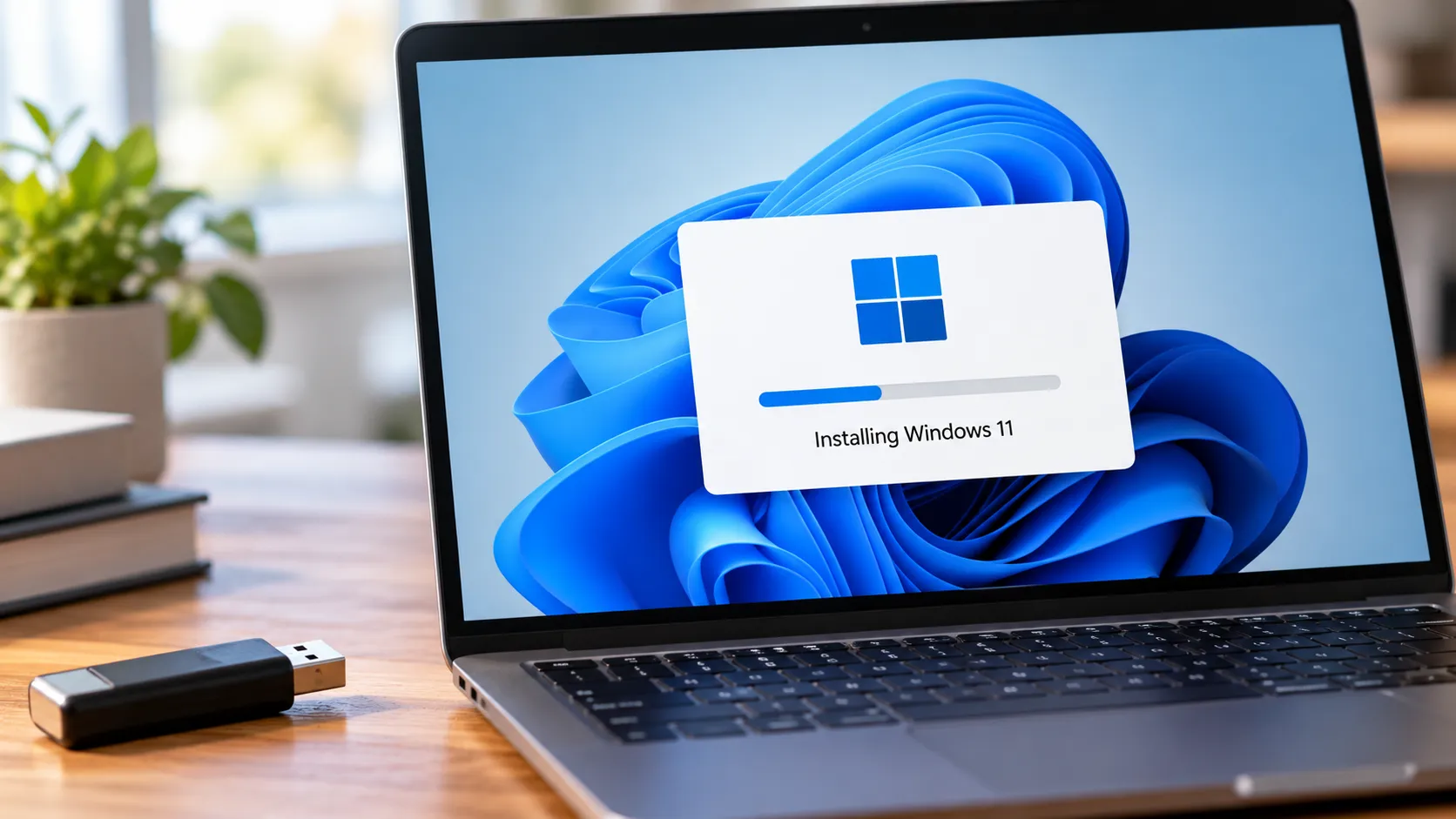
Most Tiny11 guides skip straight to a download link. That's the problem. Unofficial mirrors and repackaged Tiny11 images circulate widely, and downloading one means trusting whatever modifications its publisher made.
For Windows 11 26H2, the safer route is to build Tiny11 yourself using the open-source tiny11builder script and a Windows 11 ISO downloaded directly from Microsoft.
The official ntdevlabs GitHub repository does not currently offer a prebuilt Tiny11 26H2 ISO. Its Releases page contains versions of the builder itself, while the project documentation instructs users to download Windows from Microsoft and create the modified ISO locally.
Windows 11 26H2 reached general availability on Sept. 29, 2026. Microsoft now distributes the current Windows 11 ISO through its official download page.
Before starting, though, decide whether Tiny11 is the right tool for what you're trying to do.
Is Tiny11 right for your situation?
Tiny11 is an unofficial modification of Windows 11. It removes apps and components from a Microsoft Windows image and applies several setup changes, including hardware-requirement bypasses.
That makes it useful in some situations, but it also means you're stepping outside Microsoft's standard Windows installation path.
Tiny11 is a reasonable option if:
You're building a low-overhead VM for development, testing, or experimentation.
You're repurposing an older secondary PC and understand that unsupported hardware carries additional risk.
You specifically want a Windows installation with many bundled apps removed from the start.
You're comfortable rebuilding the ISO yourself and troubleshooting a community-maintained script.
Tiny11 is probably the wrong choice if:
The machine is business-critical or needs a vendor-supported Windows configuration.
Your organization requires Microsoft-provided, unmodified installation media for compliance or management.
You need predictable support from Microsoft or the PC manufacturer if installation or update problems appear.
You don't want to maintain or troubleshoot a modified Windows installation.
Tiny11's current regular builder remains serviceable, meaning Windows Update, language packs, and Windows features can still work after installation. That's different from tiny11 Core, which the project explicitly describes as a stripped-down development and testing image that cannot be serviced normally.
The regular project's README also warns that some removed components can reappear later. Outlook and Dev Home are specifically named as apps that may return after the system has been running or updating.
For unsupported hardware, there's another distinction worth keeping clear. Tiny11's current builder contains bypasses for Windows 11 CPU, RAM, storage, TPM, and Secure Boot checks. That can make installation possible, but it does not make the hardware officially supported.
Microsoft's Windows 11 download page warns that installing Windows 11 on hardware that does not meet the minimum requirements is not recommended, may cause compatibility issues, and leaves the PC unsupported and not guaranteed to receive updates.
What Tiny11 is
Tiny11 is a community Windows modification created with the open-source tiny11builder project maintained by ntdevlabs. It has no affiliation with Microsoft.
The repository currently provides two PowerShell builders:
tiny11maker.ps1creates the regular Tiny11 image. This is the project's recommended version for normal use and remains serviceable.tiny11Coremaker.ps1removes substantially more components but also removes normal servicing capabilities. The project recommends it for quick testing and development rather than as a full Windows 11 replacement.
For this guide, use tiny11maker.ps1.
The project says the current PowerShell-based builder can process any Windows 11 release, language, or architecture rather than being tied to one Windows build.
There's one current caveat for 26H2. Windows 11 26H2 only reached general availability on Sept. 29, and an open GitHub issue posted Oct. 5 asks whether the builder needs changes for the new stock 26H2 ISO. There is no maintainer response attached to that issue yet.
That doesn't establish that 26H2 is incompatible. It does mean there isn't a dedicated 26H2 release or maintainer confirmation to point to yet, so test the result in a VM before committing a primary machine to it.
What you need before starting
Have these ready:
A Windows PC with enough free space for Microsoft's ISO, Tiny11's working files, and the resulting image.
An official Windows 11 26H2 ISO from Microsoft.
The current
tiny11maker.ps1script from the ntdevlabs GitHub repository.Windows PowerShell 5.1, run as Administrator.
Rufus from rufus.ie if you want to write the finished ISO to a USB drive.
A VM platform such as Hyper-V, VirtualBox, or VMware if you want to test the image before installing it on physical hardware.
A valid Windows license or digital entitlement for the Windows edition you plan to activate.
You do not need a product key merely to run tiny11builder and create the ISO. Activation is a separate Windows licensing step after installation.
Use a dedicated working folder for the builder so its temporary files and final tiny11.iso are easy to identify.
Step 1: Download Windows 11 26H2 from Microsoft
Go directly to Microsoft's Windows 11 download page.
Under Download Windows 11 Disk Image (ISO) for x64 devices, download the current multi-edition Windows 11 ISO in the language you intend to install.
Microsoft also publishes SHA-256 hashes for its downloadable ISO files.
After the download finishes, open PowerShell and calculate the file's hash:
Get-FileHash C:\path\to\Windows11.iso -Algorithm SHA256
Compare the result with the SHA-256 value Microsoft publishes for your language.
The two values should match exactly.
This verifies that the Microsoft ISO hasn't been corrupted or modified between Microsoft's copy and the file on your computer. Do this before running any third-party modification script against it.
Step 2: Download the Tiny11 builder from the official repository
Go directly to:
https://github.com/ntdevlabs/tiny11builder
Do not substitute a similarly named website, mirror, YouTube download, SourceForge image, or another GitHub user's modified build.
The official repository currently contains:
tiny11maker.ps1tiny11Coremaker.ps1autounattend.xml
For this guide, download or clone the current repository and use tiny11maker.ps1.
Check the repository's README and recent commits before building. Tiny11 is actively maintained, and using the current script is particularly important while 26H2 is new.
If you see a website offering a ready-made "Tiny11 26H2" ISO for payment, through an ad redirect, or under another maintainer's name, that is not the same thing as downloading the ntdevlabs builder.
Step 3: Mount the Microsoft ISO
In File Explorer, right-click the official Windows 11 ISO and choose Mount.
Windows creates a virtual DVD drive.
Note the drive letter, such as:
D:
You'll give that letter to tiny11builder in the next step.
Step 4: Open PowerShell as Administrator
The project's current instructions specify Windows PowerShell 5.1.
Open it as Administrator.
Rather than changing your user account's permanent execution policy, use the temporary command the project currently recommends:
Set-ExecutionPolicy Bypass -Scope Process
This setting applies only to the current PowerShell session. Closing that PowerShell window restores your previous execution-policy behavior.
That's cleaner than changing the policy for your whole user account and remembering to restore it afterward.
Step 5: Run tiny11maker
Navigate to the folder containing the builder.
The project documents the command in this form:
C:\path\to\tiny11maker.ps1 -ISO D -SCRATCH C
Replace D with the drive letter assigned to your mounted Microsoft ISO.
Replace C with the drive you want the script to use for temporary working files if necessary.
The script asks you to choose which Windows edition, or SKU, from the Microsoft image you want to use.
Let the process finish without interrupting PowerShell.
Tiny11builder uses Microsoft deployment tools including DISM to modify the Windows image. Its current script removes bundled apps and components, applies setup changes, exports the resulting Windows image with recovery compression, and creates a new bootable ISO.
Step 6: Find and record the resulting ISO
The current builder does not ask you to choose an arbitrary output filename and location.
According to the project's instructions, the completed file appears in the folder where the script was extracted as:
tiny11.iso
Once it's finished, calculate a SHA-256 hash for your own image:
Get-FileHash C:\path\to\tiny11.iso -Algorithm SHA256
Save that value somewhere with your build notes.
This hash does not independently prove that your Tiny11 image is safe. There is no official ntdevlabs 26H2 ISO hash to compare it with because the project isn't distributing that prebuilt image.
What the hash gives you is a fingerprint of the image you just built. If you copy or archive that ISO later, you can recalculate the hash and verify that the file has not changed since you created it.
Step 7: Test the ISO in a VM first
This step matters more for 26H2 than it might for an older, heavily tested Windows base.
Create a disposable VM in Hyper-V, VirtualBox, VMware, or another virtualization platform and attach tiny11.iso as its installation media.
Complete a normal installation.
Then check:
Windows reaches the desktop without setup errors.
Device Manager loads normally.
Windows Update works.
Microsoft Store and Winget work if you need them.
The Windows edition is the one you selected.
The components you rely on haven't been removed.
Restart and shutdown work normally.
Activation behaves as expected for your license.
Run Windows Update and reboot again.
The tiny11builder README says the normal tiny11maker.ps1 image remains serviceable, so updates and optional Windows features should continue to function. If that basic servicing test fails in the VM, don't move the same ISO to a physical machine.
A VM test doesn't guarantee every physical PC will work, but it catches a broken build before it touches your real installation.
Step 8: Write the ISO to a USB drive
If the VM test passes and you're installing on physical hardware, open Rufus.
You'll need a USB drive large enough for the image. Microsoft recommends at least 8GB for standard Windows 11 installation media. Everything already on the USB drive will be erased.
In Rufus:
Select the USB drive.
Under Boot selection, choose
tiny11.iso.For a modern UEFI PC, use GPT as the partition scheme and UEFI as the target system.
Click Start.
Rufus may display Windows setup customization options, including additional hardware-requirement bypasses.
Tiny11builder's current script already applies CPU, RAM, storage, TPM, and Secure Boot bypasses to the image. You generally don't need to stack additional Rufus bypasses on top simply because you're using Tiny11.
Only select extra Rufus options if you understand why they're needed for the specific installation you're doing.
When Rufus reports the USB is ready, eject it normally and use your PC's firmware boot menu to start from that drive.
What to do immediately after installation
Check activation first.
If Windows doesn't activate automatically through the machine's existing digital license or the product key you intend to use, resolve that before investing time in configuring the system.
Then run Windows Update.
That gives you an immediate check that the regular Tiny11 image remains serviceable on the current 26H2 base and gets the latest security and reliability updates.
If this is a VM, create a clean snapshot after activation and updates but before installing your own software.
Keep three files afterward:
The original Microsoft Windows 11 26H2 ISO
The copy of
tiny11maker.ps1you actually usedYour finished
tiny11.iso
Also keep the SHA-256 hashes you recorded.
That gives you a reproducible record of what you built instead of leaving you dependent on a mystery ISO downloaded months earlier.
Before rebuilding later
Don't assume the script you used today is still the right one six months from now.
Check the ntdevlabs repository before every rebuild. Read its README, review the latest commits, and scan the open issues for problems involving the Windows release you're using.
That is particularly important for 26H2 right now. The project says the PowerShell builder is designed to work across Windows 11 releases, but the new version has only recently reached general availability and the repository currently has an unanswered question about whether 26H2-specific script changes are needed.
For now, the cleanest provenance chain is straightforward: download Windows 11 from Microsoft, verify Microsoft's ISO hash, get tiny11maker.ps1 from ntdevlabs, build the image yourself, and test that image in a VM before installing it on physical hardware.
That won't make Tiny11 an officially supported Windows configuration. It does remove one of the biggest avoidable risks: trusting a prebuilt modified Windows ISO from an unknown third party.

Comments
Be the first, drop a comment!