




The scariest version of Windows Recall is not the one that shipped.
The dominant fear circulating online treats Recall as a cloud-connected surveillance engine, screenshots of your screen being whisked off to Microsoft's servers, fed into AI training pipelines, used to target ads. That version of Recall does not exist in the product consumers can actually install today.
The public debate still tends to target a cloud-surveillance scenario that the shipped product does not implement. The real risks are local, specific, and meaningful, but they are not the risks most people are worried about.
None of this is to say the original backlash was misplaced. It was entirely justified.
The product that earned the backlash no longer exists
Preview builds of Recall stored screenshot data in an unencrypted folder that anyone with local access could browse freely, as How-To Geek reported earlier this year. The feature was enabled by default. Those were serious structural failures, not hypothetical risks.
What followed was a full architectural overhaul, multiple delays, and five months of testing in Microsoft's Windows Insider program before the feature reached the public in April 2025, as Ars Technica documented. The product that emerged from that process is materially different from the one that earned the headlines calling it spyware.
What the shipped product actually does
Recall is, at its core, a searchable photographic memory for your PC. It takes periodic screenshots when on-screen content changes, runs optical character recognition locally on those images, and indexes everything into a database you can query in plain language. It does not record audio or continuous video. The snapshots are organized into a timeline; you describe something you remember seeing, and Recall retrieves it.
On the privacy question, the core architectural point is simple: Recall keeps its snapshots on the device. They are never transmitted to Microsoft's servers. Microsoft says it cannot access them, and because the data never leaves your machine, it cannot be used for ad targeting or AI model training. Searches run entirely on-device and function offline. This is a local archive with a smarter index, not a remote surveillance architecture.
The hardware requirement is also a meaningful limiting factor. Recall runs only on Copilot+ PCs, a category requiring a neural processing unit capable of at least 40 trillion operations per second. That NPU handles local AI inference, which is precisely why cloud offloading is unnecessary, per Ars Technica. Recall will not appear on non-Copilot+ PCs through a Windows Update.
On managed enterprise devices, the feature is disabled and removed by default. Administrators cannot silently enable snapshot saving for individual users; the decision requires explicit user opt-in consent, according to Microsoft Learn. A substantial portion of the concerned audience is not affected by this feature at all.
One of the strongest arguments for Recall is accessibility. Security researcher Kevin Beaumont, a prominent critic of the original design, said the feature could be genuinely useful for people with mild cognitive impairment, for whom a searchable memory of past activity is assistive rather than a novelty. The feature has real utility. That is the only reason its tradeoffs deserve serious analysis.
Is Windows Recall safe? The real security problem is local access
The rebuilt version addressed the most serious structural failures. Snapshots and their associated vector database are now always encrypted, with keys protected by the device's Trusted Platform Module inside a Virtualization-Based Security Enclave. The feature shifted from opt-out to opt-in and can be removed entirely. Beaumont, who had been among the sharpest early critics, called the difference between the preview and the shipping version "night and day" after hands-on testing. That is a significant concession from someone who earned the credibility to make it.
The unresolved problems, though, are real. The most consequential is local access control. Anyone who gains access to a Recall database sees a near-complete record of that user's activity on the PC. Recall's value proposition and its risk profile are the same thing: thorough, searchable memory of everything on screen.
Authentication is the weak link, and the gap between documentation and reality is striking. Microsoft requires Windows Hello ESS with at least one biometric option enrolled, but Microsoft's own architecture note says PIN can function as a fallback after setup. Beaumont reported that PIN fallback could still unlock Recall after setup.
He verified this across multiple devices. During a controlled test, someone who had previously observed his PIN accessed his full Recall history in under five minutes, including Signal conversations he had already deleted from Signal itself, which no longer existed anywhere except the Recall database.
Content filtering is inconsistent. Beaumont found it failed to reliably exclude Signal conversations, video conferencing sessions with live captions enabled, and content from browsers outside Microsoft's supported list. Unlisted Chromium-based browsers receive only private-browsing filtering, not site-level filtering. Ars Technica's independent testing reached the same conclusion: filtering improvements are real but still inconsistent.
Worth noting separately: Recall's filtering controls only govern what Recall captures locally. They do not prevent your browser, ISP, or the websites themselves from knowing what was accessed (Microsoft Learn). That is a different privacy question from the one most people are asking.
Retention scope is also broader than many users assume. Recall preserves snapshots of content deleted from originating apps; those Signal conversations persisted in the database long after being cleared from Signal. If you leave retention unconfigured, snapshots remain until the storage cap is reached, at which point the oldest entries are deleted first. Storage can be configured between 10 and 150 GB, and retention windows between 30 and 180 days.
Why technical fixes did not solve the trust problem
Microsoft enters this conversation with a credibility deficit that predates Recall. Before Copilot and the AI push, Windows already had a reputation for aggressive telemetry collection, as How-To Geek observed earlier this year. Services like OneDrive immediately push documents to a cloud server when a Microsoft account is connected and nag users who resist. Against that backdrop, a feature that screenshots your screen, even one that keeps everything local, lands differently than it would from a company with an unblemished record.
What Recall exposed inadvertently was a latent architectural anxiety: Microsoft could build something like this and route screenshots to remote servers, and users would likely never know. That observation is not a criticism of the current design. It is a criticism of the trust relationship between a platform company and the people running its software, and no amount of encryption resolves it.
The irony is genuine. Recall's local-first architecture is, by design, more privacy-respecting than cloud AI services most people accept without much scrutiny. ChatGPT and Claude run on someone else's hardware, and usage of them is not private by default. The alarm about Recall is partly about Recall and partly a proxy for broader anxieties about surveillance capitalism and platform power. That distinction matters for evaluating whether any specific concern is proportionate to the actual architecture.
Two different risks, one decision
Separate the concerns cleanly, because they point in different directions.
The privacy risk of Microsoft accessing your data, using it for ad targeting, and feeding it into AI training is not supported by the shipped architecture. Snapshots never leave the device, and Microsoft says it cannot access them. The security risk of someone who gains physical or local access to your machine getting into a highly sensitive archive via a guessed PIN is real and underappreciated.
The remaining unresolved issues are specific: a database of near-total PC activity accessible with a four-digit PIN, content filtering that misses sensitive material in practice, and retention of data from apps users assume handle their own deletion. Those are not reasons to dismiss Recall outright. They are criteria for deciding whether to use it.
The practical decision framework: if the device is personal, single-user, and secured with a PIN you have never used elsewhere, and you have a genuine use case for searchable activity history, Recall's risk profile is manageable with deliberate configuration. If the device is shared, the PIN is reused or guessable, or the work involves legally privileged or confidential content, turn it off.
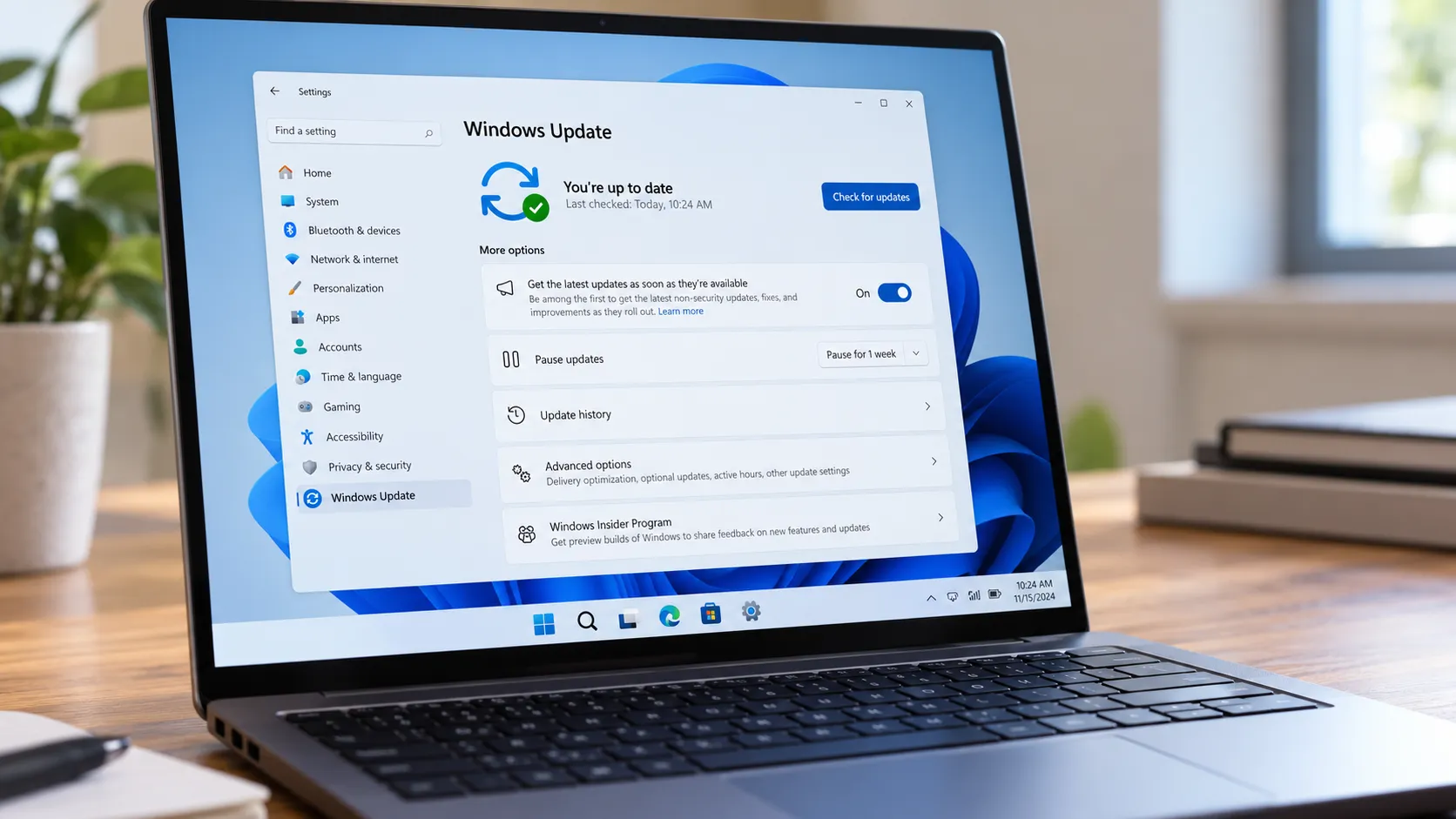
Users can disable snapshot saving, and managed-device policies can remove the feature entirely. The settings to review: opt-in state under Privacy & Security → Recall & Snapshots, sensitive information filtering, app and website exclusions, and retention and storage caps.
The shipped version of Recall is not the product that earned the original backlash. Treating it as though it is directs concern away from the risks that actually warrant it and leaves the real vulnerability, the one that lets a known PIN unlock everything, largely undiscussed.

Comments
Be the first, drop a comment!