



The Microsoft Windows and Surface event on October 7 is shaping up to focus on local AI, RTX Spark hardware, and new Windows experiences, though Microsoft has not yet confirmed pricing or a release date for either new device. The event takes place in San Francisco at 10 AM PT / 1 PM ET, with CEO Satya Nadella, Windows and Surface chief Pavan Davuluri, and NVIDIA CEO Jensen Huang all confirmed to appear on stage.
Microsoft's invite frames the show around how local AI will shape the next chapter of the PC. A teaser published yesterday narrows that further, naming RTX Spark directly and promising "new experiences designed to unlock more possibilities for developers and builders," according to The Verge.
The headline hardware, the Surface Laptop Ultra and the Surface RTX Spark Dev Box, has already been shown publicly. Microsoft has announced both devices but hasn't shared pricing, final configurations, or a specific shipping window.
What Microsoft has confirmed about the Windows and Surface event October 7
Microsoft has announced the date, time, and San Francisco venue for the event. The Nadella, Davuluri, and Huang lineup is confirmed too. Microsoft has not announced Windows 12, and The Verge says it does not expect a surprise Windows 12 announcement at the event.
That doesn't rule out surprises. Windows Central notes that while the "local AI" framing lines up neatly with hardware already known to be coming, Microsoft could still reveal additional devices on stage.
This marks Microsoft's first major Windows stage event since the Copilot+ PC launch more than two years ago, in May 2024. Before that, the last comparable event was the Windows 11 reveal in June 2021.
Microsoft published an official YouTube livestream for the event, scheduled for October 7 at 10 AM PT / 1 PM ET. The stream says it will cover what's next from Windows, Surface, and NVIDIA, including RTX Spark and new experiences for developers and builders.
What's already known about the Surface Laptop Ultra and RTX Spark Dev Box
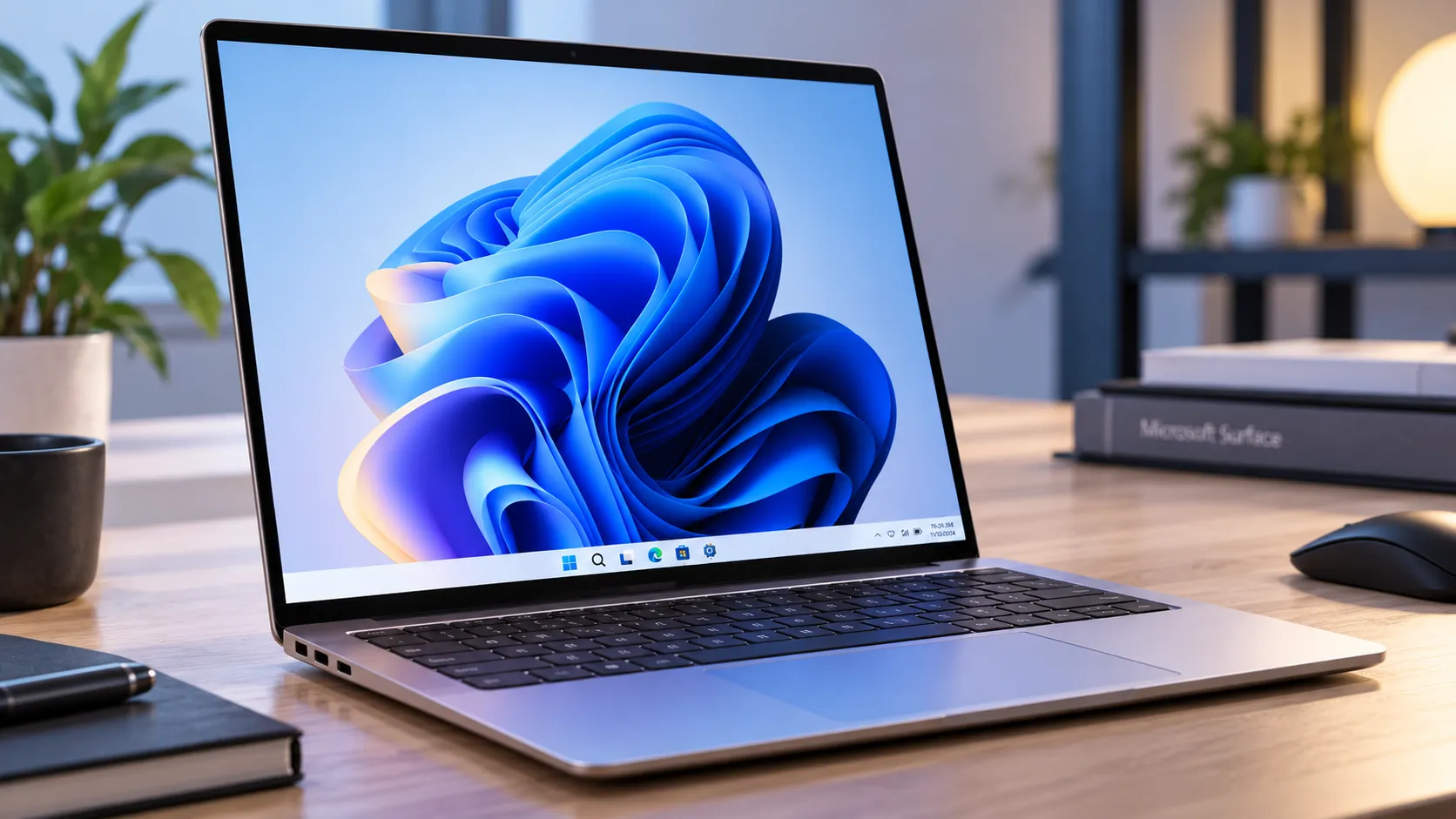
The Surface Laptop Ultra was revealed about four months ago, on May 31, 2026. Surface corporate vice president Brett Ostrum described it as "the most powerful Surface Laptop ever built." It pairs an NVIDIA Blackwell RTX GPU with up to 128GB of unified memory and full CUDA support. Microsoft says the machine can run AI models with up to 120 billion parameters directly on the device.
The Surface RTX Spark Dev Box, a compact desktop built around the same chip and aimed at developers, has also already been shown publicly. Pricing, exact shipping dates, and the full retail configuration lineup remain unannounced for both devices.
Microsoft previously said the Laptop Ultra would be available by fall 2026. The October timing lines up with that window.
What the Microsoft RTX Spark announcement could mean for buyers
What Microsoft still needs to announce
Final pricing remains unknown for both devices. Microsoft says the Dev Box has 128GB of unified memory, and the Laptop Ultra supports up to 128GB, but it has not detailed the Laptop Ultra's full retail memory and storage lineup. Microsoft also detailed the Dev Box's core specs and developer tooling. Pricing, an exact ship date, and any additional retail configuration options remain open questions.
What independent reviews should test
A handful of questions can't be answered from company demos alone, and are worth watching for once reviewers get hands-on units:
Whether x86-on-Arm app compatibility holds up in everyday use, not just staged demonstrations
How the 120-billion-parameter claim performs across different quantization settings, and what that does to speed and battery life
Real-world thermals under sustained local-AI workloads
Whether memory configurations below the top 128GB tier still deliver the advertised performance
One Windows Central reader called the AI-focused Laptop Ultra "a comical price" for internals aimed mostly at a niche use case. 9to5Windows also argues that a new chip alone rarely justifies an upgrade, since most people replace laptops only every three to five years.
Microsoft hasn't announced an event-related update that current Surface or Windows 11 owners need to install. RTX Spark is new silicon announced for new devices, not a software update reaching machines already in people's hands.
Windows 11 changes tied to RTX Spark, and what's separate
Microsoft has spent months tuning Windows 11 specifically for RTX Spark hardware. At Build 2026, the company described a Workload Profile Scheduling system built to spread tasks across the chip's 20 CPU cores, along with a tuned Prism emulation layer meant to improve x86 app performance on the Arm-based silicon. Both are described as RTX Spark-specific work.
That's separate from Microsoft's broader Windows K2 initiative, a wider push to fix long-standing Windows 11 pain points. The ability to resize and move the taskbar has been reported as an early win from that effort. Whether K2 gets any stage time on October 7 isn't confirmed either way.
Separately, Yusuf Mehdi, who leads consumer marketing for Windows and Copilot, has said he plans to spend his final year at Microsoft reimagining Windows for what he calls the "agentic era" before he leaves the company.
The Workload Profile Scheduling work described here is tailored to RTX Spark. Prism, however, is Windows' broader x86/x64 emulation layer for Arm PCs, with Microsoft adding RTX Spark-specific optimizations on top of it.
What to expect from Microsoft's October event
The confirmed pieces of this story are narrow: the date, time, location, and speaker lineup, along with two RTX Spark devices Microsoft has already shown off. The main details to watch for are price, final configurations, and availability windows for the Laptop Ultra and Dev Box, since neither has been announced yet. Whether the Laptop Ultra's AI performance claims hold up outside Microsoft's own demos is also unresolved, and Windows Central has left open the possibility that Microsoft could reveal additional hardware beyond what's already public.
Anyone considering the Laptop Ultra or Dev Box should wait for official pricing and independent reviews covering battery life, thermals, and the 120-billion-parameter claim before ordering. Everyday Windows 11 users don't need to change anything based on this event alone, unless Microsoft announces a feature with broad hardware support and a concrete release date attached.

Comments
Be the first, drop a comment!