



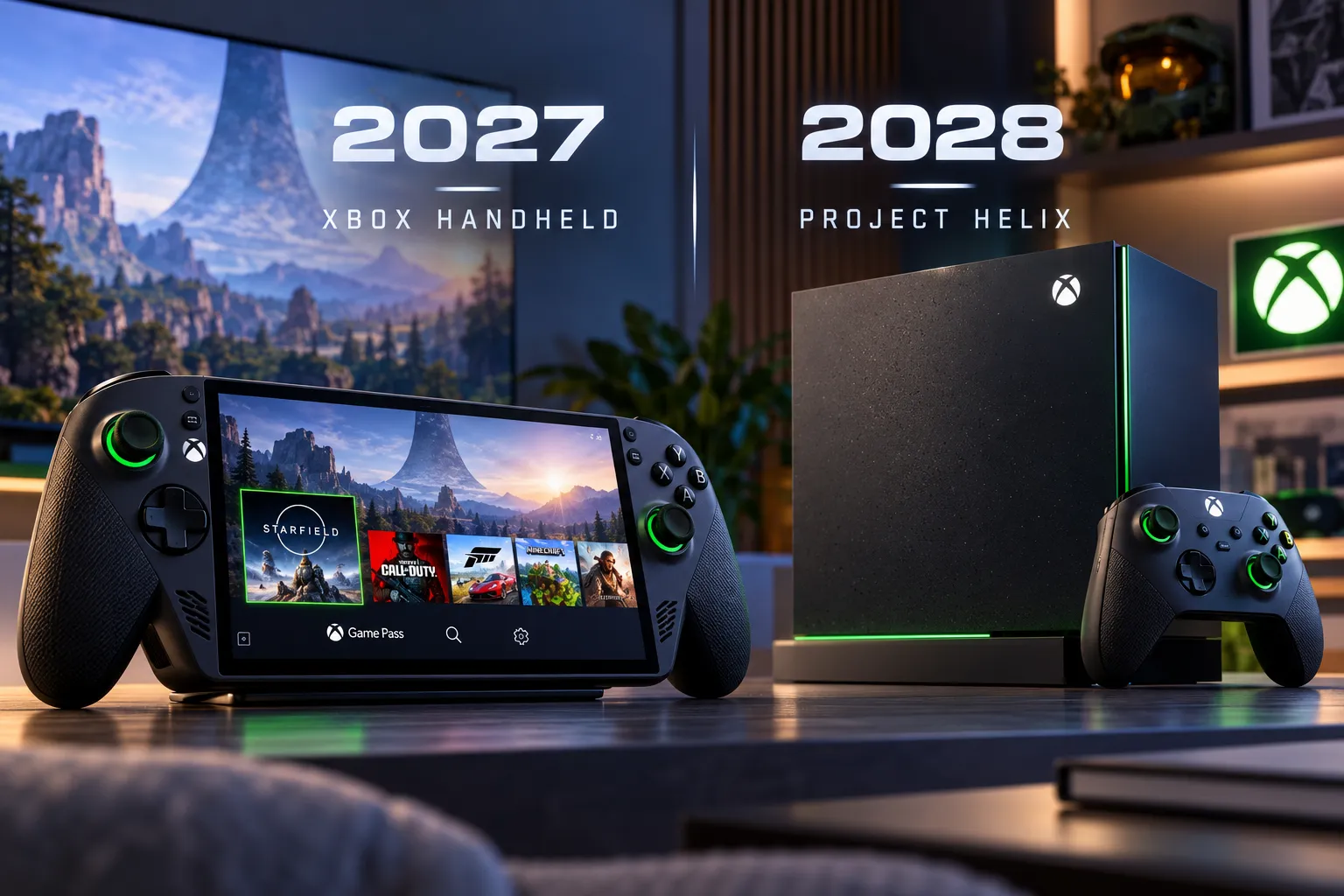
Microsoft is reportedly targeting a holiday 2027 launch for a next-generation Xbox handheld, with a home console called Project Helix following in holiday 2028.
The timeline comes from an Oct. 20 Fortune profile of Xbox CEO Asha Sharma, also covered by Windows Central and VGC. Microsoft has confirmed Project Helix but hasn't announced the handheld, confirmed either consumer release window, or named a price.
The reported Helix price is the most consequential detail for buyers: $1,200 to $1,800 unless Microsoft subsidizes the hardware, according to Fortune's reporting. That projection raises questions about how Microsoft intends to position its next console. The same report describes disagreements between the Xbox and Windows teams over the operating system, although an Xbox executive has disputed that characterization.
Xbox handheld 2027 release date: what the report actually claims
Fortune reports that Sharma plans to release a next-generation handheld device by the 2027 holiday season. The reports currently provide few details beyond the target window: no product name, specifications, confirmed manufacturer, or price. Microsoft hasn't formally announced the handheld described in the report.
For context, the existing ROG Xbox Ally X already runs Windows, with a full-screen Xbox experience designed for handheld gaming. Kotaku argues that its experience illustrates the performance and interface concerns behind the reported operating-system dispute. The outlet describes the Windows-based interface as "extremely finicky" and says it remains a drawback despite the Ally X's other strengths.
Treat holiday 2027 as a reported internal target, not a confirmed release date. Because Microsoft hasn't announced the device, there's currently no official preorder, registration, or price to act on.
Xbox Helix console 2028 price and release window
Project Helix, the next-generation home console reportedly planned for holiday 2028, is already in development. Microsoft confirmed the project in March, although it hasn't announced a consumer release window.
The company has said alpha versions of the hardware will reach developers beginning in 2027. Windows Central reports that the first developer kits are expected in early 2027, ahead of the rumored consumer launch.
Engineering deadlines have reportedly been moved forward by at least several months, adding pressure on development teams, according to Fortune. That schedule pressure could create risks of delays or changes in scope, but the reporting doesn't establish that either has happened.
The $1,200 to $1,800 internal consumer-price projection is already drawing comparisons. VGC reports that the range comes from Fortune's sources, not a Microsoft pricing announcement. A subsidy could lower the eventual retail price, but no decision has been confirmed.
Whether Microsoft can afford a substantial subsidy is a separate question. Fortune reported that Xbox's profit margin was around 3%, raising questions about how much flexibility the business has to absorb higher hardware costs. That figure doesn't establish the economics of an individual console or how Microsoft will price Helix.
For now, the reported range is an internal projection, not a retail price. There's no confirmed launch price to budget around yet.
Will the next-gen Xbox handheld run Windows?
Behind the reported price and release dates is a disagreement over software, one of the most detailed parts of Fortune's reporting.
Windows leadership reportedly wanted an upcoming handheld to use a trimmed-down version of Windows Home, while Sharma's team favored software designed around gaming performance. Fortune also reported that tensions became heated enough for a senior Xbox executive to threaten to scrap the handheld rather than adopt the proposed Windows build.
According to the report, Xbox now largely controls the operating-system direction for the project. Sharma emphasized that the two teams still collaborate, telling Fortune, "We can't build Helix on our own."
However, Xbox Chief Technology Officer Scott Van Vliet has publicly disputed Fortune's characterization. In a statement reported by Windows Central, he said the account misrepresented both the technical work and the relationship between the teams. He also confirmed that Helix's operating system is being built on Windows and that the Xbox and Windows teams are working closely together.
That distinction matters. A customized Xbox operating system built on Windows is different from abandoning Windows entirely. Microsoft's current consoles already use a customized operating system based on the Windows core.
What remains unclear is how the reported handheld will handle that foundation. Microsoft hasn't confirmed whether it will use the same approach as the ROG Xbox Ally X, a more specialized Xbox interface, or another configuration.
The operating-system design could affect storefront compatibility, background processes, and how closely the handheld resembles a conventional Windows gaming PC. None of those details has been confirmed for the reported 2027 device.
What Microsoft has actually confirmed vs. what's still rumor
Microsoft's public statements are narrower than the reported roadmap, but they establish several important facts.
At GDC on March 11, the company confirmed Project Helix as its next-generation first-party console. Microsoft said the hardware is designed to play both Xbox console and PC games, uses a custom AMD system-on-chip, and is being developed alongside the next generation of DirectX and FidelityFX Super Resolution technology.
Microsoft also confirmed plans to ship alpha hardware to developers beginning in 2027. That is a development milestone, not a consumer release date.
The company has separately confirmed that Xbox mode is expanding to Windows 11, building on the full-screen gaming experience introduced with the ROG Xbox Ally handhelds.
The unconfirmed details are the specific holiday 2027 handheld target, the holiday 2028 Helix launch window, the $1,200 to $1,800 price projection, and the final operating-system configuration for the handheld.
The release windows and price range originate from Fortune's reporting, which has since been repeated by several outlets. That coverage doesn't constitute independent confirmation from Microsoft.
The operating-system dispute also requires a qualification: Fortune reported the disagreement, but Xbox's CTO has challenged the account and confirmed that Helix is being built on Windows.
For buyers, the clearest signals to watch are Microsoft's own hardware announcements, developer updates, and official pricing information rather than treating reported internal targets as finalized plans.
What Xbox handheld shoppers should do now
Buyers who need a handheld today should compare currently available options rather than treating the reported 2027 target as a guarantee. An internal roadmap can change before any hardware ships.
Prospective Helix buyers should treat the $1,200 to $1,800 figure as an unconfirmed projection rather than a price worth saving toward. Microsoft hasn't announced a subsidy decision, final hardware specifications, or a consumer launch date.
The next meaningful updates would be an official handheld announcement, more detailed developer information about Project Helix, or confirmation of its final operating-system features.
For now, Microsoft has confirmed the next-generation console and its development plans. The reported handheld release date, Helix launch window, and pricing remain unconfirmed.


Comments
Be the first, drop a comment!