





Microsoft extends Windows 10 free security updates to October 2027
Microsoft has extended the free Windows 10 Extended Security Updates program by a full year, pushing the consumer deadline from October 2026 to October 12, 2027. No press release, no blog post just a quietly updated support page. BleepingComputer confirmed the change yesterday, with The Verge following this morning.
The unstated reason is visible in the numbers. As of November 2025, Windows 10 still held roughly 42.7% of the Windows desktop market, more than a month after Microsoft had officially ended support for it, per Statcounter figures reported by The Register last December. That is not a number a company walks away from on a fixed timetable.
What the extension means in practice depends entirely on where your PC stands. If your machine can run Windows 11, October 2027 is now a real planning runway. If it can't, this buys time but not indefinitely.
What Microsoft extended, and what stays the same
Windows 10 reached end of support on October 14, 2025. The ESU program was always a post-retirement bridge: enrolled devices receive only Critical and Important security patches, nothing more, per Microsoft Learn documentation. Under the prior consumer program, October 13, 2026 was both the final enrollment day and the last date patches would be issued.
The new change moves consumer coverage to ESU Year 2, aligning it with the October 12, 2027 date that Microsoft's lifecycle framework had already reserved for that tier. A commercial ESU Year 3 running through October 10, 2028 exists in the same framework but remains a separate, paid track not available to personal devices, per the same Microsoft Learn documentation.
What does not change is worth stating plainly. ESU delivers no feature updates, no general bug fixes, and no technical support. Per Microsoft Learn, ESU does not extend the product lifecycle. Windows 10 is still a retired operating system just one with a slightly longer security runway attached.
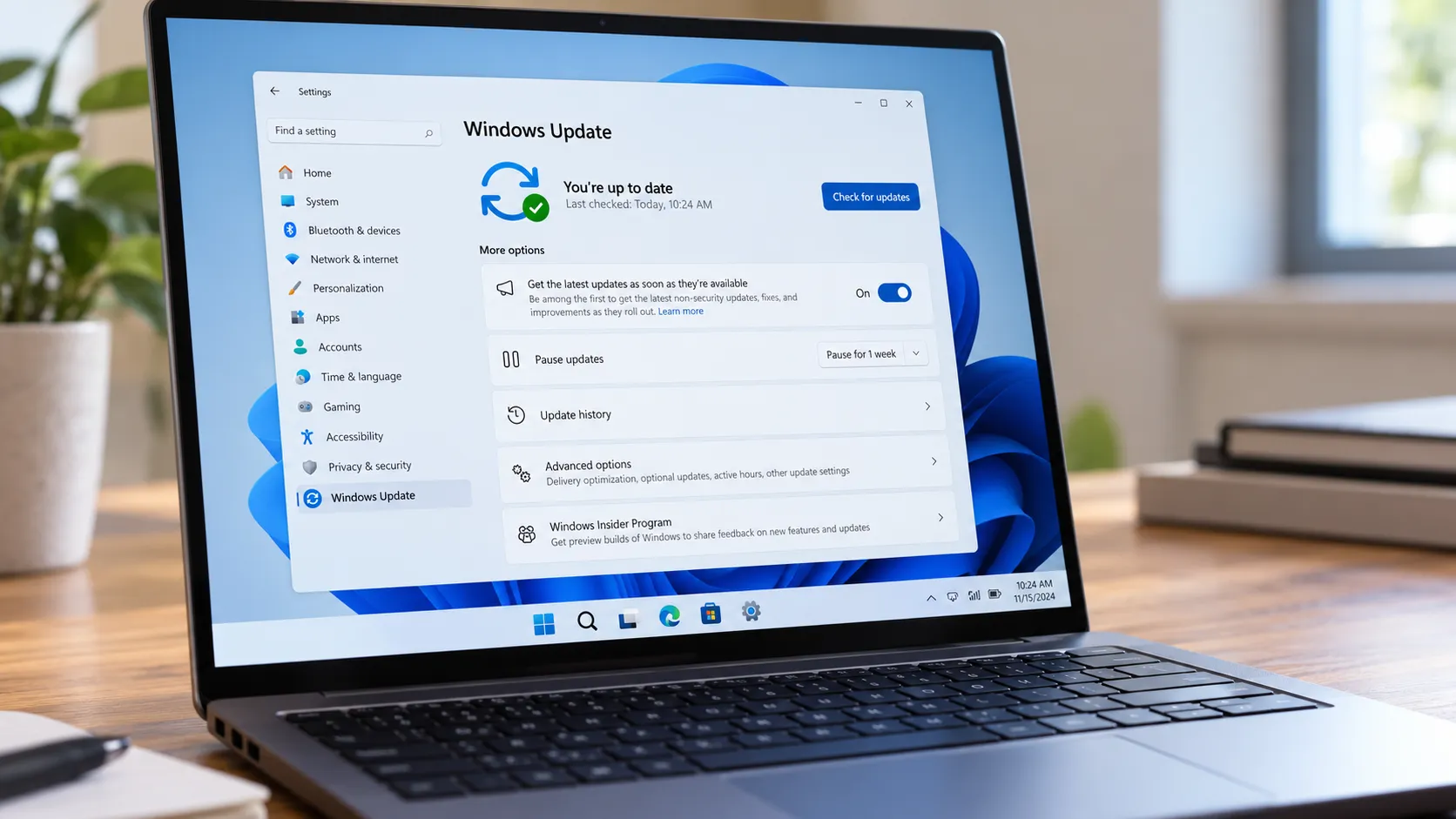
Users already enrolled carry through to the 2027 deadline automatically, with no action required, per BleepingComputer. One ESU license covers up to 10 devices associated with the same Microsoft account.
Who qualifies for Windows 10 extended security updates through 2027
The program covers personal devices only. Machines joined to an Active Directory domain, enrolled in Mobile Device Management, or joined to Microsoft Entra are excluded. Entra-registered devices where a personal machine is associated with a work account but not fully managed by it do qualify, per BleepingComputer. That distinction matters for anyone who has linked a work Microsoft account to a home PC without placing it under organizational management.
There are four enrollment paths, per BleepingComputer:
- Sync PC settings via Windows Backup to a Microsoft account (free)
- Redeem 1,000 Microsoft Rewards points (free)
- Sign into Windows 10 with a Microsoft account available to users in the European Economic Area only (free)
- One-time $30 payment the only option that does not require Microsoft account integration
The no-cost routes all require a Microsoft account and some level of engagement with Microsoft's services ecosystem. The $30 payment is the only enrollment path that sidesteps that requirement entirely. Worth knowing before choosing a route.
What the extension means for different Windows 10 users
For PCs that can run Windows 11, the extension is breathing room, not a reason to stall. Microsoft has not signaled any consumer extension beyond October 12, 2027. The runway is real, but it ends on a fixed date.
For PCs that cannot run Windows 11, the extension offers one more year of security coverage for hardware sitting below Microsoft's minimum requirements. TPM 2.0 and the supported processor list are hard ceilings not settings anyone can toggle. After October 2027, there is no free consumer path in Microsoft's current framework.
For users already enrolled, nothing is required. The extension applies automatically, per BleepingComputer.
For users who want to avoid Microsoft account requirements, the $30 one-time payment is the only available option.
One thing ESU does not change, regardless of enrollment path: it patches the security surface and nothing else. The Verge frames the extension as giving Windows 10 users exactly one additional year to decide whether to upgrade to Windows 11, accept the risks of an unsupported OS, or look elsewhere. That framing is accurate. ESU does not make Windows 10 a supported, fully maintained operating system again.
Why Microsoft moved the date, and why it said nothing
The adoption numbers tell most of the story. Windows 11 was running 10 to 12 percentage points behind where Windows 10 adoption stood at the equivalent point in the Windows 7 transition, according to Dell COO Jeffrey Clarke, quoted by The Register last December. That gap translates to tens of millions of devices still running an operating system Microsoft has already retired.
The reasons behind that gap are partly structural, partly behavioral. Many older PCs fail Windows 11's hardware requirements outright. Beyond that, Kieren Jessop, a research manager at Omdia, told The Register last December that the Statcounter picture was "genuine, but complex." When consumers purchase a new Windows 11 PC, Jessop explained, they frequently keep the old Windows 10 machine running as a secondary device repurposed for children's homework, as a kitchen PC, or for basic tasks. Those machines keep generating web traffic and appearing in usage statistics even at low intensity. The Statcounter figures, 42.7% Windows 10 versus 53.7% Windows 11 as of November 2025, reflect that layered reality rather than a straightforward headcount of primary machines.
Lansweeper principal technical evangelist Esben Dochy, also quoted by The Register last December, pointed to a different dynamic on the consumer side: many users with hardware that cannot be upgraded simply follow an "if it ain't broke, don't fix it" logic. That population has nowhere obvious to go without spending money on new equipment.
Microsoft's stated rationale, per BleepingComputer: "We understand that moving to a new PC can take time. As part of our ongoing commitment to helping customers stay secure during the transition, the Windows 10 Extended Security Updates program for personal devices is being provided for an additional year. Coverage will now be available through October 12, 2027. This gives customers more time and flexibility to find the best PC for their needs while keeping them protected."
The language points toward new hardware as the intended destination. BleepingComputer notes that Microsoft continues pushing customers toward Windows 11 or new Copilot+ PCs. The extension is a holding position, not a change of direction.
The quiet rollout via documentation update carries its own meaning. A formal announcement would require Microsoft to explain publicly why the Windows 10 transition is running behind schedule. Updating a support page has the same practical effect without inviting that conversation.
What comes next
October 12, 2027 is the date to plan around. Free consumer ESU coverage ends there. The commercial path to October 2028 is a paid enterprise track, not an extension of the personal device program.
The harder reality is that the extension changes nothing about Windows 10's fundamental status. No feature development, no bug fixes outside critical security patches, no technical support. ESU keeps the security surface patched for enrolled devices; it does not restore Windows 10 to active development.
Whether Microsoft extends the free consumer program again in 2027 is an open question. What the data shows is that the adoption gap driving this extension has not resolved itself quickly, and the secondary-device pattern Jessop describes is not going to shrink overnight. This change arrived without announcement, which means any future one could too. The practical advice stays the same either way: treat October 2027 as a real deadline, plan accordingly, and don't count on another quiet reprieve.








Comments
Be the first, drop a comment!