




When Microsoft shares case studies about companies saving tens of millions with AI deployment, there's an unspoken irony in the presentation. The tech giant is simultaneously closing its own employee library and cutting subscription services—moves that feel almost symbolic of the broader AI transformation happening across corporate America. You might be wondering how a company reporting massive AI-driven savings of $500 million in call center costs can justify eliminating traditional workplace resources that employees have relied on for decades.
Here's what makes this particularly revealing: Microsoft isn't just selling AI transformation to other companies—they're demonstrating what complete organizational commitment to algorithmic efficiency actually looks like. The company has eliminated 15,000 positions across multiple rounds of layoffs, while simultaneously proving that AI tools enhanced productivity across sales, customer service, and engineering teams. It's a fascinating case study in corporate efficiency meeting cultural transformation—and the results reveal both the competitive advantages and hidden costs of letting AI optimization drive workplace decisions.
The numbers behind Microsoft's AI-driven efficiency push
Let's break down what Microsoft is actually achieving with its internal AI implementation, because the results create a compelling competitive advantage. The company has demonstrated that AI tools enhanced productivity across sales, customer service, and engineering teams, with some truly impressive metrics in software development. Get this: AI generated over a third of the code for new products. That's not just productivity enhancement—that's a fundamental acceleration in how quickly Microsoft can bring products to market.
The customer service transformation stands out as the most dramatic example. Bloomberg reported that Microsoft said AI reduced support costs by more than $500 million while improving both employee and customer satisfaction. This creates what every enterprise leader dreams of: a measurable win-win scenario that becomes the centerpiece of sales presentations while delivering real bottom-line impact.
But here's the strategic genius: Microsoft transforms these internal successes into enterprise sales ammunition. Analysis suggests a 25,000-employee company could save up to $56.7 million over three years by deploying Microsoft 365 Copilot, with early adopters reporting 29% faster completion of core tasks like writing and summarizing. When Microsoft's sales teams present these projections, they can point to their own organization as living proof—eliminating the typical enterprise buyer's skepticism about whether AI transformation actually delivers promised returns.
This approach gives Microsoft a crucial competitive advantage: they're selling from experience rather than theory, which significantly reduces perceived implementation risk for potential customers.
What closing the employee library reveals about digital-first philosophy
Now here's where Microsoft's internal decisions illuminate their broader strategic thinking about the future of work. The closure of Microsoft's employee library represents more than cost-cutting—it's a concrete demonstration of their belief that AI can replace traditional knowledge work infrastructure. When enterprise customers see Microsoft eliminating physical research spaces, it signals confidence in digital-first workplace models that they're actively promoting.
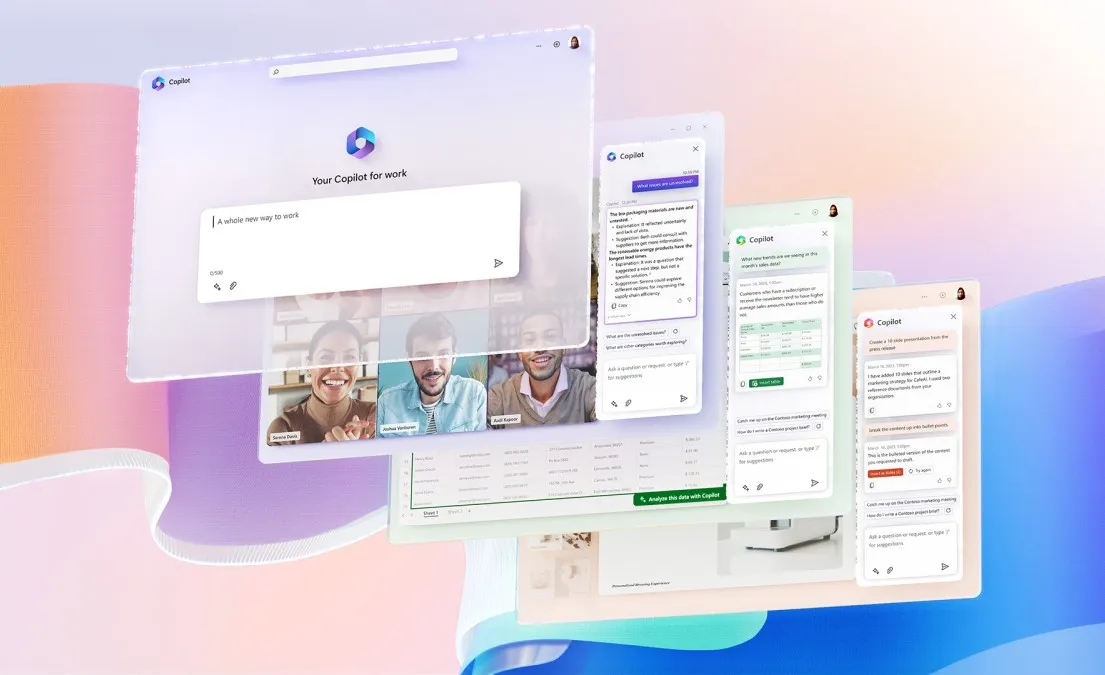
Consider what Microsoft Copilot can now handle: drafting emails, summarizing meetings, generating analyses in spreadsheets, and helping with coding queries. From Microsoft's perspective, maintaining a physical library becomes strategically inconsistent when 75% of early Copilot users report the AI saves time by finding information in their files. They're essentially validating their own product thesis: if AI can provide instant, contextual access to information, traditional research infrastructure becomes redundant overhead.
This philosophical shift goes beyond immediate cost savings. Microsoft is demonstrating that every hour of employee work automated or accelerated by AI translates into cost savings, but they're also showing enterprise customers what total commitment to this philosophy looks like in practice. The library closure becomes proof of concept for the broader workplace transformation they're selling—where digital tools don't just supplement traditional resources, they systematically replace them.
What's particularly revealing is how this decision signals Microsoft's confidence in AI's ability to handle the intangible benefits that libraries traditionally provided: spaces for deep thinking, informal collaboration, and serendipitous learning through browsing. By eliminating these spaces, Microsoft is betting that AI-mediated information discovery will prove superior to traditional research methods.
The human cost reveals systemic transformation challenges
Here's where Microsoft's internal transformation exposes the complex reality that enterprise leaders must navigate. While over 70% of Copilot users feel more productive and report improved output quality, the company has simultaneously conducted three rounds of layoffs totaling 15,000 employees. This pattern reveals a critical insight: AI productivity gains often correlate with workforce reduction rather than workload redistribution.
What makes Microsoft's experience particularly instructive is how it reflects broader management decision-making patterns. A recent survey found that 43% of managers who assessed whether AI could handle their direct reports' jobs ended up replacing them with AI. Microsoft's transparency about this approach—rather than hiding behind vague "optimization" language—provides enterprise leaders with realistic expectations about AI implementation outcomes.
The speed of this transformation creates regulatory and social challenges that existing frameworks weren't designed to handle. Current displacement laws weren't designed for the pace of algorithmic replacement, and companies aren't obligated to retrain or redeploy displaced talent under business necessity arguments. This creates a business environment where AI adoption can proceed faster than social adaptation mechanisms can respond.
Even Microsoft's community investment initiatives reveal the complexity of managing AI's societal impact while maximizing business benefits. Programs like the $4 billion Elevate program and AI Economy Institute genuinely support communities, but they simultaneously function as market development strategies—building markets for Microsoft's own tools while addressing displacement concerns that could otherwise create regulatory pressure or customer hesitation.
What this means for enterprise AI strategy
Microsoft's internal AI implementation provides enterprise leaders with a realistic preview of both opportunities and organizational challenges. The company demonstrates that proper implementation and change management are crucial for realizing AI benefits and cost savings, with well-executed deployments potentially decreasing operational expenses by tens of millions over three years. But their approach also reveals what complete commitment to AI-driven efficiency means for workplace culture and employee experience.
The closure of employee resources like libraries illustrates a critical strategic choice: Microsoft prioritizes measurable productivity gains over maintaining traditional workplace amenities that provide harder-to-quantify benefits. This suggests that enterprises following Microsoft's template will face similar decisions about which human-centered workplace elements to preserve versus optimize away.
Industry projections indicate this transformation extends far beyond individual companies. Some tech leaders (for example Anthropic's CEO) have warned AI could eliminate ~50% of entry-level white-collar jobs in the next five years; this is contested and not a consensus forecast, while most jobs will likely be disrupted or transformed by AI in the next 5-10 years. Microsoft's approach—maximizing algorithmic efficiency while systematically reducing traditional support structures—appears to be emerging as the industry-standard template.
What makes Microsoft's strategy particularly influential is that they're getting benefits from AI using the same strategies and tools that they're urging their customers to deploy. This creates powerful credibility for their enterprise sales approach, but it also means that Microsoft's internal decisions about workplace culture will likely influence how thousands of other companies approach AI transformation.
Bottom line: Microsoft's experience proves that AI transformation delivers substantial productivity and cost benefits, but it also demonstrates how these gains reshape fundamental assumptions about workplace resources and employment structures. Enterprise leaders considering similar transformations should recognize that they're not just adopting new productivity tools—they're choosing a comprehensive organizational philosophy that prioritizes algorithmic efficiency over traditional workplace community elements. The question for each organization becomes whether they can capture AI's undeniable productivity advantages while preserving the human-centered workplace values that matter to their culture and employee retention goals.




Comments
Be the first, drop a comment!