





Microsoft Ends Xbox Copilot AI to Fix Core Business Problems
Xbox CEO Asha Sharma announced Tuesday that Microsoft is ending Xbox Copilot AI on mobile and halting all console development of the assistant, confirmed the same day by an Xbox spokesperson to PC Gamer. The mobile version is being wound down; console development has stopped entirely. No replacement product has been announced.
The staffing moves arriving alongside the shutdown tell a more complicated story. Sharma is simultaneously installing four executives from Microsoft's CoreAI division into Xbox's top engineering and design roles. Taken together, the changes suggest a deliberate reorientation: less AI as a consumer-facing feature, more AI embedded in how Xbox builds and ships software.
What Xbox Copilot was and what it actually did for users
Copilot on Xbox was Microsoft's AI assistant integrated into the Xbox mobile app, with a parallel version under active development for console. Both are discontinued, The Verge reported Tuesday.
Microsoft had positioned the tool as an assistant layer inside the mobile app, though public details on its specific feature set remained limited throughout its existence. The console version never shipped to users at all. For most Xbox players, the cancellation changes nothing visible today the product was either peripheral or entirely theoretical depending on which platform they used.
That limited footprint likely made it a more defensible cut. A feature with narrow reach and unclear value is easier to remove than one with an established user base.
Why Microsoft ended Copilot on Xbox
The Xbox Copilot AI shutdown lands against a specific set of numbers. Xbox hardware revenue had declined for three consecutive fiscal years, with no recovery projected through fiscal 2026, The Verge reported in February. When a division is in that position, discretionary feature work becomes difficult to defend in any budget conversation.
Sharma's internal memo named the underlying execution problem directly: "It is too hard to ship impact quickly. We spend too much time inward instead of with the community, and we lack the depth we need in some of the fundamentals," PC Gamer reported Tuesday. The reorg points toward consumer-facing AI experiments as precisely the kind of work that memo is describing, though Sharma did not name Copilot specifically in that framing.
The execution gap shows up elsewhere, too. An Xbox mobile gaming storefront announced for a July 2024 launch still had not materialized as of February, nearly two years after the announcement, per The Verge. That kind of slippage a storefront that doesn't exist, a console AI assistant that never shipped reflects the pattern Sharma is trying to break.
The specific triggers for the Copilot cancellation (player engagement figures, cost, overlap with Microsoft's broader Copilot infrastructure) have not been publicly disclosed. What's available points to a broader execution problem, not a documented failure specific to the product itself.
How Sharma is redirecting Xbox's AI investment
The leadership moves announced alongside the cancellation are where the reorg gets concrete.
Jared Palmer, former vice president of Microsoft's CoreAI division, is now Xbox's VP of engineering and Sharma's direct technical advisor. Her memo outlined his remit as working "directly with me on our most complex product and engineering problems, with a focus on developer tooling, taste, and infrastructure," PC Gamer reported. Palmer confirmed the role publicly, writing that he'll be "focused on building world-class tools, services, and experiences for developers and players across the Xbox ecosystem." The framing, developers and players rather than a consumer assistant interface, reflects the shift in emphasis.
Three additional CoreAI veterans join him. Tim Allen, former senior vice president of CoreAI Design, takes over design at Xbox with a mandate to unify "product design, design engineering, research, and creative with a fan-first focus," per Sharma's memo. Evan Chaki, former CoreAI general manager, leads a new forward-deployed engineering group with an explicit mandate to remove repetitive work, simplify development, and improve how Xbox operates. Jonathan McKay, formerly CoreAI's head of growth, moves into a parallel growth role at Xbox.
Sharma is also bringing in outside talent: David Schloss, previously senior director of product growth at Instacart, takes over subscriptions and cloud at Xbox, PC Gamer reported.
The staffing picture suggests Xbox's AI expertise is being moved from a surface players interact with to the internal machinery that determines how fast the division can ship. That distinction is central to what today's announcement signals, even if Sharma didn't spell it out in those terms.
Sharma had hinted at this direction in February, writing that Xbox would not "chase short-term efficiency or flood our ecosystem with soulless AI slop," per The Verge. That line reads differently now less like a positioning statement, more like an early signal of a specific decision already forming.
What the Xbox Copilot AI shutdown means for users and Microsoft's broader strategy
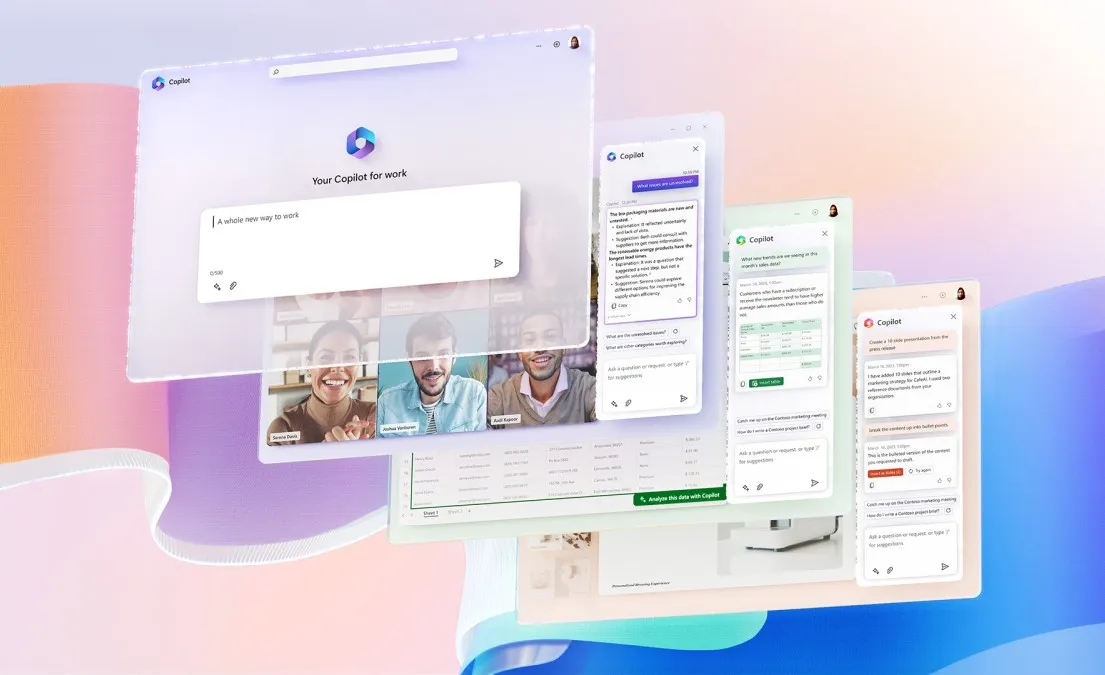
At the corporate level, Microsoft has been moving in the opposite direction. In March, Satya Nadella announced that previously separate consumer and commercial Copilot teams would be unified into a single effort, with Jacob Andreou reporting directly to Nadella across Copilot experience, platform, Microsoft 365 apps, and AI models, The Verge reported. "We are bringing the Copilot system across commercial and consumer together as one unified effort," Nadella wrote in an internal memo at the time.
Xbox stepping back as a delivery surface for Copilot fits that consolidation rather than contradicting it. The brand continues as a Microsoft-wide initiative; it's Xbox's division-level ownership of it that's ending.
For players, the near-term change is straightforward: no Copilot on console, a mobile wind-down already underway. Sharma's stated goal, per her memo, is to improve how quickly Xbox ships products and engages with the community. Whether that produces anything visible to players depends on whether Palmer, Chaki, and the rest of the incoming engineering leadership can move the needle on a division that has been slow to ship for years.
What remains genuinely open: whether centralized Microsoft Copilot eventually finds its way onto Xbox surfaces through a corporate rather than division-owned effort, and whether the new engineering structure finally gets the long-delayed Xbox mobile store out the door.
What Sharma inherited and what she's betting on
The context matters for reading this move clearly. Sharma took over a division with three consecutive years of declining hardware revenue, a mobile storefront still unbuilt nearly two years after its announced launch, and a marketing strategy that explicitly told consumers they didn't need a console to play Xbox, per The Verge's February reporting. In February, she framed her mandate plainly: "I want to return to the renegade spirit that built Xbox in the first place."
Ending Xbox Copilot AI was unlikely to fix any of those problems on its own. Sharma's bet, as the staffing moves imply, is that AI expertise applied to internal execution, developer tooling, and operational fundamentals can accomplish something a branded consumer assistant couldn't.
Three things will indicate whether that bet holds: whether the Xbox mobile store ships under the new engineering structure, whether Palmer and Chaki's work produces a visibly faster first-party release cadence, and whether Copilot eventually returns to Xbox through Microsoft's centralized effort rather than a division-owned one. That last outcome would quietly validate the logic of pulling back now.

Comments
Be the first, drop a comment!