



Windows 11 Insider Preview Build 28020.1797 Canary Channel Split Explained
Editor's note: Build 29558 referenced in the original announcement could not be confirmed from available sources at publication time. This article covers what is confirmed: the 28020.1797 release on the default track and the 29550.1000 release on the optional 29500 series. The Windows Insider Blog is the authoritative reference for any 29558 changelog.
Microsoft released Windows 11 Insider Preview Build 28020.1797 (KB 5079490) to the Canary Channel yesterday, March 30. Taken alone, it's the sixth in a steady series of weekly updates. What gives it significance is the track it's running alongside.
On March 13, Microsoft simultaneously shipped Build 29550.1000 to Canary under a separate "optional 29500 build series," a distinct track that requires Insiders to actively opt in, per the Windows Insider Blog. That same day, the default 28020.1737 also shipped. Two builds, one channel, two different tracks.
The structural split is the real story. Canary now runs a default path with a publicly reported release target and a separate experimental path whose purpose Microsoft hasn't named. What each track currently contains, and what the gap between them signals about where Windows development is heading, is what this article covers.
What Microsoft has confirmed about the split, and where the reporting ends
Microsoft's only official label for the new branch is "optional 29500 build series." No version name, no roadmap, no stated purpose beyond that designation, per the Windows Insider Blog. The default 28020 track is the only one with a publicly reported release target: the 28000-series Canary builds are for Windows 11 version 26H1, Thurrott reported in late February. That's a journalist's read based on Microsoft's build context, not an official product announcement. Still, it's the only external anchor either track currently has.
The 27H2 label circulating in third-party coverage is an inference, not a Microsoft statement. Pureinfotech argued in mid-March that the build number progression "strongly suggests that work toward version 27H2 is underway," while also acknowledging that Windows 11 27H2 has not been officially announced. That's a reasonable read of how Microsoft's build numbering has historically worked. It's also informed speculation, not confirmed product positioning. The distinction matters when deciding how much weight to put on either track.
What Microsoft has confirmed is that the Canary Channel will divide into "two separate development paths as part of a platform change," per Pureinfotech. No public timeline. No version label attached to the new branch. That's where the confirmed record stops, and anything beyond it is interpretation.
What Windows 11 Build 28020.1797 tells us about the Canary split
The 28020 track has been in steady motion since early February. Six builds shipped between February 4 and March 30: 28020.1546, 1611, 1685, 1737, 1743, and 1797, at roughly weekly intervals, per the Windows Insider Blog. That cadence reflects an active development line being iteratively tested, not a branch idling between milestones. Six updates in less than two months is a meaningful pace for a pre-release channel.
The optional 29500 series, by comparison, has one confirmed public release. Build 29550.1000 shipped with:
- Emoji 16.0 support, introducing a new set of emojis
- New pan-and-tilt camera controls in Camera settings for supported hardware
- A power-settings change that applies global options (Display, Sleep, Hibernate, and button behavior) uniformly across all power plans
- A reliability improvement for the
sfc /scannowcommand
Incremental improvements, per Pureinfotech. Not a platform overhaul, and not a changelog that communicates any particular product direction on its own.
The asymmetry here is the most concrete data point available. Six builds against one. A publicly reported product target on one side, an unnamed development path on the other. One branch is being driven forward at pace; the other is early-stage and sparse. That gap should anchor how anyone interprets either track right now, more than any speculation about version numbers.
Why this matters beyond Insider hobbyists
The Canary Channel split has practical implications that extend past the people who install pre-release builds for fun.
When Microsoft separates development paths at the channel level, it's making a decision about how to manage risk across fundamentally different kinds of changes. The 28020 track, tied to a reported near-term release in 26H1, is the kind of branch where Microsoft is still iterating on features that will ship to general users within a predictable window. App developers and IT teams can use that track to test compatibility because there's at least a reported product context to work against.
The 29500 series is something else. If the 27H2 theory holds, this branch represents deeper platform work being kept separate from near-term servicing, precisely because it's not ready to sit alongside changes that need to ship soon. That would be consistent with how Microsoft has historically managed major version transitions: keep experimental work isolated until it's stable enough to merge into a conventional release cadence. The separation also limits the blast radius when something breaks, which is a real consideration in a channel that already ships builds with incorrect desktop watermarks.
For enterprise IT teams specifically, the split complicates feature forecasting. When a single Canary track existed, every build gave some signal about what might eventually reach the Dev and Beta Channels and, ultimately, production. Now there are two tracks with different timelines and only one with a reported release anchor. Teams that monitor Insider builds to anticipate what's coming in enterprise deployments need to be explicit about which track they're watching and why.
None of this is speculative about Microsoft's intent. It's just what the structure of two separate build tracks, with different cadences and different levels of official clarity, logically implies.
What this means for Insiders deciding whether to switch
The answer depends entirely on what kind of testing is being done.
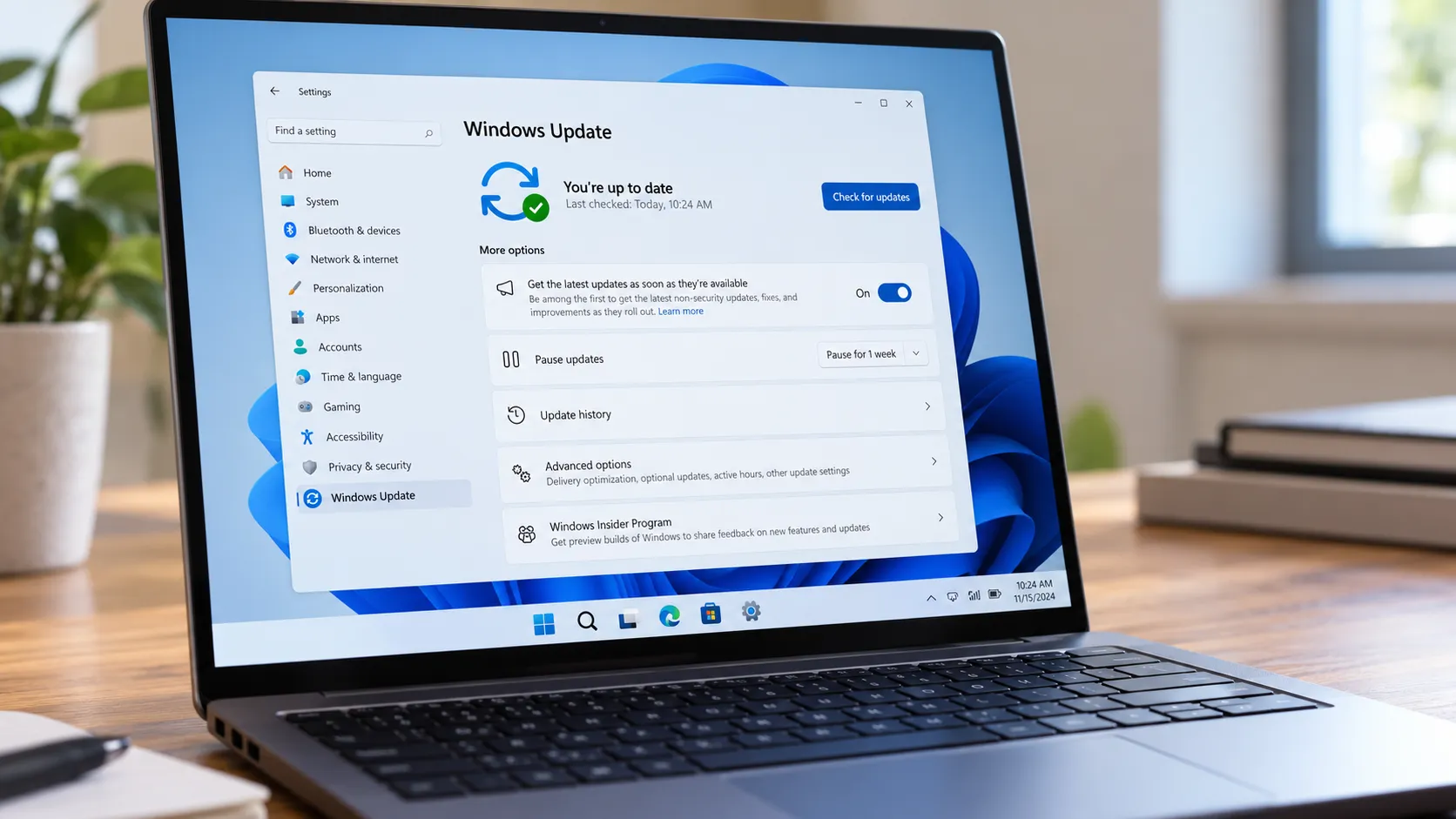
For enthusiasts who want to chase the signal early: The optional 29500 series is accessible through Windows Insider Program settings under Update & Security, per Pureinfotech. Opting in means accepting genuine ambiguity: no confirmed release target, one public build so far, and no official explanation of what the track ultimately serves. If the 27H2 theory is correct, early adopters get a head start on whatever that platform work turns out to be. If the branch turns out to serve a different or narrower function, there's no official story to fall back on. This is testing without a stated destination, which is fine for some people and a problem for others.
For developers and IT admins: The 28020 track is the only practical option. Tied to 26H1 per Thurrott's reporting, it's the only path with a reported product context for compatibility work. App testing, deployment planning, and feature tracking all require a known release target. The 29500 series cannot provide that right now, and using it for serious compatibility work would mean building assumptions on a foundation with no confirmed endpoint.
One other point worth noting: Canary is already Microsoft's most volatile pre-release channel. The default track itself shipped two consecutive builds, 28020.1546 and 28020.1611, displaying the wrong build number in the desktop watermark before Microsoft corrected it, per the Windows Insider Blog. The optional track introduces a second layer of uncertainty on top of that baseline instability. Neither path belongs on a production machine; the optional path is for people comfortable running builds with no confirmed release context at all.
What to watch next
Build 28020.1797 is the continuation of a steady cadence, the sixth Canary update in under two months, per the Windows Insider Blog. Its significance is structural rather than standalone: it confirms the default 28020 track remains in regular development while the optional 29500 series sits at one confirmed release with an incremental changelog.
The split itself is confirmed. Its purpose is not. Microsoft introduced two separate development paths "as part of a platform change" without attaching a public product label to the new branch, per Pureinfotech. Treating the 29500 series as confirmed groundwork for any specific version means getting ahead of the evidence.
Three things would sharpen the picture: a second or third 29500-series release with a more substantial changelog, official version naming from Microsoft for the new branch, or any public explanation of what the "platform change" actually entails. Any one of those would convert the current pattern into a confirmed product story. Until then, the gap between six builds and one says more than any of the individual releases.










Comments
Be the first, drop a comment!